

FAQs

Contents
- 1 Rhinoplasty FAQ
- 1.1 Do you NEED a surgeon board certified by the ABFPRS?
- 1.2 Rhinoplasty Recovery: How Long Does it Take?
- 1.3 Is rhinoplasty very painful?
- 1.4 rhinoplasty follow-up
- 1.5 What are the risks involved in rhinoplasty (nose reshaping)?
- 1.6 Is the nose runnier after rhinoplasty?
- 1.7 When are stitches removed after rhinoplasty surgery?
- 1.8 Where is rhinoplasty surgery performed?
- 1.9 Do I need a CAT scan or an X-ray before undergoing rhinoplasty?
- 1.10 What is septorhinoplasty?
- 1.11 What is rhinoplasty?
- 1.12 After rhinoplasty, does someone need to help me get around, and keep me company at home?
- 1.13 Where is the rhinoplasty incision placed?
- 1.14 Who is a good candidate for rhinoplasty?
- 1.15 Is financing available for rhinoplasty?
- 1.16 What specifically can be achieved with rhinoplasty?
- 1.17 How long does nose reshaping surgery last?
- 1.18 What can I expect during a rhinoplasty consultation?
- 1.19 What are type of anesthesia is used in rhinoplasty?
- 1.20 How is nose reshaping (or rhinoplasty) done?
- 1.21 Open and Closed Rhinoplasty: What’s the Difference?
- 1.22 Does Rhinoplasty Take a Year to Show Results?
- 1.23 What if I’m unhappy with the results of my rhinoplasty?
- 1.24 Can You Wear Glasses After Rhinoplasty Surgery?
- 1.25 Will I have scars after rhinoplasty surgery?
- 1.26 When do nasal splints come out after rhinoplasty?
- 1.27 Will I be awake during nose reshaping?
- 1.28 Can Your Nose Grow After Rhinoplasty?
- 1.29 What is minimally invasive rhinoplasty?
- 1.30 What is a functional or reconstructive rhinoplasty?
- 1.31 What is endonasal rhinoplasty?
- 1.32 May I eat the morning of rhinoplasty surgery?
- 1.33 How to augment missing or misshapen parts of the nose?
- 1.34 What can be done about the crooked nose?
- 2 Tummy Tuck FAQ
- 2.1 When should silicone gel-filled breast implants be used in breast augmentation surgery with caution?
- 2.2 Is seroma (fluid accumulation as your body attempts to fill a potential space) common after breast enlargement surgery, what are the consequences, and what is the treatment?
- 2.3 Can stretch marks be removed via abdominoplasty surgery?
- 2.4 Am I a good candidate for an abdominoplasty or tummy-tuck surgery?
- 2.5 What is a mini-abdominoplasty?
- 2.6 What happens if I become pregnant after an abdominoplasty?
- 2.7 What happens if I lose weight after a tummy-tuck?
- 2.8 How long do the results of a tummy-tuck last?
- 2.9 What happens if I gain weight after a tummy-tuck?
- 2.10 How long does tummy-tuck surgery last?
- 2.11 What is the customary cost of abdominoplasty surgery?
- 2.12 What can I expect in the post-operative period following tummy-tuck surgery, and what is recovery like?
- 2.13 Is seroma formation common after tummy-tuck surgery?
- 2.14 What are the risks associated with abdominoplasty surgery?
- 2.15 How long do I have to be off from work or school after a tummy-tuck?
- 2.16 How much pain will I experience after abdominoplasty?
- 2.17 What is the usual post-operative recovery period like?
- 2.18 What kind of incisions may be used for the tummy-tuck procedure?
- 2.19 How is a tummy-tuck or abdominoplasty done?
- 2.20 What happens during a consultation for abdominoplasty?
- 2.21 I am in the process of losing weight, should I wait to have a tummy-tuck?
- 2.22 I plan to have a child, should I wait to have an abdominoplasty (tummy-tuck)?
- 2.23 What is a tummy-tuck?
- 2.24 Am I a good candidate for a tummy-tuck or an abdominoplasty?
- 2.25 What is an abdominoplasty?
- 3 Breast Augmentation FAQ
- 3.1 What are the different types of tuberous breasts?
- 3.2 What medical conditions have not had safety and effectiveness established in accordance with FDA standards with respect to saline breast implantation?
- 3.3 What is wound dehiscence after breast augmentation surgery, what are the consequences, and what is the treatment?
- 3.4 Smooth Vs. Textured
- 3.5 What are the Spectrum® Postoperatively Adjustable Breast Implants? Particularly the Siltex Contour Profile® Spectrum® Breast Implants?
- 3.6 What are the Spectrum® Postoperatively Adjustable Breast Implants? Particularly the Smooth Round Spectrum® Breast Implants? What are their advantages and disadvantages?
- 3.7 What are the Spectrum® Postoperatively Adjustable Breast Implants? Particularly the Siltex Round Spectrum® Breast Implants? What are their advantages and disadvantages?
- 3.8 What is subglandular breast implant placement in breast augmentation?
- 3.9 Subglandular Vs. Submuscular Vs. “Dual-Plane” Breast Implant Placement
- 3.10 What is submuscular breast implant placement in breast augmentation?
- 3.11 What is breast enlargement or breast augmentation surgery?
- 3.12 Should I have breast augmentation using textured or smooth breast implants?
- 3.13 What are Titanium Coated Breast Implants?
- 3.14 Am I too old for breast enlargement or breast augmentation surgery?
- 3.15 Am I too young for breast enlargement or breast augmentation surgery?
- 3.16 What is a transumbilical breast augmentation incision?
- 3.17 What are Trilucent Breast Implants (Peanut Oil Breast Implants, Soy Oil Breast Implants, Soya Oil Breast Implants, Soybean Oil Breast Implants)?
- 3.18 Incision Type
- 3.19 What is implant exposure or breast implant extrusion after breast enlargement surgery with silicone breast implants, what are the consequences, and what is the treatment?
- 3.20 Is implant removal common after breast augmentation surgery with silicone breast implants?
- 3.21 Is there a way to tell my own breast tissue from silicone breast implants during self examination?
- 3.22 Is infection common after breast enlargement surgery with silicone breast implants, what are the consequences, and what is the treatment?
- 3.23 Should I have breast augmentation using silicone or saline prosthesis?
- 3.24 Is pain normal after breast augmentation surgery with silicone implants?
- 3.25 Is seroma (fluid accumulation as your body attempts to fill a potential space) common after breast enlargement surgery with silicone breast implants, what are the consequences, and what is the treatme
- 3.26 Is breast tissue or skin flap death (necrosis) common after breast augmentation surgery with silicone breast implants?
- 3.27 Am I a good candidate for the use of silicone gel-filled breast implants in my breast augmentation surgery?
- 3.28 Is silicone gel-filled breast implant rupture obvious, or easily detected?
- 3.29 Are unsatisfactory results common after breast augmentation surgery with silicone breast implants?
- 3.30 Is breast tissue or skin flap death (necrosis) common after breast augmentation surgery?
- 3.31 What Were The Main Reasons For Implant Removal in The Allergan Core Study for Primary Augmentation with INAMED® Silicone Breast Implants?
- 3.32 What Were The Complication Rates After 4 Years of Follow-up?
- 3.33 What Were The Benefits to Silicone Breast Augmentation according to the Allergan Core Study on INAMED® Silicone-Filled Breast Implants?
- 3.34 What was the followup rate in the Allergan Core Study on INAMED® Silicone-Filled Breast Implants?
- 3.35 What Were The Main Reasons For Reoperation in The Allergan Core Study for Primary Augmentation with INAMED® Silicone Breast Implants?
- 3.36 What were the Allergan Core Study Results on INAMED® Silicone-Filled Breast Implants for primary augmentation and revision-augmentation?
- 3.37 What is the difference between silicone and saline filled breast implants?
- 3.38 Will I be able to breast feed after breast enlargement surgery with silicone breast implants?
- 3.39 Is breast tissue atrophy common after breast enlargement surgery with silicone breast implants?
- 3.40 Can calcium collections in the breast after silicone breast implant surgery be mistaken for cancer?
- 3.41 Is there an association between breast augmentation surgery with silicone breast implants and cancer, or other serious conditions?
- 3.42 What is capsular contracture after breast enlargement surgery with silicone breast implants?
- 3.43 Is chest wall deformity common after breast enlargement surgery with silicone breast implants?
- 3.44 Is there an asociation between silicone breast implants and connective tissue disease?
- 3.45 Does baby get exposed to silicone that diffuses from silicone breast implants?
- 3.46 What is a periareolar incision in breast enlargement surgery?
- 3.47 What are PIP Saline Breast Implants?
- 3.48 Should I opt for Subglandular, Submuscular, or the “Dual-Plane” Breast Implant Placement?
- 3.49 What are Polyurethane Coated Breast Implants?
- 3.50 How did MHRA bring the Polyurethane Coated Breast Implant issue to plastic surgery patients?
- 3.51 How did MHRA bring the Polyurethane Coated Breast Implant issue to plastic surgery professionals?
- 3.52 What can I expect in the post-operative period following breast enlargement surgery?
- 3.53 Are there any particular questions you should ask of your plastic surgeon in consultation?
- 3.54 If I need revision breast augmentation surgery, or “touch up” breast enlargement surgery do I have to pay?
- 3.55 What Were The Main Reasons For Implant Removal in The Allergan Core Study for Revision-Augmentation with INAMED® Silicone Breast Implants?
- 3.56 What Were The Main Reasons For Reoperation in The Allergan Core Study for Revision-Augmentation with INAMED® Silicone Breast Implants?
- 3.57 Saline Vs. Silicone
- 3.58 Should I perform self breast examinations after breast enlargement surgery?
- 3.59 How can breast implants change the shape of my breasts?
- 3.60 Shaped Vs. Round
- 3.61 What are MemoryGel™ Smooth Round Moderate Profile Breast Implants? What are their advantages and disadvantages?
- 3.62 What are MemoryGel™ Smooth Round Moderate Plus Profile Breast Implants? What are their advantages and disadvantages?
- 3.63 What are Contour Profile® High Breast Implants Style 2900? What are their advantages and disadvantages?
- 3.64 What are Contour Profile® Moderate Breast Implants Style 2900? What are their advantages and disadvantages?
- 3.65 What are the various silicone implants available from Mentor?
- 3.66 What are Siltex® Round Moderate Profile Breast Implant Style 2600? What are their advantages and disadvantages?
- 3.67 What are Round Saline Breast Implants? Particularly the Smooth Round High Profile Breast Implants, Style 3000 from Mentor? What are their advantages and disadvantages?
- 3.68 What are Round Saline Breast Implants? Particularly the Smooth Round Moderate Profile Breast Implants, Style 1600 from Mentor? What are their advantages and disadvantages?
- 3.69 What are Round Saline Breast Implants? Particularly the Smooth Round Moderate Plus Profile Breast Implants, Style 2000 from Mentor? What are their advantages and disadvantages?
- 3.70 What was presented to the committee on safety of devices (MHRA)?
- 3.71 Is the need for additional surgeries (reoperations) common after breast augmentation surgery with silicone breast implants?
- 3.72 Is breast augmentation surgery the only surgery I will ever need to enhance my breasts?
- 3.73 Is the need for additional breast procedures common after breast enlargement surgery?
- 3.74 Is breast augmentation surgery painful?
- 3.75 What type of incision should I chose when undergoing breast enlargement surgery? What are the advantages and disadvantages of each?
- 3.76 Is infection common after breast enlargement surgery, what are the consequences, and what is the treatment?
- 3.77 What is an inframammary incision with respect to breast augmentation?
- 3.78 Are silicone breast implants safe?
- 3.79 Can any patient receive the latest generation cohesive or gummy-bear silicone implants?
- 3.80 Is loss of sensation from the skin of the lower pole of the breast common after breast enlargement surgery, what are the consequences, and what is the treatment?
- 3.81 Is loss of nipple sensation possible after breast augmentation surgery?
- 3.82 Is it better to use a low profile breast implant or a high profile breast prosthesis in breast enlargement surgery?
- 3.83 Does breast enlargement surgery, or do breast implants interfere with mammography?
- 3.84 Should I have a mammogram prior to have breast augmentation surgery?
- 3.85 Should I massage my breasts after breast enlargement surgery?
- 3.86 What is the McGhan style 410 breast implant, what are its features, and when should it be used?
- 3.87 What various sizes and shapes do the 410 “gummy bear” silicone gel implants come in?
- 3.88 What are MemoryGel™ Smooth Round High Profile Breast Implants? What are their advantages and disadvantages?
- 3.89 What is the thinking behind making the cohesive or gummy bear implant anatomically contoured?
- 3.90 Is it possible for “Gummy Bear Breast Implants” to rupture?
- 3.91 What are Cohesive Gel Breast Implants (“Gummy Bear Breast Implants”)?
- 3.92 Why is the cohesive “gummy bear” implant being investigated?
- 3.93 How can I tell if my cohesive gel (“gummy bear”) breast implants have ruptured, or are leaking?
- 3.94 Unfortunately, this is a question that can be answered only in speculation, without hard medical evidence. Presumably the more solid, formed nature of silicone “gummy bear” implant would not allow as
- 3.95 What are Hydrogel Breast Implants (Hyaluronic-Acid Filled Breast Implants)?
- 3.96 Besides silicone breast implants, or saline breast prostheses, what else is out there?
- 3.97 What is implant exposure or breast implant extrusion after breast enlargement surgery, what are the consequences, and what is the treatment?
- 3.98 How can the palpability of a breast implant be reduced in breast enlargement surgery?
- 3.99 What is palpable or visible breast implant rippling after breast augmentation surgery, what are the consequences, and what is the treatment?
- 3.100 What are some of the unestablished consequences of implant rupture?
- 3.101 Is breast implant rupture common after breast augmentation surgery, what are the consequences, and what is the treatment?
- 3.102 What type of implants should I ask my surgeon to use in enlarging my mammaries through breast augmentation surgery?
- 3.103 Do breast implants come with a warranty, if so what does the warranty cover, and what is excluded?
- 3.104 What type of surgical techniques are not appropriate for plastic surgeons to use in breast augmentation surgery for risk of implant shell rupture?
- 3.105 How should I care for my incisions after breast enlargement surgery?
- 3.106 Who would be considered a good candidate for breast enlargement or breast augmentation surgery?
- 3.107 What is capsular contracture after breast augmentation surgery, what are the consequences, and what is the treatment?
- 3.108 Is chest wall deformity common after breast enlargement surgery?
- 3.109 Is chronic pain common after breast enlargement surgery?
- 3.110 What is closed capsulotomy?
- 3.111 Are gummy bear implants the final word in breast augmentation?
- 3.112 Can any surgeon use the cohesive gummy bear implant?
- 3.113 Is there a way to detect cohesive gel (“gummy bear”) breast implant rupture or leak?
- 3.114 What happens if “Gummy Bear Breast Implants” tear, rupture, or leak?
- 3.115 Why aren’t any Inamed or Mentor contoured or anatomically shaped silicone gummy bear breast implants made smooth?
- 3.116 What are some of the complications of breast enlargement surgery?
- 3.117 Is there an association between breast augmentation surgery and connective tissue disease?
- 3.118 What other points should I consider when chosing silicone gel-filled breast implants to be used in my breast enlargement?
- 3.119 What is the customary cost of breast augmentation or breast enlargement surgery?
- 3.120 Is dissatisfaction with cosmetic results common after breast augmentation surgery?
- 3.121 What is “dual-plane” breast implant placement in breast augmentation?
- 3.122 Is there a way to tell my own breast tissue from saline breast implants during self examination?
- 3.123 What are the restrictions to activity after breast enlargement surgery?
- 3.124 What are the advantages and disadvantages to the use of cohesive “gummy bear” breast implants?
- 3.125 How and why do breasts shape change with age?
- 3.126 What are the various saline implants available from Allergan?
- 3.127 What are the various silicone implants available from Allergan?
- 3.128 I not happy with the size of my breasts, but I do not want breast enlargement surgery. What are my options?
- 3.129 Should my physician use a shaped or round implant in performing my breast augmentation?
- 3.130 What is an axillary incision in breast enlargement surgery?
- 3.131 Is bleeding common after breast augmentation surgery, what are the consequences, and what is the treatment?
- 3.132 Where do breasts get their shape?
- 3.133 Will there be breast skin and breast tissue changes after silicone gel-filled breast implant use in breast augmentation surgery?
- 3.134 Is breast tissue atrophy common after breast enlargement surgery?
- 3.135 Is it safe to breastfeed my child after silicone breast enlargement surgery?
- 3.136 Can calcium collections in the breast after saline or silicone breast implant surgery be mistaken for cancer?
- 3.137 Is there an association between breast augmentation surgery and cancer?
- 3.138 Am I a good candidate for saline-filled breast implants?
- 3.139 What type of anesthesia is typically used to carry out breast augmentation or breast enlargement surgery?
- 3.140 Will I be able to breast feed after breast enlargement surgery?
- 3.141 Is delayed wound healing common after breast enlargement surgery?
- 3.142 Is abscess formation common after breast augmentation surgery with silicone breast implants, what are the consequences, and what is the treatment?
- 3.143 When should silicone gel-filled breast implants not be used in breast enlargement surgery?
Rhinoplasty FAQ
Do you NEED a surgeon board certified by the ABFPRS?
Board certification is highly important, as the ACGME only recognizes the ABPS as a valid specialty board. This recognition is crucial as the ACGME is the regulatory body overseeing resident education across all medical specialties, including internal medicine and general surgery.
The Importance of ACGME Recognition of Board Certification
The ACGME doesn’t recognize individuals trained in a program certified by a board not recognized by it. This means that any board not recognized by ACGME is not bound by its rules and regulations.
Unregulated Boards and False Advertising
Regrettably, this creates an opportunity for the formation of boards such as the American Board of Facial Upper Outer Eyelid Lash Surgeons that may not necessitate a medical degree. To the general public, it may seem as though anyone trained in a program recognized by such a board has special training in the upper outer part of the eyelid. Surgeons who claim to be specialists in a particular area may lead people to believe that they underwent plastic surgery training followed by specialty training, which is a blatant lie.
The Value of ACGME Plastic Surgery Training
In truth, ACGME plastic surgery training takes six to eight years and encompasses all aspects of plastic surgery. Surgeons who lack this training typically receive only one year of so-called “plastic” surgery training and may consider themselves experts in the field. It’s crucial to note that the postoperative lawsuit end is the only area where the cosmetic surgery industry is regulated, leaving many individuals unaware of the nuances in the industry.
Why Board Certifications Not Recognized by ACGME are Preposterous
While there are a few cosmetic surgeons who are not plastic surgeons and are quite good, there are also ASPS surgeons who are not up to par. Therefore, to claim that one needs a surgeon with board certification not recognized by the ACGME is a preposterous flagrant lie. Instead, patients require an honest physician who provides safe procedures and achieves good results, as well as having strong endorsements from their patients.
The Importance of a Board Certified Surgeon’s Ethical Character
People often ignore the ethical character of the surgeon, but it is an essential consideration. Even if someone is not board certified by the American Board of Plastic Surgery, they may still possess skills and experience. However, one must ask how many patients the surgeon would have had to perform a given procedure on before they acquired enough experience to consistently produce good and reproducible results. Would you want a physician of such limited moral fiber to perform your surgery?
Conclusion
In summary, people should focus on finding a surgeon who is honest, safe, and has a track record of getting good results. They should not base their decision solely on board certifications not recognized by the ACGME. It is essential to consider the ethical character of the surgeon, as well as their level of training and experience. Ultimately, patients should prioritize their safety and well-being when choosing a surgeon.
Rhinoplasty Recovery: How Long Does it Take?
Rhinoplasty Recovery Time: What to Expect After a Nose Job
The First Few Days After Rhinoplasty Surgery
If you are considering a rhinoplasty, one of the most important things to consider is the recovery time. After all, you want to know how long it will be until you can get back to your normal routine. The truth is, the recovery period after a nose job can vary depending on a number of factors. However, most patients can expect to experience a similar healing process.
In the first few days after surgery, you can expect to experience some discomfort and swelling. Your nose will likely be packed with gauze to help control bleeding, and you may have a splint on the outside of your nose to help support it as it heals. You may also experience some bruising around the eyes and face.
The First Week After Surgery
As the first few days pass, you may start to feel more comfortable. You will likely still have some swelling and bruising, but it should start to improve. You may be able to remove the gauze from your nose and splint from your face. Your surgeon will give you instructions on how to care for your nose during this time.
The Second Week After Rhinoplasty Surgery
By the end of the first week, you should start to feel much better. Your swelling and bruising should continue to improve, and you may start to see some initial results from your surgery. However, it is important to continue to take care of your nose during this time.
The Third Week and Beyond
As you enter the third week of your recovery, you should start to feel almost back to normal. Most patients can return to work or school at this point, although you may still have some residual swelling and bruising. Over the coming weeks and months, you will continue to see the full results of your rhinoplasty as your nose heals.
In conclusion, the recovery time after a rhinoplasty can vary, but most patients can expect to experience some discomfort and swelling for the first few days, followed by a gradual improvement over the following weeks. By following your surgeon’s instructions and taking care of your nose during this time, you can ensure a smooth and successful recovery.
Is rhinoplasty very painful?
Rhinoplasty Pain: What to Expect During Recovery
Rhinoplasty, commonly known as a nose job, is a surgical procedure that aims to reshape the nose for both aesthetic and functional purposes. Many patients considering rhinoplasty wonder about the level of pain they can expect during recovery. While pain is subjective and can vary depending on the individual, there are typical levels of discomfort associated with this procedure.
Level of Pain During Recovery After a rhinoplasty procedure, patients can expect to experience some level of discomfort and pain. This discomfort can range from mild to severe and can last for several days or even weeks. During the first few days after the procedure, patients may experience moderate to severe pain, which can be managed with prescription pain medication provided by the surgeon.
Factors That Affect Pain Level Several factors can influence the level of pain experienced during the recovery period after rhinoplasty. The extent of the surgical procedure is a significant factor, as a more extensive procedure can result in more pain and discomfort. Additionally, pain can be influenced by the individual’s pain tolerance level, which can vary from person to person. The patient’s overall health, age, and the type of anesthesia used during the procedure can also impact the level of discomfort experienced.
Managing Pain After Rhinoplasty While pain is an expected part of recovery after rhinoplasty, there are several steps patients can take to manage discomfort and promote healing. Following the surgeon’s post-operative instructions, taking prescription pain medication as directed, and avoiding physical activity and strenuous exercise can help minimize pain and promote healing.
Other strategies to manage pain and discomfort after rhinoplasty include using cold compresses to reduce swelling, sleeping with the head elevated, and avoiding blowing the nose. It is essential to follow all post-operative instructions carefully to ensure a safe and comfortable recovery.
Conclusion In conclusion, rhinoplasty is a surgical procedure that can result in some level of pain and discomfort during the recovery period. Congestion, inability to breathe through swollen air passages, the taste of blood are all problems that most rhinoplasty patients are bothered by more than pain. Pain is normal with any surgery, and is no worse with rhinoplasty. The level of pain can vary depending on several factors, including the extent of the procedure and the individual’s pain tolerance level. However, by following the surgeon’s post-operative instructions and taking steps to manage pain, patients can experience a safe and comfortable recovery.
rhinoplasty follow-up
Rhinoplasty Follow-Up: How Often Should You See Your Surgeon?
Rhinoplasty is a cosmetic surgery that reshapes the nose, improving its size, shape, or function. After undergoing rhinoplasty surgery, it’s important to follow up with your surgeon regularly to ensure proper healing and minimize the risk of complications. In this article, we’ll discuss how often you need to see your rhinoplasty surgeon after nose reshaping surgery and why it’s important to keep up with your follow-up appointments.
Why Follow-Up Appointments Are Important
After rhinoplasty surgery, follow-up appointments are critical for monitoring the healing process, addressing any issues that may arise, and ensuring that the final results are satisfactory. Your surgeon will evaluate the progress of your healing, remove any packing or splints, and check for any signs of infection, bleeding, or other complications. They’ll also provide guidance on caring for your nose post-surgery, including advice on when you can resume normal activities.
How Often to See Your Surgeon
The frequency of your follow-up appointments will depend on the specifics of your surgery and your individual healing process. In general, your surgeon will schedule your first appointment for 1-2 days after your surgery to check for bleeding or other immediate concerns. You’ll then typically have appointments at 1 week, 1 month, 3 months, 6 months, and 1 year after your surgery.
It’s important to attend each follow-up appointment and to contact your surgeon if you have any concerns or issues between appointments. While the healing process can vary from person to person, regular check-ins with your surgeon will ensure that any complications are caught early and addressed promptly.
Conclusion
Rhinoplasty follow-up appointments are a critical component of the post-operative care process. They allow your surgeon to monitor the healing process, identify any issues that may arise, and provide guidance on caring for your nose post-surgery. The frequency of your follow-up appointments will vary based on your individual healing process, but it’s important to attend each appointment and to contact your surgeon if you have any concerns between visits. By staying on top of your follow-up appointments, you can help ensure a safe and successful recovery from your rhinoplasty surgery.
https://www.realself.com/question/follow-appointments-there-after-rhinoplasty
My patients are typically seen twenty four to forty eight hours after rhinoplasty. Packing is removed at this visit. Weekly visits follow for the next two weeks. The patient is then seen at three, six, and 12 months after surgery. This regimen varies from surgeon to surgeon.
What are the risks involved in rhinoplasty (nose reshaping)?
Understanding the Risks of Rhinoplasty
Any surgical procedure carries with it three types of problems. The first is related to anesthesia; general, and less commonly local. The second category is common to all surgical procedures. This is the risk of bleeding, infection, loss of soft tissue, loss of skin, numbness, etc. The third is specific to the particular surgery being performed. In the case of rhinoplasty, this would be asymmetry, changes in appearance over time, etc.
What is Rhinoplasty?
Rhinoplasty is a surgical procedure that involves reshaping the nose. It is typically done to improve the appearance of the nose, but it can also be performed to correct breathing problems or other medical issues.
What are the Potential Complications?
While rhinoplasty is generally safe, there are potential risks and complications that you should be aware of before undergoing the procedure. Some of the most common complications include:
Infection
Bleeding
Swelling
Bruising
Numbness
Scarring
Poor wound healing
Breathing difficulties
How to Minimize the Risks of Rhinoplasty
While there is no way to completely eliminate the risks of rhinoplasty, there are steps you can take to minimize them. Some of the most important steps include:
Choosing a qualified and experienced surgeon
Following all pre-operative and post-operative instructions provided by your surgeon
Avoiding smoking and other habits that can increase the risk of complications
Informing your surgeon of any medications or supplements you are taking
Being honest about your medical history and any previous surgeries
It’s also important to have realistic expectations about the results of rhinoplasty. While the procedure can improve the appearance of the nose, it won’t necessarily make it “perfect.” Your surgeon can help you understand what to expect and whether rhinoplasty is the right choice for you.
Conclusion
Rhinoplasty can be a safe and effective way to improve your appearance and correct medical issues. However, it’s important to understand the risks and complications involved before undergoing the procedure. By choosing a qualified surgeon and taking steps to minimize the risks, you can help ensure a successful outcome.
Is the nose runnier after rhinoplasty?
Will Rhinoplasty Make Your Nose Runnier?
A minority of patients experience increased nasal discharge after rhinoplasty. This typically persists for half or a year, but may last longer.
What Causes a Runny Nose After Rhinoplasty?
Rhinoplasty is a surgical procedure that aims to reshape the nose. During the operation, the surgeon may make changes to the nasal bones, cartilage, and tissue. This can lead to swelling and inflammation, which can cause an increase in mucus production. Additionally, the surgery may disrupt the normal flow of air through the nose, which can also result in a runny nose.
How Long Does a Runny Nose Last After Rhinoplasty?
The duration of a runny nose after rhinoplasty can vary from patient to patient. In most cases, the symptoms will improve within a week or two after the surgery. However, it’s not uncommon for patients to experience some degree of nasal congestion and discharge for several weeks or even months after the procedure.
Tips for Managing a Runny Nose After Rhinoplasty
If you’re experiencing a runny nose after surgery, there are several steps you can take to manage your symptoms. First, be sure to follow your surgeon’s post-operative instructions carefully. This may include using saline nasal sprays, taking over-the-counter decongestants, and avoiding activities that could increase your risk of nasal trauma.
When to Seek Medical Attention
While a runny nose after surgery is usually a normal part of the healing process, there are some situations where you should seek medical attention. These include:
If your symptoms are severe or worsening over time
If you’re experiencing fever or chills
If you notice signs of infection, such as redness, swelling, or discharge from the incision site
Conclusion
While a runny nose after rhinoplasty is a common side effect of the surgery, most patients will recover without any long-term complications. By following your surgeon’s instructions and taking steps to manage your symptoms, you can minimize your discomfort and get back to your normal routine as quickly as possible.
When are stitches removed after rhinoplasty surgery?
When Are Stitches Removed After Rhinoplasty Surgery?
Internal stitches used in both open and closed rhinoplasty, are absorbable and do not need removal. External sutures are used only in cases of open rhinoplasty. In such case, stitches are removed after rhinoplasty surgery. They are removed between day five and seven.
Rhinoplasty, or nose surgery, is a common cosmetic procedure that can alter the appearance and function of the nose. Stitches are typically used to close incisions after surgery, but when are they removed? In this article, we’ll discuss when stitches are typically removed after rhinoplasty surgery and what to expect during the recovery process.
The Timing of Stitch Removal
Stitches are usually removed within 5 to 10 days after rhinoplasty surgery. The timing of stitch removal can vary depending on the extent of the surgery and the surgeon’s preferences. Some surgeons use dissolvable stitches that do not require removal, while others prefer to use non-dissolvable stitches that need to be removed manually.
It’s important to follow your surgeon’s instructions regarding stitch removal. If you try to remove the stitches yourself or if you remove them too early, you may cause injury or disrupt the healing process.
What to Expect During Recovery From Stitches Removed After Rhinoplasty Surgery
During the recovery process, you may experience some discomfort or swelling around the incision site. Your surgeon may prescribe pain medication or recommend over-the-counter pain relievers to manage any discomfort.
It’s important to keep the incision site clean and dry during the recovery process to prevent infection. Your surgeon will provide you with specific instructions on how to care for the incision site and when you can resume your normal activities.
In some cases, your surgeon may place splints or packing inside the nose to help support the new structure and prevent bleeding. These will typically be removed during a follow-up appointment.
Conclusion
Stitches are typically removed within 5 to 10 days after rhinoplasty surgery. It’s important to follow your surgeon’s instructions regarding stitch removal and care for the incision site during the recovery process. With proper care, you can minimize discomfort and promote optimal healing. If you have any questions or concerns about your recovery, be sure to contact your surgeon for guidance.
Where is rhinoplasty surgery performed?
Where is Rhinoplasty Surgery Performed?
A surgical facility, a hospital, or in some cases a physician’s office may serve as the stage from rhinoplasty. The American Society of Plastic Surgeons (ASPS) 2004 data on cosmetic surgery procedures performed by members shows the following distribution: 62% – office, 21% – hospital, and 17% – ambulatory surgical facility.
Rhinoplasty Facilities
If you are considering rhinoplasty, you may be wondering where to have the procedure performed. Several locations can perform rhinoplasty surgery, including hospitals, clinics, or outpatient surgical facilities. It’s crucial to choose an accredited facility with experienced rhinoplasty surgeons.
Hospital Rhinoplasty Surgery
Surgeons often perform rhinoplasty surgery in a hospital setting because hospitals have the necessary equipment and resources to safely perform the surgery. Moreover, hospitals train their staff to handle any complications that may occur during the procedure. If you choose to have your rhinoplasty surgery in a hospital, you can expect to stay overnight for observation.
Clinics
Clinics are another option for performing rhinoplasty surgery. Although choosing a clinic may be a more cost-effective option than selecting a hospital, it is essential to ensure that the clinic has accreditation and rhinoplasty surgeons with experience. If you choose to have your rhinoplasty surgery at a clinic, you will likely be able to go home the same day as the surgery.
Outpatient Surgical Facilities
Outpatient surgical facilities offer another option for performing rhinoplasty surgery. Surgeons often choose these facilities for procedures that do not require an overnight stay. If you choose to have your rhinoplasty surgery at an outpatient surgical facility, you will likely be able to go home the same day as the surgery.
In conclusion, rhinoplasty surgery can be performed in several locations, including hospitals, clinics, and outpatient surgical facilities. It is important to choose a facility that is accredited and has experienced rhinoplasty surgeons. Book your appointment today and get the nose you’ve always wanted!
Do I need a CAT scan or an X-ray before undergoing rhinoplasty?
X-ray Before Rhinoplasty: What You Need to Know
Though some surgeons will only get an imaging study when there is a breathing problem, most complicated, and secondary revisional patients will need the so called CAT scan before rhinoplasty. In short the answer depends on the patient.
If you’re considering rhinoplasty, you may be wondering whether you need an X-ray or a CT scan before the surgery. The answer depends on several factors, including your medical history and the specifics of your surgery. In this article, we’ll explore the preoperative requirements for rhinoplasty and provide you with the information you need to make an informed decision.
Why Do You Need an X-ray Prior to Rhinoplasty?
Before any surgery, including rhinoplasty, your surgeon will want to have a complete understanding of your nasal anatomy. This will help them identify any underlying structural issues that could affect the success of your surgery. An X-ray or CT scan can provide detailed images of your nasal bones, cartilage, and soft tissues, helping your surgeon plan the best course of action.
What Happens During an X-ray?
If your surgeon recommends an X-ray or CT scan before your rhinoplasty, you’ll likely undergo the imaging test at a hospital or diagnostic imaging center. During the test, you’ll be asked to lie still on a table while a machine takes images of your nasal area. The process is quick and painless, usually taking no more than 15-30 minutes.
When Do You Need an X-ray Prior to Rhinoplasty?
The decision to perform an X-ray or CT scan before rhinoplasty depends on several factors, including your medical history, the complexity of your surgery, and your surgeon’s preference. Generally, an X-ray is recommended if you have a history of nasal trauma or if your surgeon suspects that you have an underlying structural issue that could affect your surgery’s success. However, if you have no history of nasal trauma and your surgery is relatively straightforward, an X-ray may not be necessary.
In conclusion, if you’re considering rhinoplasty, you may need an X-ray or CT scan before the surgery. Your surgeon will evaluate your medical history and the specifics of your surgery to determine whether imaging is necessary. By understanding the preoperative requirements for rhinoplasty, you can make an informed decision and ensure the best possible outcome for your surgery.
What is septorhinoplasty?
All About Septorhinoplasty: Procedure, Recovery, and Risks
Septorhinoplasty is a surgical procedure that corrects both nasal function and appearance. This procedure is a combination of two surgeries, rhinoplasty, which is the surgery to reshape the nose, and septoplasty, which is the surgery to correct the deviated nasal septum. In this article, we will discuss everything you need to know about septorhinoplasty, including the procedure, recovery, and risks.
Septorhinoplasty Procedure
Septorhinoplasty is performed under general anesthesia, and it usually takes about 2-3 hours to complete. The surgeon will make incisions inside the nose to access the cartilage and bone. Depending on the complexity of the case, the surgeon may also make additional incisions in the skin between the nostrils or on the side of the nose.
The surgeon will then reshape the nose and correct the deviated nasal septum. The cartilage and bone are then repositioned and secured with sutures. Once the surgery is complete, the surgeon will place a splint and packing inside the nose to help maintain the new shape and support the healing process.
Recovery
Recovery after septorhinoplasty usually takes about 1-2 weeks. During the first few days after surgery, patients may experience swelling, bruising, and discomfort. The surgeon may prescribe pain medication and antibiotics to manage these symptoms.
Patients should avoid any strenuous activity or heavy lifting for at least two weeks after surgery. They should also avoid blowing their nose for the first week and use a saline spray to keep the nasal passages moist. The splint and packing inside the nose are usually removed after 1-2 weeks.
Risks
Like any surgical procedure, septorhinoplasty carries some risks. These risks include bleeding, infection, scarring, and a reaction to anesthesia. In rare cases, the surgery may not produce the desired results, or the patient may require additional surgery to achieve the desired outcome.
It is essential to choose a board-certified plastic surgeon who has experience with septorhinoplasty to minimize the risks and ensure a successful outcome.
In conclusion, septorhinoplasty is a surgical procedure that can correct both nasal function and appearance. The procedure takes about 2-3 hours to complete and has a recovery time of 1-2 weeks. Like any surgical procedure, it carries some risks, but with proper care and choosing the right surgeon, the outcome can be successful.
What is rhinoplasty?
Rhinoplasty: What It Is and How It Works
Rhinoplasty, commonly known as a nose job, is a surgical procedure that alters the shape and function of the nose. This procedure can be performed for medical reasons such as correcting breathing problems, or for cosmetic reasons to improve the appearance of the nose.
There are two types of rhinoplasty: open and closed. In open rhinoplasty, the surgeon makes an incision on the columella, the strip of skin that separates the nostrils. In closed rhinoplasty, all the incisions are made inside the nostrils. The choice of technique depends on the patient’s needs and the surgeon’s preferences.
Rhinoplasty can address a variety of issues, such as:
Changing the size or shape of the nose
Correcting a deviated septum
Reshaping the tip of the nose
Narrowing the nostrils
Correcting a crooked nose
Improving the angle between the nose and the upper lip
Before, During, and After Surgery
Before the surgery, the patient will have a consultation with the surgeon to discuss their goals and expectations. The surgeon will evaluate the patient’s nasal anatomy and explain the procedure in detail. They will also discuss the risks and potential complications of the surgery.
During the surgery, the patient will be under general anesthesia. The surgeon will make the necessary incisions and reshape the nose by removing or adding tissue. The surgery can take anywhere from one to four hours, depending on the complexity of the procedure.
After the surgery, the patient will need to wear a splint on their nose for about a week. They may experience swelling, bruising, and discomfort, which can be managed with pain medication. The patient should avoid strenuous activities for several weeks to allow for proper healing.
Rhinoplasty is a safe and effective procedure, but it does have some risks, such as infection, bleeding, and scarring. It is important to choose a qualified and experienced surgeon to minimize these risks.
In conclusion, rhinoplasty is a surgical procedure that can improve the shape and function of the nose. Whether it is done for medical or cosmetic reasons, it is important to understand the procedure and its risks before making a decision.
After rhinoplasty, does someone need to help me get around, and keep me company at home?
After Rhinoplasty: The Importance of Support for Recovery
The ability to function in the face of normal post-operative pain, and swelling depends on the individual patient undergoing rhinoplasty. As a rule, however, a friend or family member should remain with the patient for at least the duration of the first post-operative night.
Understanding Rhinoplasty Recovery
If you’re considering rhinoplasty, it’s important to understand the recovery process. After the surgery, you’ll likely feel groggy and tired from the anesthesia, and your nose will be sore and swollen. You may also have some bruising around your eyes. It’s important to have a support system in place to help you through this period of healing.
The Need for Assistance
One of the most important things you’ll need after rhinoplasty is assistance. For the first few days after surgery, you’ll likely need help with daily tasks such as getting up and moving around, preparing meals, and taking medications. It’s also important to have someone with you during this time to ensure that you don’t accidentally bump or injure your nose.
Emotional Support After Rhinoplasty
In addition to physical assistance, emotional support is also crucial after rhinoplasty. The recovery process can be difficult and uncomfortable, and it’s common to feel anxious or overwhelmed during this time. Having a friend or family member with you can help you stay positive and focused on your recovery.
Staying Comfortable
During the recovery period, it’s important to stay comfortable and avoid any activities that could cause damage to your nose. You’ll need to sleep with your head elevated for the first few days after surgery to help reduce swelling. It’s also important to avoid bending over or lifting heavy objects, as this can increase pressure on your nose.
Getting Back to Normal
Although it may take several weeks or even months to fully recover from rhinoplasty, most people are able to return to their normal activities within a few weeks. However, it’s important to continue to take things slowly and avoid any activities that could cause damage to your nose. Your surgeon will provide you with specific instructions on when it’s safe to resume certain activities.
Conclusion
In conclusion, after rhinoplasty, having a support system in place is crucial for a successful recovery. Whether it’s physical assistance with daily tasks, emotional support, or simply having someone to keep you company, having a friend or family member by your side can make all the difference. Remember to take things slowly and follow your surgeon’s instructions to ensure a safe and successful recovery.
Where is the rhinoplasty incision placed?
Rhinoplasty Incision: Types, Placement, and Scarring
One of the most critical aspects of this procedure is the placement of the rhinoplasty incision. The incision placement and technique used depend on the type of nose reshaping procedure being performed and the surgeon’s preference. In this article, we’ll discuss the various types of incisions used in rhinoplasty, their placement, and the expected scarring.
In closed rhinoplasty, the incisions go inside the nose and are completely undetectable. While, in open nose rehaping, the same incisions are used. In addition, the open rhinoplasty requires an incision under the column of the nose between the two nostrils. Generally, the incision heals so as to be imperceptible within six months to one year.
Types of Rhinoplasty Incisions
There are two primary types of nose job incisions: open and closed. The surgeon chooses to make a closed rhinoplasty incision inside the nose, whereas they make an open cut on the columella, the strip of skin separating the nostrils. With a closed nose reshaping surgery, the incision remains hidden, resulting in no visible scarring. In contrast, open rhinoplasty incisions result in visible scarring that is often noticeable. The type of incision used depends on the complexity of the rhinoplasty procedure, the surgeon’s preference, and the patient’s desired outcome.
Placement of Rhinoplasty Incisions
The surgeon determines the placement of the nose job incision based on the type of nasal surgery being performed. They make closed nose job incisions inside the nose, which makes them virtually invisible. Open nose reshaping incisions, on the other hand, are made on the columella, resulting in a visible scar that fades over time. The surgeon may also make additional incisions inside the nostrils to access the underlying nasal structures.
Expected Scarring
One of the biggest concerns patients have about rhinoplasty is scarring. Closed nose job incisions typically do not leave any visible scars. Open nose reshaping incisions, on the other hand, do result in visible scarring that may take several months to fade. By providing proper care and adhering to post-operative instructions, one can minimize scarring and achieve stunning results from the procedure.
To summarize, nose job incision placement and type in nasal surgery depend on factors such as procedure complexity, surgeon preference, and desired outcome. Closed nose job incisions result in no visible scarring, while open ones may leave visible scarring that fades over time. Discussing cut placement and scarring with your surgeon is essential before undergoing rhinoplasty.
Who is a good candidate for rhinoplasty?
Who is a Good Candidate for Rhinoplasty?
Anyone with real concerns about the function or appearance of their nose makes a good candidate for rhinoplasty. Unrealistic expectations, deficits that only the patient can see, psycho-emotional instability, the belief that one’s entire life rests on undergoing the procedure are all red flags.
Rhinoplasty is a cosmetic procedure that aims to reshape the nose for aesthetic or functional purposes. Furthermore, the surgery can address a variety of issues, including a crooked or humped nasal bridge, a bulbous or drooping nasal tip, and breathing difficulties due to a deviated septum or other nasal abnormalities.
Qualifications for Rhinoplasty
Not everyone is a suitable candidate for rhinoplasty. Suitable for healthy adults with realistic expectations and an understanding of risks and benefits. Other qualifications for rhinoplasty may include:
Fully developed facial features: Rhinoplasty is not typically recommended for individuals under the age of 18, as the nose may not have finished developing.
Good overall health: Healthy patients without medical conditions that increase surgery risks are preferred.
Non-smokers: Smoking can impair healing and increase the risks of complications during and after surgery.
Realistic expectations: Patients should have a clear understanding of what rhinoplasty can and cannot achieve. Be clear about rhinoplasty’s limitations and set realistic expectations.
Other Considerations
In addition to the qualifications above, there are other factors to consider when deciding whether rhinoplasty is right for you. Accordingly, some of these include:
Facial balance: The nose should be proportional to other facial features, and the surgeon considers the patient’s facial structure.
Skin thickness: Thick nasal skin may make some patients unsuitable for rhinoplasty as it may not adapt well to the new nose shape.
Communication with the surgeon: Find a skilled plastic surgeon to meet your needs and reach your goals.
Conclusion
A suitable rhinoplasty candidate is a healthy adult with realistic expectations and a clear understanding of the procedure’s risks and benefits. Consider facial balance, skin thickness, and communication with the surgeon. If you are considering rhinoplasty, it is important to consult with a qualified plastic surgeon who can help you make an informed decision about the best course of action for your needs.
Is financing available for rhinoplasty?
Is Financing Available for Rhinoplasty?
Rhinoplasty, commonly known as a nose job, is a surgical procedure that reshapes the nose to improve its appearance and function. While the procedure can provide significant benefits, it can also come with a high cost. Many patients wonder if financing options are available to make rhinoplasty more affordable.
It is possible to get financing for any surgical procedure, cosmetic or reconstructive. The details depend on your surgeon.
Financing Options for Rhinoplasty
Fortunately, financing options are available for rhinoplasty. Many plastic surgery clinics offer financing plans that allow patients to pay for the procedure over time. These plans typically involve making monthly payments over a set period of time, with interest added to the total cost.
Another financing option is to use a credit card to pay for the procedure. Some credit cards offer 0% interest for a set period of time, which can be a great way to finance rhinoplasty without accruing interest. However, it’s important to carefully consider the terms and conditions of the credit card before using it to pay for a surgical procedure.
Benefits of Financing Rhinoplasty
Financing rhinoplasty can have many benefits. By spreading out the cost of the procedure over time, patients can make it more affordable and easier to manage. This can make it possible for patients who may not have been able to afford the procedure otherwise to get the nose they desire.
Financing can also allow patients to choose a more experienced and skilled surgeon, as they may have higher fees than less experienced surgeons. This can help ensure that the patient gets the best possible results from their rhinoplasty.
Conclusion
If you’re considering rhinoplasty but are concerned about the cost, financing options are available to make the procedure more affordable. By choosing a financing plan that works for you, you can get the nose you desire without breaking the bank. Contact us today to learn more about the financing options available for rhinoplasty.
External link:https://www.smartbeautyguide.com/procedures/head-face/nose-reshaping/
What specifically can be achieved with rhinoplasty?
As long as goals are realistic and expectations appropriate, rhinoplasty can achieve dramatic results. There are many desirable ways to shape the nasal bridge, including narrowing, widening, shortening, lengthening, dropping, or raising it. One can also reshape the nasal tip to a more aesthetically pleasing form and improve the dynamic function of the nose by altering the external or internal valves. In summary, one can improve the nose in many ways, but it is important to set clear pre-operative objectives to achieve the most personalized result since beauty reflects the patient’s perception, likes, and dislikes.
Introduction to Rhinoplasty
Rhinoplasty, also known as nose surgery, is a cosmetic procedure that can help improve the appearance of the nose. The surgery can be performed to change the size, shape, and angle of the nose, as well as to correct functional issues such as breathing difficulties. In this article, we will discuss the various benefits and results of rhinoplasty.
Enhance Facial Symmetry
One of the primary goals of rhinoplasty is to enhance facial symmetry. A well-proportioned nose can help balance out the other features of the face and create a more harmonious appearance. For example, if the nose is too large or too small for the rest of the face, it can create an imbalance that draws attention away from other features. Rhinoplasty can correct these issues by reshaping the nose to better fit the overall facial structure.
Improve Breathing Function
In addition to aesthetic benefits, rhinoplasty can also improve breathing function. If you have a deviated septum or other structural abnormalities in the nose, it can interfere with normal breathing and lead to issues such as snoring or sleep apnea. Rhinoplasty can correct these issues by straightening the nasal septum and improving airflow.
Correct Nose Injuries
Rhinoplasty can also be used to correct nose injuries such as a broken nose. If you have suffered a nasal injury, it can lead to deformities or functional issues that can affect your quality of life. Rhinoplasty can help correct these issues and restore the appearance and function of the nose.
Boost Self-Confidence
Finally, rhinoplasty can have a significant impact on your self-confidence. If you are unhappy with the appearance of your nose, it can affect your self-esteem and lead to feelings of self-consciousness. Rhinoplasty can help address these concerns by creating a nose that you feel more comfortable and confident with.
In conclusion, rhinoplasty can help you achieve the nose of your dreams while also improving breathing function and boosting self-confidence. If you are considering this cosmetic surgery procedure, it is important to choose a qualified and experienced surgeon who can help you achieve the best possible results.
External links: https://www.smartbeautyguide.com/procedures/head-face/nose-reshaping/
How long does nose reshaping surgery last?
The uncomplicated primary (first time) rhinoplasty takes between 1 and ½ hours and 3 hours. The more complicated, and secondary nose surgery can take up to 6 hours.
Understanding the Nose Reshaping Procedure
Nose reshaping surgery, also known as rhinoplasty or a nose job, is a cosmetic procedure that can alter the shape and size of your nose. It can address concerns such as a bump on the bridge of the nose, a crooked nose, or a wide or narrow nasal tip.
During the procedure, the surgeon will make incisions inside the nose or on the outside, depending on the specific case. They will then reshape the bone and cartilage to achieve the desired result. The entire surgery typically takes 1-3 hours to complete.
Nose Reshaping Recovery Time
After the surgery, you will need to rest for a few days and avoid any strenuous activities. You may experience swelling and bruising around the nose and eyes, which can last for several weeks. It is important to follow your surgeon’s post-operative instructions carefully to ensure proper healing.
Most people are able to return to work or school within 1-2 weeks, but it may take several months for the full results of the surgery to be visible.
Expected Results
Nose reshaping surgery can have a significant impact on your appearance and self-confidence. It is important to have realistic expectations about the results of the procedure. Your surgeon can show you before-and-after photos of previous patients to give you an idea of what to expect.
It is also important to choose a qualified and experienced surgeon who can perform the procedure safely and effectively.
Conclusion
Nose reshaping surgery can be a life-changing procedure for those who are unhappy with the appearance of their nose. By understanding the procedure, recovery time, and expected results, you can make an informed decision about whether it is right for you. Remember to choose a qualified surgeon and follow their instructions carefully to ensure a successful outcome.
What can I expect during a rhinoplasty consultation?
Rhinoplasty Consultation: Understanding Your Goals and Assessing Feasibility
Rhinoplasty is a surgical procedure that alters the nose’s shape, size, or structure for improved appearance or function. If you’re considering rhinoplasty, your first step should be to schedule a consultation with a qualified and experienced plastic surgeon.
During your consultation, the surgeon will assess your goals for the surgery and evaluate the feasibility of achieving those goals. Communication style is critical as each physician communicates differently with patients during the evaluation. In this article, we will explore the importance of effective communication in rhinoplasty consultations.
Identifying Your Goals for Rhinoplasty
Every patient has their own unique set of expectations and preferences regarding their nose. Patients may want to reduce size, enhance shape, or correct asymmetry of their nose. Effective communication with your surgeon is key to ensuring that your goals align with what is achievable and realistic.
At your rhinoplasty consultation, your surgeon will ask you about the features of your nose that bother you the most. Sharing your goals with the surgeon helps them identify the changes you want and the features to address. They evaluate the feasibility of your desired results and recommend a course of action.
Evaluating Feasibility and Addressing Concerns
While most alterations are possible with rhinoplasty, it is important to keep in mind that the nose must fit the face. If your surgeon believes that your desires may leave you with a nose that does not match your facial features, they will explain this to you and recommend an appropriate course of action.
In addition to assessing the aesthetic concerns, your surgeon will evaluate your nose’s functionality by checking for airflow problems and any medical issues associated with the nose. The surgeon will also conduct a physical examination of the nose and associated structures.
Developing a Rhinoplasty Plan
After assessing your goals and feasibility, the surgeon will develop a rhinoplasty plan that outlines the surgical approach, potential risks and complications, and expected outcomes. They will also discuss any adjunctive procedures that could further enhance your appearance.
Effective communication during your rhinoplasty consultation is crucial to ensure that your goals are realistic and achievable. By establishing clear communication and understanding your goals, your surgeon can develop a personalized rhinoplasty plan that meets your unique needs and expectations.
What are type of anesthesia is used in rhinoplasty?
What Type of Anesthesia is Used in Rhinoplasty?
Anesthesia used in rhinoplasty is an important aspect of the surgery. Most rhinoplasty cases are done under general anesthesia. Less complicated nose reshaping surgery cases limited to a given nasal region may be done with a regional nerve block, and sedation.
Introduction
Rhinoplasty is a surgical procedure that involves altering the shape and size of the nose. This cosmetic surgery can help improve the appearance of the nose, correct breathing problems, and fix deformities caused by injury or birth defects. One of the most crucial aspects of the rhinoplasty procedure is anesthesia. In this guide, we will explore the different types of anesthesia used in rhinoplasty surgery and what you need to know about them.
Local Anesthesia
Local anesthesia is a type of anesthesia that numbs a specific area of the body, in this case, the nose. Healthcare professionals inject anesthesia into the nasal tissues to prevent pain during the procedure. They often use local anesthesia along with other types of anesthesia, such as sedation or general anesthesia, to manage pain and discomfort during and after the procedure.
Sedation
Sedation is a type of anesthesia that induces a state of relaxation and drowsiness in the patient. During the procedure, healthcare professionals use sedation along with local anesthesia to manage pain and discomfort. Healthcare professionals administer this type of medication through an IV line, which enables patients to remain responsive to commands while not being fully conscious.
General Anesthesia Used in Rhinoplasty
General anesthesia is a type of anesthesia that puts the patient into a deep sleep during the procedure. Healthcare professionals administer the medication either through an IV line or by having the patient inhale gas. With general anesthesia, patients are completely unconscious and cannot feel any pain or discomfort during the procedure. Surgeons usually reserve this type of anesthesia for more complex or lengthy procedures.
Conclusion
In conclusion, rhinoplasty is a surgical procedure that requires anesthesia to manage pain and discomfort during the surgery. Local anesthesia, sedation, and general anesthesia are the three main types of anesthesia used in rhinoplasty surgery. Your surgeon will work with you to determine the best type of anesthesia for your individual needs and preferences. By understanding the different types of anesthesia used in rhinoplasty, you can feel more confident and informed about your upcoming surgery.
How is nose reshaping (or rhinoplasty) done?
How Nose Reshaping Works: A Complete Guide
Rhinoplasty, commonly known as a “nose job,” is a cosmetic surgery that alters the shape of the nose. Surgeons perform rhinoplasty surgery for a variety of reasons such as to enhance appearance, to correct a birth defect, or to improve breathing issues. In this article, we will explore the procedure of nose reshaping in detail.
Nose Reshaping Consultation
The first step in the rhinoplasty procedure is the consultation with the surgeon. During this visit, the surgeon will examine the nose and discuss the patient’s goals for the procedure. They will also discuss any medical conditions or medications that could affect the surgery.
Anesthesia
Rhinoplasty is typically performed under general anesthesia. This means that the patient will be asleep during the surgery.
Incision
There are two primary techniques for performing rhinoplasty: open and closed. In the open technique, a small incision is made on the columella, the strip of tissue between the nostrils. In the closed technique, the incisions are made inside the nostrils. The surgeon will choose the best technique for the patient based on their goals and the complexity of the procedure.
Reshaping
Once the incision is made, the surgeon will reshape the nose by removing or rearranging the cartilage and bone. They may also add cartilage, bone, or tissue to build up the nose.
Closing the Incision
The surgeon concludes the nose reshaping procedure by closing the incision using sutures or surgical tape. If the surgeon makes the incision on the columella, the patient may see a small scar that will gradually diminish in visibility as time passes.
Recovery After Nose Reshaping Surgery
Following the surgery, healthcare professionals will monitor the patient for a brief period before discharging them to go home. It is essential to follow the surgeon’s post-operative instructions carefully, including avoiding strenuous activity and keeping the head elevated.
Risks With Rhinoplasty
Like all surgeries, rhinoplasty carries risks including infection, bleeding, and adverse reactions to anesthesia. It is essential to discuss the risks and benefits of the procedure with the surgeon before deciding to undergo the surgery.
In conclusion, rhinoplasty is a cosmetic surgery that alters the shape of the nose. Healthcare professionals perform rhinoplasty surgery while the patient is under general anesthesia. The procedure involves making incisions to modify the shape of the nose by rearranging or removing cartilage and bone. Although the procedure carries risks, it can lead to noticeable enhancements in both breathing and appearance.
Open and Closed Rhinoplasty: What’s the Difference?
Open vs Closed Rhinoplasty: Which Technique is Right for You?
Rhinoplasty, commonly known as a “nose job,” is a popular cosmetic surgery that can improve the appearance and function of the nose. There are two main techniques for performing rhinoplasty: open and closed. Both techniques involve making incisions in the nose, but they differ in the placement of the incisions and the amount of access the surgeon has to the underlying structures.
Open Rhinoplasty
In open rhinoplasty, the surgeon makes a small incision on the columella, the strip of tissue that separates the nostrils. This allows the surgeon to lift the skin and soft tissue off the underlying cartilage and bone, providing a clear view of the nasal structures. Surgeons prefer this technique for patients with complex nasal deformities that need significant restructuring of the nasal tip or septum. It also allows for greater precision in nasal tip refinement and grafting.
Closed Rhinoplasty
Surgeons perform all incisions inside the nostrils during closed rhinoplasty and reshape the nose through these incisions. This technique is most suitable for patients who need minimal alteration to the nasal tip or septum. It also results in less swelling and a shorter recovery time, as there are no external incisions.
Which Technique is Right for You?
The decision between open and closed rhinoplasty depends on several factors, including the extent of the changes you desire, your nasal anatomy, and your surgeon’s expertise. During your consultation, your surgeon will evaluate your nose and discuss the pros and cons of each technique. Ultimately, the choice between open and closed rhinoplasty should be made by you and your surgeon together.
In conclusion, open and closed rhinoplasty are two techniques used to achieve a beautiful and functional nose. The best technique for you will depend on several factors, including the complexity of your nasal deformity and your desired outcome. With the guidance of an experienced plastic surgeon, you can make an informed decision and achieve the nose you’ve always wanted.
Does Rhinoplasty Take a Year to Show Results?
Some people say that it takes a year to see the results of nose reshaping or rhinoplasty surgery, is this true?
Rhinoplasty, also known as nose reshaping or a nose job, is a cosmetic procedure that can alter the appearance of the nose. Many people who are considering this surgery wonder how long it takes to see the results. Some say it takes a year, while others claim it’s much sooner. So, what’s the truth? Let’s explore the timeline for seeing the results of rhinoplasty.
Immediately After Surgery
After rhinoplasty surgery, your nose will be bandaged and packed with gauze to support the new shape and reduce swelling. You will likely feel groggy and have some pain and discomfort, but medication can help manage these symptoms. You will need someone to drive you home and help you during the first few days of recovery.
First Week After Surgery
During the first week after surgery, you will have a follow-up appointment with your surgeon to remove the bandages and packing. You will likely experience some bruising and swelling, and you will need to continue to take pain medication and avoid strenuous activities.
First Month After Rhinoplasty
After the first week, you will continue to experience swelling and bruising, but it should start to subside. You can gradually resume normal activities, but you should still avoid anything that could bump or injure your nose. Your surgeon will likely advise you to avoid wearing glasses or sunglasses during this time.
Three Months After Rhinoplasty
At the three-month mark, most of the swelling should have gone down, and you will start to see the results of your surgery. However, your nose may still be sensitive, and you should continue to avoid strenuous activity and anything that could cause injury.
One Year After Rhinoplasty
It can take up to a year for your nose to fully heal and for the final results of your rhinoplasty to be visible. However, most people see a significant improvement in the appearance of their nose within the first few months after surgery.
In conclusion, while it’s true that it can take up to a year to see the final results of rhinoplasty, you will start to see changes much sooner. By the three-month mark, most of the swelling should be gone, and you will start to see the new shape of your nose. If you’re considering rhinoplasty, be sure to discuss the timeline for recovery and results with your surgeon. With proper care and patience, you can enjoy a beautiful, new nose.
What if I’m unhappy with the results of my rhinoplasty?
Rhinoplasty Results: What if You’re Not Happy?
To begin with, adequate time should be given for healing and resolution of swelling after rhinoplasty. Typically you will have a good idea of what your nose will ultimately look like after three months. If your nasal skin is excessively thick this may be closer to one year. If the perceived abnormality is still present after one year, additional surgery may be unavoidable to correct the problem.
Understanding the Risks of Rhinoplasty
Rhinoplasty is a popular cosmetic surgery that can change the shape and size of your nose. However, like any surgical procedure, it comes with risks. It’s essential to understand these risks before deciding to undergo the procedure.
Realistic Expectations for Results
One of the most common reasons for dissatisfaction with rhinoplasty results is unrealistic expectations. While rhinoplasty can significantly improve the appearance of your nose, it cannot make it perfect. It’s crucial to discuss your expectations with your surgeon and understand the limitations of the procedure.
Communicating with Your Surgeon
Communication is key to achieving satisfactory procedure results. Before the surgery, make sure you discuss your goals, concerns, and expectations with your surgeon. It’s also essential to communicate any post-operative concerns you may have.
Revision Rhinoplasty: Your Options
If you’re unhappy with the results of your nose surgery, you may be a candidate for revision surgery. This procedure can address cosmetic and functional issues resulting from the initial surgery. However, revision rhinoplasty is a complex procedure that requires a highly skilled and experienced surgeon.
Avoiding Disappointment
To avoid disappointment with your nose job results, it’s crucial to choose a qualified and experienced surgeon. Look for a surgeon who has a proven track record of successful procedures. Additionally, follow your surgeon’s post-operative instructions carefully to ensure proper healing and optimal results.
Can You Wear Glasses After Rhinoplasty Surgery?
If bone repositioning was not done, glasses may be worn as usual. For all other rhinoplasty cases, glasses my rest on top of the external nasal splint while it is in place. After the splint is removed, glasses should not be allowed to rest directly on the nose for one month, or a total of six weeks from the time of rhinoplasty.
What Happens After Surgery?
Rhinoplasty is a cosmetic procedure that is designed to reshape the nose, improve its function, and enhance its overall appearance. After the surgery, you will need to take some time to recover and let your body heal. You will likely experience some swelling and bruising around your nose and eyes, and your nose may be tender to the touch. But what about wearing glasses? Will it be safe to wear them right after surgery, or should you wait a while before putting them back on?
When Can I Start Wearing Glasses Again After Rhinoplasty?
Wearing glasses after rhinoplasty surgery can be uncomfortable, but there is no need to worry. Most patients can resume wearing glasses after about a week or two, depending on the extent of the surgery and the amount of swelling and bruising. It is important to wait until your nose has fully healed before you start wearing glasses again. If you wear glasses too soon, they can put pressure on your nose and cause discomfort or even damage.
Tips for Wearing Glasses After Surgery
When you are ready to start wearing glasses again after rhinoplasty surgery, there are a few things you can do to make the process more comfortable. First, make sure your glasses fit well and are adjusted properly. This will help prevent any unnecessary pressure or discomfort on your nose. You can also consider using a nose pad or cushion to help distribute the weight of your glasses more evenly. If you have any concerns or questions about wearing glasses after rhinoplasty surgery, be sure to talk to your surgeon.
Will I have scars after rhinoplasty surgery?
Heading: Scars After Rhinoplasty: Causes, Prevention, and Treatment Options
Every operation leaves scars. The better question would be “Does rhinoplasty leave visible scars?” The answer depends on whether or not an open rhinoplasty was performed. A small 1/8 inch scar will be present at the base of the nose, between the nostrils. This is highly camouflaged owing to two factors. The first is a natural shadow line that separates the nose from the upper lip. The second factor is that one can only visualize the area from a downward position, also described as the “lover’s or pet dog’s position.” However, if the nose reshaping is done using closed rhinoplasty, the scars will be inside the nostrils and thus remain invisible.
Understanding Scarring After Rhinoplasty
Rhinoplasty is a popular cosmetic surgery that can help reshape the nose for aesthetic or functional reasons. Many people wonder whether rhinoplasty will leave them with scars after the surgery despite its effectiveness. The answer is yes, but the severity and visibility of the scars can vary based on several factors.
Causes of Scarring After Rhinoplasty
The incisions made during the rhinoplasty procedure are the main cause of scars. Surgeons can make these incisions either inside the nose or on the outside, depending on the nature of the surgery. In some cases, the surgeon may need to use cartilage grafts or other materials to achieve the desired shape or function of the nose. These materials can also contribute to scarring.
Preventing Scars After Rhinoplasty
There are several things that you can do to help prevent scarring after rhinoplasty. To minimize scarring after rhinoplasty, follow your surgeon’s post-operative care instructions carefully. Keep the surgical site clean and avoid activities that could stress the nose. Avoid smoking or using tobacco products, as they can slow down healing and increase scarring risk.
Treating Scarring After Rhinoplasty
If you do develop scars after rhinoplasty, there are several treatment options available. These may include topical creams, laser therapy, or surgical revision. The best treatment option for you will depend on the severity and location of the scars, as well as your personal preferences and goals for the outcome of the surgery.
In conclusion, while scarring is a common side effect of rhinoplasty, there are steps that you can take to minimize its appearance and impact. Overall, you can reduce the appearance and impact of scarring after rhinoplasty by working with a qualified surgeon and following a post-operative care plan.
When do nasal splints come out after rhinoplasty?
That depends on the type of nasal splint in question. External splints are used almost always, because some type of nasal bone reshaping is done as part of the rhinoplasty more often than not. When only nasal tip work is done, they may not be employed. When used they routinely stay on for two weeks. Internal splints are not used routinely. Typically, they are used in cases of the deviated nose or septum, where the partition of the two sides of the nose was reset. When used they are removed between postoperative day five and seven.
Timing of Nasal Splint Removal
The timing of nasal splint removal varies depending on the patient’s healing process and the surgeon’s preferences. In general, the splint is removed within 5 to 7 days after the surgery. However, some surgeons may leave the splint in place for up to two weeks to ensure optimal healing.
Before the splint removal, the surgeon will examine the nose to make sure it has healed properly. If the nose is not yet fully healed, the splint may be left in place for a few more days. If everything looks good, the splint removal process will begin.
Process of Nasal Splint Removal
The process of removing the nasal splint is quick and painless. The surgeon will use scissors or a scalpel to carefully cut the splint along the sides of the nose. Once the splint is cut, it will be gently lifted off the nose.
After the splint is removed, the patient may feel some discomfort or pressure in the nose. This is normal and will subside quickly. The patient may also notice some swelling and bruising around the nose, which is also normal after rhinoplasty surgery.
Post-Splint Removal Care
After the nasal splint is removed, the patient should follow the surgeon’s post-operative instructions carefully. These instructions may include using saline nasal spray to keep the nasal passages moist, avoiding strenuous activities for a few weeks, and avoiding blowing the nose for several days.
It is important to note that the nose will continue to heal and change for several months after the surgery. It is essential to keep all follow-up appointments with the surgeon to ensure optimal healing and results.
Conclusion
Nasal splint removal after rhinoplasty surgery is a quick and painless process. The timing of the splint removal varies depending on the patient’s healing process and the surgeon’s preferences. After the splint is removed, it is essential to follow the surgeon’s post-operative instructions carefully for optimal healing and results.
Will I be awake during nose reshaping?
Will I be awake during nose reshaping?
If your rhinoplasty surgery is performed under general anesthesia, then the answer is a definitive yes. Most people who receive local (and/or regional block) and intravenous sedation will also be asleep, though breathing on their own.
What is nose reshaping?
Nose reshaping, also known as rhinoplasty, is a surgical procedure that changes the shape, size, or proportions of the nose. Surgeons can perform rhinoplasty for medical reasons, such as correcting breathing problems, or for cosmetic reasons, to improve the appearance of the nose.
What happens during nose reshaping?
Nose reshaping can be done under general anesthesia or local anesthesia with sedation. General anesthesia puts you to sleep for the entire procedure, while local anesthesia with sedation numbs the nose and surrounding areas while keeping you relaxed and drowsy.
During the procedure, the surgeon will make incisions inside or outside the nose, depending on the technique used. They may remove or reshape bone, cartilage, or tissue to achieve the desired results. The incisions are then closed with dissolvable or non-dissolvable stitches.
Will I be awake during surgery?
If you are having nose reshaping under general anesthesia, you will be completely asleep and unaware of the procedure. If you are having the procedure under local anesthesia with sedation, you will be awake but relaxed and drowsy. You will not feel any pain, but you may be aware of some pressure or movement.
What is the recovery like?
After nose reshaping, you will need to rest and avoid strenuous activity for several weeks. Swelling, bruising, and tenderness are common symptoms after nose reshaping, and doctors may place a splint or cast on the nose to aid in proper healing. You will need to keep the area clean and follow your surgeon’s instructions for care and recovery.
In conclusion, whether or not you will be awake during nose reshaping depends on the type of anesthesia used. Talk to your surgeon about your options and what to expect during and after the procedure. Remember to follow all post-operative instructions to ensure a smooth recovery.
External links: https://www.plasticsurgery.org/cosmetic-procedures/rhinoplasty
Can Your Nose Grow After Rhinoplasty?
Is It Possible for the Nose to Grow After Rhinoplasty Surgery?
If the rhinoplasty is performed before growth is complete it is quite possible for the nose to continue to grow. This is the reason that rhinoplasty at an early age should be reserved for patients with significant defects. Additionally, it is important to consider the potential for changes in the nose due to the natural aging process, which can also affect the results of the surgery over time.
Understanding Rhinoplasty Surgery
Rhinoplasty is a surgical procedure that aims to reshape the nose for aesthetic or functional reasons. During the surgery, the surgeon can remove or add bone, cartilage, or tissue to achieve the desired result. Additionally, it is important to choose a qualified and experienced surgeon who can help you achieve your desired results while minimizing the risk of complications.
The Healing Process After Surgery
After the rhinoplasty surgery, the nose will be swollen and bruised, and you may experience some discomfort. The healing process can take several weeks, and you may need to wear a nasal splint or bandage during this time.
Can the Nose Grow After Rhinoplasty Surgery?
Once the rhinoplasty surgery is complete, the nose should be permanently altered. However, there are some cases where the nose can continue to grow after surgery. This is more common in younger patients whose bones are still developing.
What You Can Do About Post-Surgery Nose Growth
If you’re concerned about post-surgery nose growth, you should speak to your surgeon. They may recommend additional surgery or other treatments to address the issue. It’s important to note that in most cases, the nose will not grow significantly after rhinoplasty surgery.
Final Thoughts
While it’s possible for the nose to grow after rhinoplasty surgery, it’s not common. Most patients are satisfied with the results of their surgery and do not experience any issues with post-surgery nose growth. If you have concerns, speak to your surgeon about the best course of action.
What is minimally invasive rhinoplasty?
Minimally Invasive Rhinoplasty: A Gentle Approach to Nose Reshaping
Minimally invasive rhinoplasty is another fancy name for nose surgery done through an internal incision. As is the case with endonasal rhinoplasty, it may sound better, and more technologically advanced, but in the end, it too is just a simple closed rhinoplasty.
What is Minimally Invasive Rhinoplasty?
Minimally invasive rhinoplasty, also known as a non-surgical or needle nose surgery, is a cosmetic procedure that reshapes the nose using injectable fillers. Unlike traditional nose surgery, this procedure does not require general anesthesia, incisions, or significant downtime. Instead, a skilled practitioner uses a small needle to inject the filler into specific areas of the nose to achieve the desired shape.
How Does It Work?
During a non-surgical rhinoplasty, a practitioner uses a dermal filler, such as hyaluronic acid, to add volume to the nose or to correct asymmetry. A medical professional can complete the procedure in as little as 15-30 minutes, and you will immediately see the results.
Benefits of Minimally Invasive Rhinoplasty
The surgery has several advantages over traditional nose surgery, including:
Non-surgical: No incisions or general anesthesia required
Quick and easy: The procedure takes less than an hour
Minimal downtime: Most patients can return to work and regular activities immediately
Reversible: The filler can be dissolved if the patient is not satisfied with the results
Natural-looking: The results are subtle and natural-looking
Am I an Ideal Candidate?
If you are unhappy with the appearance of your nose, but do not want to undergo traditional nose surgery, you may be a good candidate for non-surgical rhinoplasty. However, the procedure is not suitable for everyone. During your consultation, your practitioner will assess your nose and determine if you are a good candidate for this procedure.
In conclusion, minimally invasive rhinoplasty is a gentle and non-surgical alternative to traditional nose surgery. If you’re considering nose reshaping, you may want a surgery-free alternative without the risks and downtime. In this case, non-surgical rhinoplasty may be a suitable option for you.
What is a functional or reconstructive rhinoplasty?
Functional and Reconstructive Rhinoplasty: Beyond Cosmetic Purposes
When most people hear the word “rhinoplasty,” they immediately think of cosmetic nose surgery. While cosmetic rhinoplasty is indeed a popular procedure, there are many cases where a functional or reconstructive rhinoplasty is necessary.
What is a Functional or Reconstructive Rhinoplasty?
Functional or reconstructive rhinoplasty is a surgical procedure that aims to improve the function of the nose, such as correcting breathing difficulties, while also improving its appearance.
The Septum: A Culprit for Breathing Difficulties and Lopsided Noses
The septum, which is the wall of cartilage that divides the nose into two chambers, can be a culprit for breathing difficulties. Deviation of the septum can significantly compromise nasal airflow, leading to breathing difficulties that are much more important than the external appearance of the nose. Fortunately, addressing this issue can greatly aid nasal airflow and improve nasal shape.
Resetting Displaced Nasal Bones: Improving Nasal Airflow and Shape
In cases of trauma where the nasal bones have been misplaced, nasal airflow is also significantly compromised. Resetting the displaced bones can usually take care of the problem and improve nasal shape as well.
What to Expect During Reconstructive Rhinoplasty
Reconstructive rhinoplasty is typically performed under general anesthesia and may take several hours to complete. The surgeon will make incisions inside the nose or on the columella (the strip of tissue that separates the nostrils) to access the nasal structures.
Once the necessary corrections have been made, the surgeon will close the incisions with dissolvable sutures and apply a splint or dressing to support the healing process.
Recovery and Results
Recovery time for reconstructive rhinoplasty varies depending on the extent of the procedure. However, most patients can typically return to work and other activities within two weeks. While the full results of the procedure may take several months to become apparent, most patients report improved breathing and a more symmetrical appearance of the nose.
Conclusion: Form is Function and Function is Form
In conclusion, form is function and function is also form when it comes to nose surgery. Fixing breathing difficulties can lead to improved nasal shape, and vice versa. Therefore, it’s important to understand that functional and reconstructive rhinoplasty can have benefits that go beyond just cosmetic purposes.
What is endonasal rhinoplasty?
Endonasal Rhinoplasty: Benefits and Procedure Explained
Endonasal rhinoplasty, also known as closed rhinoplasty or scarless rhinoplasty, is a surgical technique used to reshape the nose by accessing the nasal structures through small incisions inside the nostrils. Unlike traditional open rhinoplasty, which involves making a small incision on the columella (the strip of tissue between the nostrils), endonasal rhinoplasty does not leave any external scars.
Endonasal Rhinoplasty is just a fancy term for nose surgery done through an internal incision. It may sound better, and more technologically advanced, but in the end it is just a simple closed rhinoplasty.
Surgeons commonly use this technique to correct functional issues such as a deviated septum or to enhance the appearance of the nose by adjusting the size, shape, or projection of the nasal tip, bridge, or nostrils. They can also use endonasal rhinoplasty to refine the nasal profile and improve breathing without affecting the external appearance of the nose.
Procedure
The endonasal rhinoplasty procedure typically involves the following steps:
Anesthesia: The patient receive general anesthesia or local anesthesia with sedation to ensure comfort during the procedure.
Incisions: The surgeon makes small incisions inside the nostrils to access the nasal structures.
Reshaping: The surgeon uses specialized instruments to reshape the nasal structures, such as trimming or grafting cartilage, adjusting the nasal bones, or reducing the size of the nostrils.
Closure: The surgeon closes the incisions with dissolvable sutures and places a splint or dressing over the nose to support the healing process.
Advantages of Endonasal Rhinoplasty
The advantages of closed rhinoplasty over traditional open rhinoplasty include:
No visible external scars
Reduced postoperative swelling and bruising
Faster recovery time
Less discomfort and pain
More precise surgical control
However, endonasal rhinoplasty may not be suitable for every patient or every type of nasal deformity. A board-certified plastic surgeon who specializes in rhinoplasty should thoroughly evaluate and make the decision to use this technique.
In conclusion, endonasal rhinoplasty is a safe and effective technique for reshaping the nose. It offers many advantages over traditional open rhinoplasty. If you are considering this procedure, choose a qualified and experienced plastic surgeon. They can help you achieve the best possible results.
May I eat the morning of rhinoplasty surgery?
Eating Before Rhinoplasty Surgery: What You Need to Know
Generally speaking, the answer is no. Most surgeons prefer to do rhinoplasty under general anesthesia. If anesthesia is given to a patient with even a partially full stomach, regurgitation of stomach contents into the lungs may occur, and this is very serious. In some cases, limited nasal work may be done without general anesthesia. Even in cases such as this, it is preferable not to eat since there is always a chance for general anesthesia if the case becomes more complicated during surgery or if there is persistent bleeding, or other unforeseen complication.
The Importance of Following Pre-Operative Instructions
Before any surgery, including rhinoplasty, it’s important to follow the pre-operative instructions provided by your surgeon. These instructions may include restrictions on eating and drinking before the surgery. It’s essential that you follow these instructions to ensure a safe and successful procedure.
Can You Eat Before Rhinoplasty Surgery?
In most cases, patients are instructed not to eat or drink anything after midnight on the night before the surgery. This is done to prevent any potential complications that could arise from having food or liquid in your stomach during the procedure.
However, every patient is unique, and your surgeon may have specific instructions for you based on your individual case. It’s important to follow these instructions closely to ensure the best possible outcome.
What About Medications and Supplements?
In addition to restrictions on eating and drinking, your surgeon may also have specific instructions for any medications or supplements you are taking. It’s important to let your surgeon know about any medications or supplements you are taking, as some may need to be stopped or adjusted before the surgery.
Final Thoughts
If you’re planning on having rhinoplasty surgery, it’s important to follow all pre-operative instructions provided by your surgeon. This includes any restrictions on eating or drinking before the procedure. By following these instructions closely, you can help ensure a safe and successful procedure.
Remember, every patient is unique, and your surgeon may have specific instructions for you based on your individual case. Be sure to ask any questions you may have and follow your surgeon’s instructions closely for the best possible outcome.
External links: https://www.plasticsurgery.org/cosmetic-procedures/rhinoplasty
How to augment missing or misshapen parts of the nose?
How to Correct Missing/Misshapen Parts of the Nose
Having missing or misshapen parts of the nose can affect one’s self-confidence and self-esteem. Fortunately, several techniques and procedures are available to augment the nose and correct these issues.
There are many options. Patient’s own tissue is a good option, though use of bone and some types of cartilage can result in warping and asymmetry in the years after surgery. More recently, alloderm, a natural product has been used successfully, without the need for harvesting tissue from the patient, and subjecting another area to surgery.
Rhinoplasty
Rhinoplasty is a popular surgical procedure that can improve the appearance and function of the nose. During the procedure, the surgeon can remove or add tissue, modify the bone and cartilage, or reshape the nose to correct any deformities.
Dermal Fillers For Missing/Misshapen Parts of the Nose
Dermal fillers are injectable substances that can be used to add volume to specific areas of the nose. This non-surgical procedure is an option to correct minor defects or asymmetry in the nose.
Nose Implant
A nose implant involves placing an implant in the nose to add volume or change its shape. Various materials, including silicone and Gore-Tex, can make nose implants.
Septoplasty
Septoplasty is a procedure that corrects a deviated septum, which can cause breathing difficulties and affect the appearance of the nose. It can help improve breathing issues and the overall appearance of the nose.
Conclusion
In conclusion, there are various techniques and procedures available for nose augmentation to correct missing or misshapen parts of the nose. It is essential to consult with a qualified and experienced plastic surgeon to determine the best option for you. With the help of a skilled surgeon, you can achieve the nose you’ve always wanted and improve your self-confidence and self-esteem.
What can be done about the crooked nose?
More often than not, the septum, or the partition between the two chambers of the nasal cavity is the cause of the problem. To address the problem, the septum must be straightened. In other cases displaced nasal bones may give the appearance of deviation, in which case they must be reset.
Understanding Nasal Septum Deviation
A crooked nose can occur due to various reasons, with one of the most common being a deviated nasal septum. The nasal septum is a wall of cartilage and bone that separates the two nasal passages. When the nasal septum is not straight, it can cause the nose to appear crooked. Nasal septum deviation can be caused by genetics, trauma to the nose, or as a result of a previous nose surgery.
Trauma to the Nose
Another cause of a crooked nose is trauma. A blow to the nose can cause the cartilage and bones in the nose to shift or break, leading to a crooked appearance. This can occur during sports activities, car accidents, or even from a simple fall.
Congenital Issues
Some people are born with a crooked nose due to congenital issues. This can occur due to genetics or other factors during development in the womb.
Treatment Options for a Crooked Nose
There are several treatment options available for a deviated nose. The best option will depend on the cause and severity of the issue.
Rhinoplasty: This is a surgical procedure that can be used to reshape the nose and correct issues such as a deviated septum or broken bones.
Non-Surgical Nose Job: This is a non-invasive procedure that involves using injectable fillers to reshape the nose.
Nasal Splints or Strips: These can be used to temporarily straighten the nose and improve breathing.
Conclusion
A crooked nose can be frustrating and affect your self-confidence. However, there are several treatment options available to help straighten your nose and improve your breathing. Talk to a qualified plastic surgeon or ENT specialist to determine the best option for you.
Tummy Tuck FAQ
When should silicone gel-filled breast implants be used in breast augmentation surgery with caution?
Safety has not been conclusively demonstrated in cases of autoimmune diseases, such as lupus and scleroderma, a weakened immune system as in chemo patients, or HIV patients, disorders of healing, blood clotting, vascular disease, after radiation therapy to the chest, and incompletely treated psychiatric problems.
Is seroma (fluid accumulation as your body attempts to fill a potential space) common after breast enlargement surgery, what are the consequences, and what is the treatment?
In breast augmentation surgery, a space is created under the soft tissues of the chest wall. This is the space where the breast implant is placed. The size of the pocket and the size of the implant are seldom identical, and the discrepancy creates a potential space where fluid can collect. The dissection through the soft tissue to the breast implant pocket also makes a potential space for fluid to collect. Sometimes a long standing blood collection can leave a space after it is resorbed. Most seromae resolve with only a few drainage attempts, without an incision. In cases where post-breast augmentation seromae fail to resolve, lining of the fluid pocket needs to be excised because this is what makes the fluid.
Can stretch marks be removed via abdominoplasty surgery?
This issue is entirely dependent on the patient, and the location of the striae or stretch marks. If the stretch marks are entirely confined to the skin that will be resected, obviously all of the stretch marks will be gone. If there are stretch-marks present outside of the area to be excised, the stretchmarks will be stretched in the direction of their orientation. To be sure, stretching them in a direction perpendicular to their orientation will always make them worse. When stretch-marks are present in lose skin the adopt a raised appearance with color-variegation, and become very conspicuous. Stretching them along their long axis, however, generally camouflages them to a greater extent than they would be in an area of excess skin.
Am I a good candidate for an abdominoplasty or tummy-tuck surgery?
The ideal tummy-tuck patient is healthy, smoke-free, has attained a stable target weight, and if female, is through with planned pregnancies. He or she has excess abdominal skin in the abdominal area, and a minimal amount of excess adipose deposits.
What is a mini-abdominoplasty?
A mini-tummy-tuck is used in patients who have minimal upper abdominal skin excess, and a minimal to moderate amount of skin excess below the umbilicus or the belly button. It is called a “mini” abdominoplasty because dissection does not proceed above the belly button. The navel is not transposed, the horizontal extent of the incision is much less, and abdominal tightening is generally not included.
What happens if I become pregnant after an abdominoplasty?
Stretching the abdominal skin after an abdominoplasty will lead to tension on the tummy-tuck incision. Tension is placed on this incision can lead to a widened scar. The added belly volume can stretch the skin of the abdomen, negating the effects of tummy-tuck surgery. It is best to be through with all planned pregnancies prior to undergoing abdominoplasty.
What happens if I lose weight after a tummy-tuck?
Losing weight after abdominoplasty can negate some of the effects of this body sculpting surgery. Losing adipose tissue relaxes the skin envelope in which it is contained leading to excess skin. If the weight loss is modest, less than twenty pounds as a general rule, this effect is not very pronounced. Losing more weight can produce visible skin laxity. It is best to be at a stable target weight prior to undertaking any form of body reshaping. Otherwise the results will be compromised.
How long do the results of a tummy-tuck last?
The results of abdominoplasty surgery are less dependent on gravity, and more on maintenance of ideal weight, or in the very least the stable weight at which the abdominoplasty was performed. Gaining weight will not only add unwanted adipose tissue but also stretch out abdominal skin, in essence partially reversing the intent of the original surgery, not to mention the havoc weight gain can wreak on abdominoplasty incisions. Ideally, one tummy-tuck surgery should be all you need.
What happens if I gain weight after a tummy-tuck?
Gaining weight after abdominoplasty can present a real problem. Tension is placed on the previous incision that can lead to a widened scar. The added adipose tissue can stretch the skin of the abdomen, negating the effects of tummy-tuck surgery. It is best to be at a stable target weight prior to undertaking any form of body reshaping. Otherwise the results will be compromised.
How long does tummy-tuck surgery last?
Abdominoplasty can take from two to four hours. This depends on the amount of tissue to be removed, patient size, and the possible addition of liposuction or hernia repair. Panniculectomy performed after massive weight loss generally takes longer because of the amount of skin to be removed.
What is the customary cost of abdominoplasty surgery?
Prices range from as little as $3,500 to as high as $15,000. There are several factors that go into the price of breast enlargement surgery.Geographical area is probably the most likely factor to affect the price of breast enlargement surgery. Prices tend to run lower in regions where the population is less affluent on average, where cosmetic surgery is considered less necessary, but also where competition is more prevalent.Surgeon availability is another important factor in price setting. A surgeon whose schedule is entirely booked for months on end, will generally “skim the top,” in terms of patients who can afford higher prices. This does not mean there is no one out there who can do as good a job. It means that a particular surgeon knows he or she can get a certain amount of money for his or her abdominoplasty.Another important part of the ultimate cost that is passed on to the patient is whether or not the plastic surgeon owns the facility at which the breast enlargement surgery is carried out. Although part of the facility fee may then go to the owning surgeon, it may be set substantially lower than a facility fee that would be paid to a third party such as a hospital or operating center when carrying out the tummy-tuck surgery.A factor related to the facility fee is whether or not the surgeon prefers to use general anesthesia, or to employ the services of an anesthesiologist, or whether the plastic surgeon favors surgeon administered sedation with local blocks for carrying out abdominoplasty surgery. Obviously, the addition of an anesthesiologist or even a certified nurse anesthetist will add cost to a tummy-tuck. It is important to realize, however, that paying for an anesthesiologist does add a certain measure of safety, regardless of what anyone may tell you to the contrary.
What can I expect in the post-operative period following tummy-tuck surgery, and what is recovery like?
The following information is given to Dr. Gerzenshtein’s patients before surgery to inform them of a typical course after abdominoplasty. Your plastic surgeon may have a different working environment and his or her patients a different experience. Consult with your physician about their impressions of patient experience. On waking from anesthesia, you will find yourself in the recovery room with dressings and/or abdominal binder in place. You will likely be able to depart once sufficiently recovered from anesthesia. A friend or family member should drive you home and stay with you for the next 2 days to help you with activities of daily living. You will need to sleep on your back with your hips flexed and a pillow or two under your knees. This will reduce the tension on your healing incision. When walking you will likely need to remain slightly bent at the trunk because of the same tension. You will feel tired and run down for the first several days after general anesthesia, this will improve substantially over the first week. Discharge should be minimal over the next 48 hours; bleeding may occur with excessive activity. If dilute local solution was used (superwet or tumescent technique) pain and discomfort will be mild initially, it will increase and peak within two days, it will then subside over the course of one to two weeks, please use pain medication as needed to help. Nausea and vomiting in the postoperative period is not uncommon and has to do with the type of anesthesia used, and overall patient sensitivity to the various medications, it generally resolves within one to two days after surgery, increasing fluid intake, especially via one of the “ade” (gatorade, powerade, etc.) solutions available for sports use, combined with anti-emetic medication should minimize this problem. Use of opiate pain medication, combined with inactivity, and dehydration may lead to constipation, increasing fluid intake will help this as well, especially in combination with walking, and the use of the prescribed stool softener. Swelling and bruising peak within three days of surgery and gradually subside over the following week. Healing incisions will adopt a pinkish hue which should gradually fade over the next six months to a year. Some patients react to absorbable (inside) suture, small pustules or whiteheads along the incision may signal this, the suture may be removed in the office if the problem becomes bothersome. Numbness may affect lower abdominal skin, this typically resolves on its own within six months.
Is seroma formation common after tummy-tuck surgery?
Although it is the most common complication of an abdominoplasty, seroma formation is more of a nuisance than a serious problem in the majority of cases. It may occur in as many as 15% of abdominoplasty patients. Seroma formation is a result of fluid accumulation as your body attempts to fill a potential space. Most seromae resolve with only a few drainage attempts, without an incision. In cases where post-abdominoplasty seromae fail to resolve, lining of the fluid pocket needs to be excised because this is what makes the fluid.
What are the risks associated with abdominoplasty surgery?
The most common complication of tummy-tuck surgery is seroma formation. This is a result of fluid accumulation as your body attempts to fill a potential space. Most seromae resolve with only a few drainage attempts, without an incision. In cases where post-abdominoplasty seromae fail to resolve, lining of the fluid pocket needs to be excised because this is what makes the fluid. Other complications include hemorrhage (bleeding), infection (superficial skin and soft tissue, or deep around the soft tissue surrounding the implant), incision dehiscence (wound coming open), loss of skin and fat due to compromised blood supply, and loss of sensation over abdominal skin (usually lower part). Major complications are much more common in patients who smoke, have poorly controlled diabetes, and have major systemic illness that interferes with healing. Apart from surgery related complications, problems related to anesthesia also need to be considered. Many times such troubles are more serious than any of the abdominoplasty related complications the most severe of which are blood clots travelling to the lung circulation (pulmonary embolism) or heart attacks (myocardial infarction). As with any patient undergoing a major surgery under general anesthesia, appropriate risk recognition and management is part of the standard pre-operative evaluation and plan.
How long do I have to be off from work or school after a tummy-tuck?
The answer to the question depends on several factors. If you work at a desk job, in a clean environment and you feel up to it you may be ready to resume work within 1-2 weeks of your abdominoplasty. If your job requires heavy lifting, over 20 lbs, on a regular basis, or a fair amount of physical exertion, you will not be able to return to work for 4-6 weeks. Regardless of what your normal daily activities may consist of, a lot will depend on how quickly you recover from anesthesia, and the stress of surgery.
How much pain will I experience after abdominoplasty?
Assuming the postoperative course is without complication; pain from tummy-tuck surgery peaks the day after surgery, and diminishes over the course of the following three to four days to be tolerable enough without the use of narcotics. Of course, pain tolerance varies significantly from patient to patient. The 72-96 hrs time frame is a “ballpark” figure, and a reflection of personal experience. Several other important factors are crucial to consider in breast enlargement surgery. Pre-incisional administration of local or dilute local (called tumescent) anesthetic greatly diminishes postoperative abdominoplasty pain. Sleeping with your back elevated and several pillows under your knees will reduce the tension on the abdominal incision and diminish your pain considerably. Apart from incisional pain, spasm of the tonic back muscles can cause a considerable amount of discomfort, muscle relaxants may be of benefit.
What is the usual post-operative recovery period like?
Your pain will be at its worst for the first three days after surgery and should diminish substantially after this. You should, however, get up and move about on the day after your surgery, attend to your basic needs, and cough and deep breathe as instructed. When sleeping or reclining, you should have two pillows under your knees, and your back slightly upright to reduce tension on the incision. When moving about you should be slight bent at the waist for the same reason. Presuming your drain output is minimal drains will be removed at the first post-operative visit. You should not engage in strenuous activity, heavy lifting, or straining the abdominal muscles. To maneuver out of bed you should roll sideways, for instance. You may shower 48 hours after the procedure. DO NOT bathe or submerge in water. Pat abdominal incision area dry, DO NOT rub. You should be able to get back to normal activities of daily living without much discomfort by 9-14 days. If your job does not involve much physical labor you may be fit to return within the same time frame. Heavier lifting and strenuous exercise should not be undertaken for at least one month after this surgery.
What kind of incisions may be used for the tummy-tuck procedure?
There are generally two configurations used by Dr. Gerzenshtein when performing an abdominoplasty; the straight cut and the V-cut. Both incisions are planned according to patient preference. A patient who prefers to wear a V-cut swimsuit will do better with an incision to match. The same holds true for a straight-cut bikini. Although a W incision has been advocated for various reasons, Dr. Gerzenshtein does not favor this approach owing to its appearance in and out of clothes, and would use it under special circumstances only. As a general rule, all incisions should ride low so as to be concealed. In cases where there is not enough skin present to reach the lower edge of the incision from above the umbilicus, it is far better to accept a small vertical component to the incision than to have an unsightly high-riding scar.
How is a tummy-tuck or abdominoplasty done?
Preoperative markings are made just before going back to the operating room. Based on patient preference, the final incision may be planned such that either a V-shaped or a more straight-cut bikini would adequately cover it. With the patient under general anesthesia, the skin and fat is raised away from the covering of the abdominal musculature to the level of the belly button or umbilicus is. A cut is made around the navel, and it is dissected from the surrounding skin and left on a stalk. The abdominal skin flap is the dissected superiorly to the level of the xiphoid bone, the lowest portion of the chest plate. The lower edge of the incision is pulled down and the excess skin and its underlying fat are removed. The edges of the rectus abdominis; the six pack muscle, may be tightened by sewing them together. The deeper layer separating the deep from superficial abdominal fat compartments is closed. Drains are placed under the skin/fat flap; following this the deep and then the superficial layers of the skin are closed. A new opening is made for the navel; the belly-button is then brought through this aperture and sutured in place. To reduce tension on the incision and keep it from spreading, the incisions are covered with Steri-strips™. A binder may be placed for support.
What happens during a consultation for abdominoplasty?
Dr. Gerzenshtein will take a detailed medical and surgical history, followed by a physical examination. This is done to make sure that you are physically and psychologically fit to undergo a tummy-tuck. In the course of the history and physical, once all of the pertinent general medical information has been obtained, Dr. Gerzenshtein’s focus will shift to your particular concerns, and make a determination as to what the best way would be to handle that particular problem. In general there are multiple considerations to ponder when it comes to abdominoplasty, such as the type of bikini you wear, how much lose skin there is below the belly button, above it, whether there is laxity to the abdominal muscles, and whether a tummy-tuck alone would solve the problem. All of this information will then be discussed in detail, and your preferences taken into account. All of the risks related to abdominoplasty will be laid out and discussed. All of your questions and concerns will be addressed. Following this, pre-operative photos may be obtained, followed by measurements.
I am in the process of losing weight, should I wait to have a tummy-tuck?
Having a tummy-tuck, then losing additional weight is counterproductive to the best possible result. This is because additional weightloss will create more loose skin, calling for another abdominoplasty.
I plan to have a child, should I wait to have an abdominoplasty (tummy-tuck)?
Pregnancy after an abdominoplasty will stretch the tummy-tuck scar, making it unsightly, or, worse, may split the point of incision altogether. Abdominal distension will re-stretch abdominal skin and make it necessary to repeat the surgery.
What is a tummy-tuck?
A tummy-tuck, otherwise known asabdominoplasty, is an operation that addresses three unfavorable characteristics of the aging, post-partum, orpost-weightlossabdomen; extra skin, lax abdominal musculature, and to a lesser degree remaining focal fat deposits. Extra skin is excised, to the extent that safe closure can be performed, abdominal muscles are tightened in the midline, re-establishingtaughtnessand bringing in the waistline, and leftover fat on the abdominal underside is removed.
Am I a good candidate for a tummy-tuck or an abdominoplasty?
There are three factors to consider, your overall health status, your post-operative goals, and your willingness to be pro-active in the recovery process. It is dangerous to perform any procedure on any patient unfit to undergo general anesthesia, but it is downright foolish to perform an elective cosmetic procedure on such a patient. Patients with heart disease, breathing difficulties, kidney insufficiency, and any other serious medical condition should obtain “clearance” before surgery to make sure they are not putting themselves at an unacceptable risk. Smoking patients should quit for at least a month before undergoing abdominoplasty. It goes without saying that psychological stability is a prerequisite. Women who are of child-bearing age should have had all of the off-spring they were going to have at the time of surgery. This is necessary for two reasons. First, pregnancy after an abdominoplasty will stretch the scar, making it unsightly. Second, pregnancy after a tummy-tuck may re-stretch abdominal skin making it necessary to repeat the surgery. For similar reasons, if you have been losing weight, you must be at your target weight, as any weight-loss will necessitate re-operation. Apart from doubling the cost of this particular surgery, it will expose you to the risk of general anesthesia for a second time, unnecessarily. In terms of postoperative expectations, a good candidate would be very clear about their desires and plainly state what they expect the tummy-tuck to achieve. If surgeon does not know what the goal is, how can he or she work toward it? It is unreasonable to expect this surgery to be a substitute for fat-loss or to complement a poorly completed weight-loss regimen. It is very reasonable to expect an excellent result if you are at target weight and have much excess skin and rectus abdominis muscles that are diastatic (split in the middle), with a bulge that is unrelated to subcutaneous fat. Finally, you must be prepared to work through some discomfort and resume normal activities of daily living early on to help prevent some of the more common surgical complications associated with any surgery.
What is an abdominoplasty?
An abdominoplasty, otherwise known as a tummy-tuck, is an operation that addresses three unfavorable characteristics of the aging, post-partum, or post-weight-loss abdomen; extra skin, lax abdominal musculature, and to a lesser degree remaining focal fat deposits. Extra skin is excised, to the extent that safe closure can be performed, abdominal muscles are tightened in the midline, re-establishing tautness and bringing in the waistline, and leftover fat on the abdominal underside is removed.
Breast Augmentation FAQ
What are the different types of tuberous breasts?
Type I, (hypoplasia) underdevelopment of the lower inner (medial) fourth (quadrant); type II, (hypoplasia) underdevelopment of the lower inner (medial) fourth (quadrant) and outside (lateral) fourth; and type III, severe breast tightening and narrowing (constriction) and overall underdevelopment (global hypoplasia).Tuberous Breast Deformity: Classification and Treatment Strategy for Improving Consistency in Aesthetic CorrectionKolker, Adam R.; Collins, Meredith S.Plastic & Reconstructive Surgery. 135(1):73-86, January 2015.
What medical conditions have not had safety and effectiveness established in accordance with FDA standards with respect to saline breast implantation?
Safety has not been established in hematologic disorders that interfere with blood clotting, blood thinning, wound healing, immune system derangements, such as immunosuppressive regiments for cancer, HIV, autoimmune conditions like scleroderma, or lupus, and compromised blood supply, as would be found after radiation for cancer.
What is wound dehiscence after breast augmentation surgery, what are the consequences, and what is the treatment?
Wound dehiscence is a disruption of the incision used to access the breast implant pocket in breast enlargement. It may be due to infection, impaired healing, or post-operative trauma. If due to infection, antibiotic therapy or even removal may be necessary as outlined in the question on infection. If due to impaired healing, the precise factor(s) must be identified and addressed, though the breast implant needs may be salvaged. If Caused by trauma, and no breast implant exposure is noted, either primary, or delayed wound closure may be used.
Smooth Vs. Textured
There are advantages and disadvantages to using each type of implant for both the surgeon and the patient. Let’s address the concerns of the patient and then discuss the benefits of one type over another in terms of technical pluses and minuses.A lot of information on the differences in outcomes between using textured or smooth implants for breast augmentation comes from anecdotal reporting or confounded studies and is thus as useful as preference or hearsay. With that in mind here are the supposed advantages of one over another with respect to different characteristics that affect breast enlargement.Textured breast implants have a rough surface. The thinking behind this is that if the texture is irregular, cells that form a scar will not as be organized on such a surface, which would result in a softer, more pliable breast capsule, and diminish contracture rates. This disparity in breast capsule formation has never been conclusively demonstrated in studies. Because the textured breast implant does not have a regular surface, it is thicker, but at the same time thought to be weaker, because of its surface flaws. A well-known consequence of using the textured breast implant is its more tenacious adherence to the breast capsule that is laid down around it. This may be an advantage in a woman who has had a teardrop or anatomical implant placed at the time of breast augmentation to hold position. The reason that is important is that the shaped breast implant is not symmetric and must sit in the subglandular or submuscular pocket just so. In a thinner woman, or a woman with minimal native breast tissue, a breast implant that has adhered to the capsule and is not free to move around, will pull on the adjacent breast skin and cause breast surface irregularities. It will also be more palpable, and it may need to be placed through a larger incision owing to its lack of pliability when compared to a smooth breast implant. Textured breast implants may also carry a higher risk of breast implant rupture because any traction or pushing on the breast would also shear the breast implants by virtue of their close association with the breast pocket capsule. Finally, it may be more difficult to remove textured breast implants, again because of their adherence to the breast capsule.
What are the Spectrum® Postoperatively Adjustable Breast Implants? Particularly the Siltex Contour Profile® Spectrum® Breast Implants?
What are their advantages and disadvantages? The Spectrum® Postoperatively Adjustable Breast Implants are made only by Mentor. The obvious advantage to the adjustability of such breast implants is the ability to enlarge or diminish the size of a breast after the operation. Many women that are quite pleased with the results of their breast augmentation surgery wish that they would have opted for breast implants that were slightly larger, or slightly smaller. Indeed, the decision as to how large of a breast augmentation to request is a tough one. Short of wearing a silicone prosthesis to determine the optimal size for breast enlargement in any particular woman, there are not very many options. This is not what one would call high tech, and at times some patients are unsure in spite of such a maneuver. The Spectrum® Postoperatively Adjustable Breast Implants give a plastic surgeon the ability to adjust the dimensions of an enlarged breast for up to half a year after the fact. This is performed via a tiny fill tube left in place at the time of surgery. The breast implants are filled to a point deemed perfect by the patient, and the tube is removed in the office. Another very powerful reason to use such adjustable implants is when performing breast enlargement surgery along with breast lift surgery. Because the complication rate for this procedure is unacceptable to some aesthetic surgeons they chose to stage it, or perform the breast augmentation separately from the breast lift. The reason for this is that the two procedures stress breast skin more than either one alone. The breast augmentation will stretch breast skin, and place it under tension. The breast lift will excise skin and place it under tension. This excessive tension, in the very least can make for very wide and unattractive scars, and at the worst cause breakdown of the incisions and implant exposure, breast skin and fat (necrosis) death, and possible life-threatening infection. Because the adjustable breast implant does not need to be inflated to full capacity at the time of a simultaneous breast lift and breast enlargement surgery, the augmentation mastopexy can be carried out all in one step. The breast can then be gently and gradually stretched over time. This will obviate the need for an extra surgery. Siltex Contour Profile® Spectrum® Style 2500 breast implant, as the name suggests, is a textured implant of anatomic or teardrop shape, that more accurately reflects the silhouette of a mature breast, with a gentle slope, that can be filled to the desired size as describe above. It is available in the size listed below.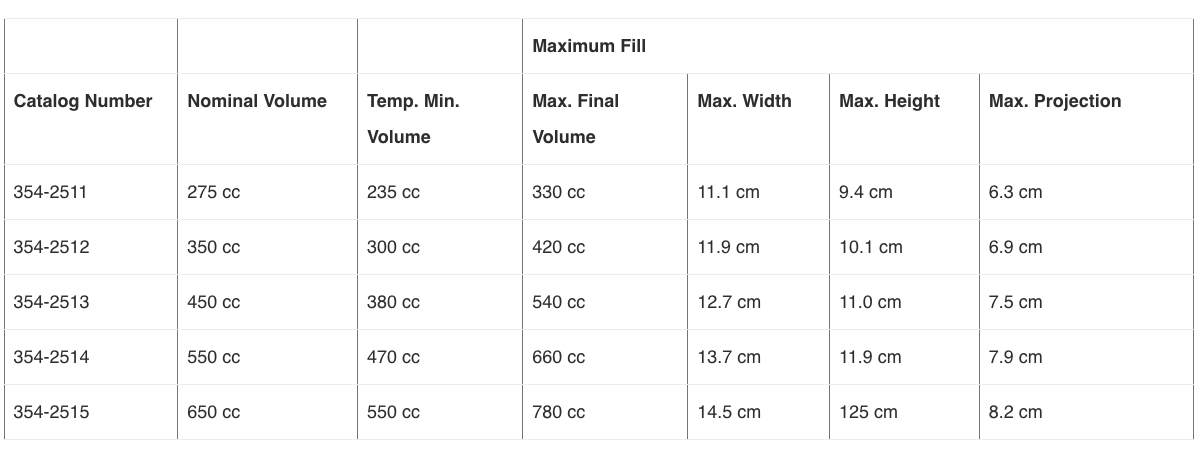
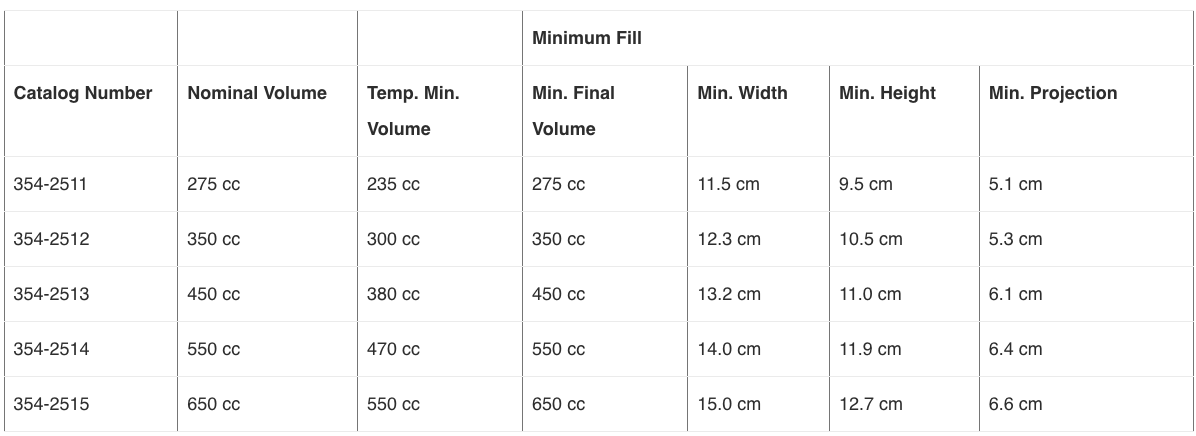
What are the Spectrum® Postoperatively Adjustable Breast Implants? Particularly the Smooth Round Spectrum® Breast Implants? What are their advantages and disadvantages?
The Spectrum® Postoperatively Adjustable Breast Implants are made only by Mentor. The obvious advantage to the adjustability of such breast implants is the ability to enlarge or diminish the size of a breast after the operation. Many women that are quite pleased with the results of their breast augmentation surgery wish that they would have opted for breast implants that were slightly larger, or slightly smaller. Indeed, the decision as to how large of a breast augmentation to request is a tough one. Short of wearing a silicone prosthesis to determine the optimal size for breast enlargement in any particular woman, there are not very many options. This is not what one would call high tech, and at times some patients are unsure in spite of such a maneuver. The Spectrum® Postoperatively Adjustable Breast Implants give a plastic surgeon the ability to adjust the dimensions of an enlarged breast for up to half a year after the fact. This is performed via a tiny fill tube left in place at the time of surgery, adjacent to the incision. The breast implants are filled to a point deemed perfect by the patient, and the tube is removed in the office. The fill volume is generally determined by the amount of injection that a patient would tolerate, and typically that is on order of 50 – 100 cc. Although it is possible to attempt to fill the Spectrum® expandable breast implant years after the surgery in theory, this would probably not be very feasible practically. This is because of the presence of a breast capsule that forms to varying degrees in every breast augmentation patient. Another very powerful reason to use such adjustable implants is when performing breast enlargement surgery along with breast lift surgery. Because the complication rate for this procedure is unacceptable to some aesthetic surgeons they chose to stage it, or perform the breast augmentation separately from the breast lift. The reason for this is that the two procedures stress breast skin more than either one alone. The breast augmentation will stretch breast skin, and place it under tension. The breast lift will excise skin and place it under tension. This excessive tension, in the very least can make for very wide and unattractive scars, and at the worst cause breakdown of the incisions and implant exposure, breast skin and fat (necrosis) death, and possible life-threatening infection. Because the adjustable breast implant does not need to be inflated to full capacity at the time of a simultaneous breast lift and breast enlargement surgery, the augmentation mastopexy can be carried out all in one step. The breast can then be gently and gradually stretched over time. This will obviate the need for an extra surgery. The Smooth Round Spectrum® Style 1400 breast implant, as the name suggests, is a smooth implant of moderate projection that can be filled to the desired size as describe above. It is available in the size listed below.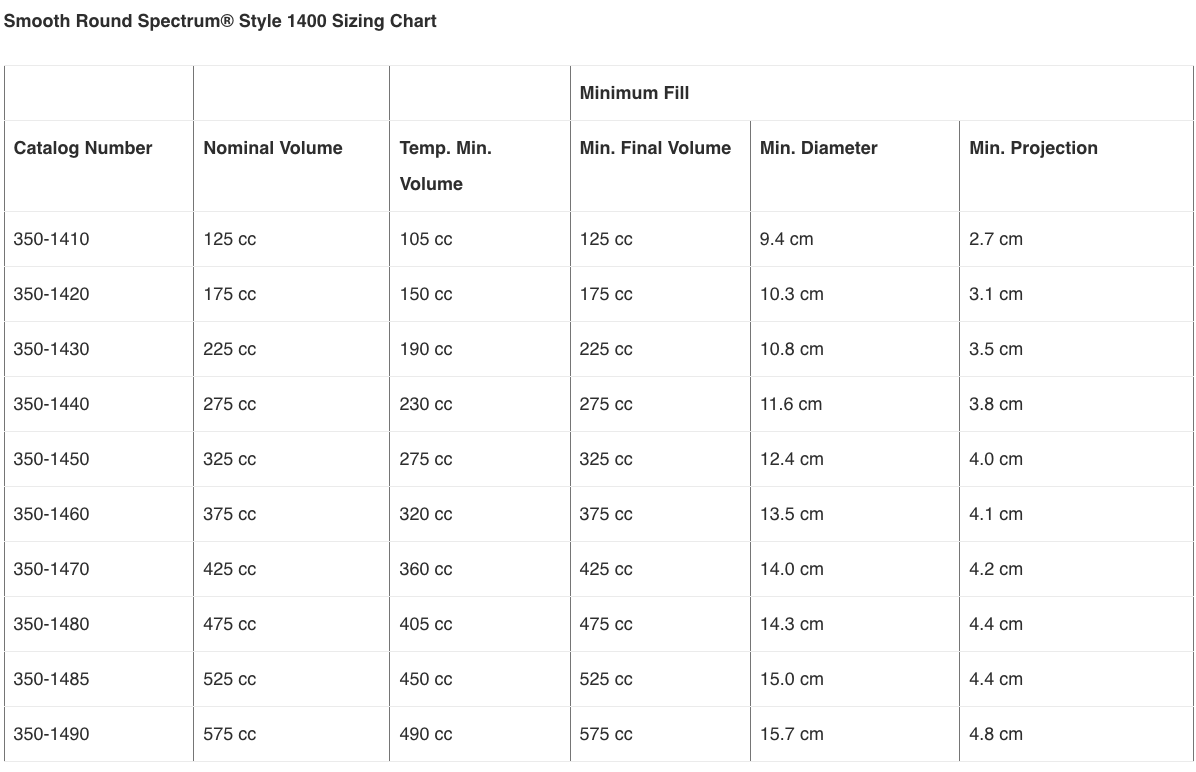
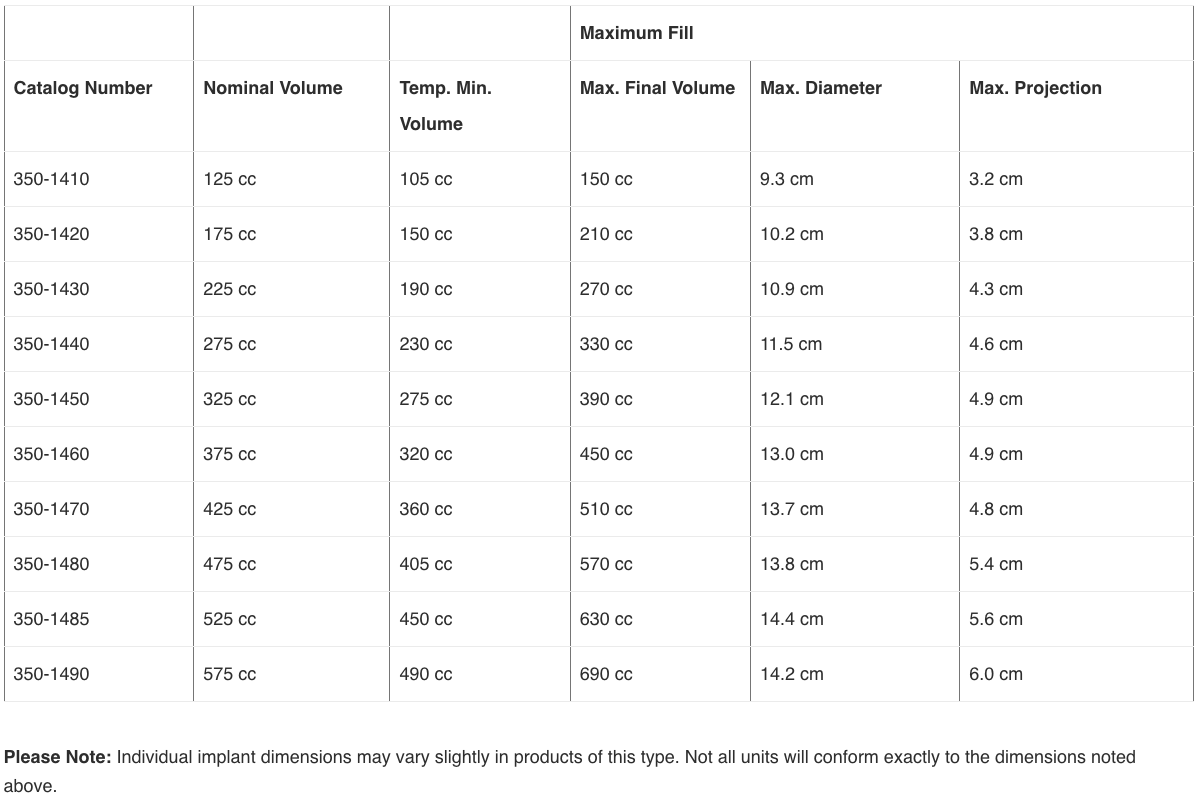
What are the Spectrum® Postoperatively Adjustable Breast Implants? Particularly the Siltex Round Spectrum® Breast Implants? What are their advantages and disadvantages?
The Spectrum® Postoperatively Adjustable Breast Implants are made only by Mentor. The obvious advantage to the adjustability of such breast implants is the ability to enlarge or diminish the size of a breast after the operation. Many women that are quite pleased with the results of their breast augmentation surgery wish that they would have opted for breast implants that were slightly larger, or slightly smaller. Indeed, the decision as to how large of a breast augmentation to request is a tough one. Short of wearing a silicone prosthesis to determine the optimal size for breast enlargement in any particular woman, there are not very many options. This is not what one would call high tech, and at times some patients are unsure in spite of such a maneuver. The Spectrum® Postoperatively Adjustable Breast Implants give a plastic surgeon the ability to adjust the dimensions of an enlarged breast for up to half a year after the fact. This is performed via a tiny fill tube left in place at the time of surgery. The breast implants are filled to a point deemed perfect by the patient, and the tube is removed in the office. Another very powerful reason to use such adjustable implants is when performing breast enlargement surgery along with breast lift surgery. Because the complication rate for this procedure is unacceptable to some aesthetic surgeons they chose to stage it, or perform the breast augmentation separately from the breast lift. The reason for this is that the two procedures stress breast skin more than either one alone. The breast augmentation will stretch breast skin, and place it under tension. The breast lift will excise skin and place it under tension. This excessive tension, in the very least can make for very wide and unattractive scars, and at the worst cause breakdown of the incisions and implant exposure, breast skin and fat (necrosis) death, and possible life-threatening infection. Because the adjustable breast implant does not need to be inflated to full capacity at the time of a simultaneous breast lift and breast enlargement surgery, the augmentation mastopexy can be carried out all in one step. The breast can then be gently and gradually stretched over time. This will obviate the need for an extra surgery. Siltex® Round Spectrum® Style 2400 breast implant, as the name suggests, is a textured implant of moderate projection that can be filled to the desired size as describe above. It is available in the size listed below.
What is subglandular breast implant placement in breast augmentation?
Subglandular placement refers to placement of breast implants under the skin, fat, and breast tissue, but on top of the muscle. As a result of this, patients who are thin, and lack significant breast tissue will have an increased chance for implant palpability. The risk for capsular contracture is also significantly higher for both saline and silicone breast implants when placed over the muscle. The advantage to using this approach is the ability to take up loose skin at the lower poles of the breasts, and avoid the longer incisions necessary for a breast lift in some cases.
Subglandular Vs. Submuscular Vs. “Dual-Plane” Breast Implant Placement
Subglandular placement refers to placement of breast implants under the skin, fat, and breast tissue, but on top of the muscle. As a result of this, patients who are thin, and lack significant breast tissue will have an increased chance for implant palpability. The risk for capsular contracture is also significantly higher for both saline and silicone breast implants when placed over the muscle. The advantage to using this approach is the ability to take up loose skin at the lower poles of the breasts, and avoid the longer incisions necessary for a breast lift in some cases.Submuscular placement puts the breast implant pocket between the ribs of the chest wall and the chest (pectoralis) muscle on top. It is much less prone to cause breast implant palpability than subglandular implant placement, and is associated with a lower risk of scarring and hardness around the implants. Its disadvantage is the propensity to cause a higher riding breast implant. When the pectoralis muscles are contracted the implants are also prone to move up in a very unnatural fashion.The “dual-plane” approach allows placement of the upper portion of the implant under the muscle, and by releasing the lower portion of the muscle allows the lower portion of the breast implant to sit under the breast tissue. This eliminates the drawbacks of both the sub-glandular and sub-muscular placement while retaining the advantages of both. It is the most commonly performed placement in today’s breast augmentation surgery.
What is submuscular breast implant placement in breast augmentation?
Submuscular placement puts the breast implant pocket between the ribs of the chest wall and the chest (pectoralis) muscle on top. It is much less prone to cause breast implant palpability than subglandular implant placement, and is associated with a lower risk of scarring and hardness around the implants. Its disadvantage is the propensity to cause a higher riding breast implant. When the pectoralis muscles are contracted the implants are also prone to move up in a very unnatural fashion.
What is breast enlargement or breast augmentation surgery?
Breast augmentation or enlargement surgery is an operation in which the breasts are made bigger by the addition of mammary implants. The implants may be saline or silicone. The implant is also known as a mammary prosthesis. It typically takes from one half hour to one and a half hours to place the breast device, depending on such things as pocket location, incision, and the type of implant used.
Should I have breast augmentation using textured or smooth breast implants?
There are advantages and disadvantages to using each type of implant for both the surgeon and the patient. Let’s address the concerns of the patient and then discuss the benefits of one type over another in terms of technical pluses and minuses.A lot of information on the differences in outcomes between using textured or smooth implants for breast augmentation comes from anecdotal reporting or confounded studies and is thus as useful as preference or hearsay. With that in mind here are the supposed advantages of one over another with respect to different characteristics that affect breast enlargement.Textured breast implants have a rough surface. The thinking behind this is that if the texture is irregular, cells that form a scar will not as be organized on such a surface, which would result in a softer, more pliable breast capsule, and diminish contracture rates. This disparity in breast capsule formation has never been conclusively demonstrated in studies. Because the textured breast implant does not have a regular surface, it is thicker, but at the same time thought to be weaker, because of its surface flaws. A well-known consequence of using the textured breast implant is its more tenacious adherence to the breast capsule that is laid down around it. This may be an advantage in a woman who has had a teardrop or anatomical implant placed at the time of breast augmentation to hold position. The reason that is important is that the shaped breast implant is not symmetric and must sit in the subglandular or submuscular pocket just so. In a thinner woman, or a woman with minimal native breast tissue, a breast implant that has adhered to the capsule and is not free to move around, will pull on the adjacent breast skin and cause breast surface irregularities. It will also be more palpable, and it may need to be placed through a larger incision owing to its lack of pliability when compared to a smooth breast implant. Textured breast implants may also carry a higher risk of breast implant rupture because any traction or pushing on the breast would also shear the breast implants by virtue of their close association with the breast pocket capsule. Finally, it may be more difficult to remove textured breast implants, again because of their adherence to the breast capsule.
What are Titanium Coated Breast Implants?
The only difference between silicone impants and titanium coated implants is the presence of titanium coating. This is not a palpable, visible difference. It is a thin layer, and is said to impart more strength to the implant. The inert nature of titanium is also predicted to confer to the coating less of a propensity to cause an inflammatory reaction, and thus diminish the rate of capsular contracture.
Am I too old for breast enlargement or breast augmentation surgery?
“Old” age should never be a determining factor for breast enlargement. Breast augmentation surgery should only be withheld from a patient for two reasons. The first reason would be that the patient is medically unfit to have the surgery. They may have lung, heart, kidney, etc. problems. Operating on such patients would put their life in jeopardy. The second subset of patients should not be operated for psychological reasons. They may have the wrong motivation, they may believe that breast enlargement is the answer to all of their life’s problem, they may a have a skewed perception of their body image, or they may be frankly psychologically unfit to make an informed decision and give consent for breast augmentation surgery. Age itself may slow healing, and require some adjustments in the post-operative period, but provided a patient is healthy, they should not be barred from having their breasts enlarged, simply because they are too old.
Am I too young for breast enlargement or breast augmentation surgery?
Although the media likes to harp on a “disturbing trend,” of high school aged kids getting breast augmentation, this is probably more of a trend in the seedier, non Plastic Surgery Board certified “cosmetic” surgeons. Any responsible plastic surgeon knows full well that results are far more predictable after a breast augmentation performed in a patient who has reached her mature breast size. There are exceptions, of course, the two most common ones are women who have almost no breast tissue to begin with, significant growth is not expected, women with tubular breast deformity, and patient’s with Poland’s syndrome.
What is a transumbilical breast augmentation incision?
The trans-umbilical incision is placed at the top of the belly-button. Its obvious advantage is a lack of scars on, around, or near the breasts. Its disadvantages are blind dissection, making asymmetry more common, and making the likelihood of one side being submuscular and the other subglandular more likely. If an undesirable result is obtained, a new incision will be needed to correct the problem. It may also damage the breast implants, and cannot be used with pre-filled silicone breast implants.
What are Trilucent Breast Implants (Peanut Oil Breast Implants, Soy Oil Breast Implants, Soya Oil Breast Implants, Soybean Oil Breast Implants)?
As the above suggests, such breast implants were filled with various organic oils. The hope was that, as in the case of saline, organic oils would be absorbed in the case of a leak without setting up an inflammatory reaction, in the case of implant rupture. Safety data lacking, along with reports of local inflammatory effects on rupture, the implant was taken off the UK market. Further information from the British MHRA (Equivalent of FDA, except for the food part), can be studied below.Trilucent breast implantsThese implants were removed from the market in 1999, and in 2000 the Medical Devices Agency (now MHRA) recommended that these implants should be explanted.The Trilucent™ Care Centre (TCC), which was set up for patients with these implants, closed on December 31 2004. AIE Inc has taken over the functions carried out by the TCC.A clinical research programme was sponsored by AIE Inc and was carried out by an independent panel of experts to investigate the long-term health effects of Trilucent™ implants. This was completed in 2004. The full report concluded that there is no evidence for local or systemic disease risk once the implants have been removed.MHRA issued a device alert (MDA/2004/047) in September 2004 to notify interested parties of the conclusions of this study and the closure of the TCC.Background informationTrilucent™ breast implants were available for sale throughout the EU between 1995 and March 1999. They consisted of a silicone elastomer shell with a lipid filler based on soyabean oil. Since they were first marketed in 1995 over 9,000 implants were sold in the UK, and implanted into almost 5,000 women.As a result of an investigation into reports of inflammation associated with rupture of Trilucent™ breast implants, MDA reviewed the manufacturer’s safety assessment. This revealed serious concerns relating to the long term safety of Trilucent™ breast implants, in particular in relation to the breakdown of the lipid filler. As a result of MDA’s concerns the company voluntarily withdrew the product from the market in March 1999 and MDA issued an Advice Notice AN 1999(01). The withdrawal was a precautionary measure until further information could be gathered about the biological safety and clinical experience with these implants. The advice given at that time was that there was no evidence to suggest that removal of Trilucent™ breast implants was indicated but that women should be advised to seek an immediate consultation if they noticed unusual breast swelling or inflammation associated with their Trilucent™ breast implants.In AN 1999(01) clinicians were advised not to use MRI (magnetic resonance imaging) on women implanted with Trilucent™ breast implants, because of concerns about heating up of the transponder (a device contained within the implant to provide identification information electronically). In the light of subsequent enquiries on the value of MRI for detecting implant rupture, this advice was modified. Clinicians have since been advised to use MRI with caution on women implanted with Trilucent™ breast implants.The first results of further analytical studies on the filling material in Trilucent™ breast implants became available in May 2000. MDA convened a group of independent experts (the Trilucent™ Advisory Group) to consider the available scientific evidence. This Group made an assessment of the risk to women with these implants and provided advice to MDA. A statement summarising the Trilucent™ Advisory Group’s conclusions and advice is available, with the minutes of a meeting held on 19 May 2000 . Based on this advice, MDA issued a Hazard Notice (HN 2000(05)).In 2000, a programme of research was initiated to investigate any potential risks to women implanted with Trilucent™ breast implants. This programme was directed, on behalf of AEI Inc, by a panel of independent experts. The programme was completed in 2004. The panel concluded that:the recommendation that Trilucent™ breast implants should be removed remains appropriate because exposure of local tissue to toxic compounds has been confirmed;there is no evidence for local or systemic disease risk once the implants have been removed; no further studies are needed to assess the potential risk of Trilucent™ breast implants. This information was the subject of MHRA Medical Device Alert MDA/2004/047.Although the research programme has been completed, MHRA continues to record and investigate reports of adverse events associated with Trilucent™ breast implants. If further problems are identified, MHRA will issue advice.Safety information published by MHRA relating to Trilucent™ breast implants:AN1999(01) – Trilucent breast implants: Voluntary recallVoluntary recall of Trilucent breast implantsHN 2000(05) – Trilucent™ breast implants: recommendation to removeRecommendation to explant Trilucent™ breast implantsMDA/2004/047 – Trilucent (soya bean oil filled) breast implantsConclusions of clinical research programme and closure of TCC
Incision Type
The inframammary approach to breast augmentation surgery allows your plastic surgeon the greatest visibility while dissecting an implant pocket, and as such, allows greater precision and control of symmetry. The inframammary incision is placed in the fold under the breast, in the breast fold, and tends to be more noticeable for two reasons. It is typically larger than other types of breast incisions. It has a tendency to migrate as the implant settles up or down, and its final resting place is less predictable.The periareolar incision goes around the nipple. It is less noticeable, smaller than the inframammary incision, and if a lift is required later in time, it may be utilized again. Its disadvantages in breast enlargement surgery are a higher infection (because the cut goes through breast tissue), it may be more difficult to breastfeed after this type of breast augmentations, and it may decrease breast skin and nipple sensation or infection more of a concern.Placing the incision in the axilla (underarm) allows for a smaller incision. It is useful when there is not much breast tissue present to begin with, and thus no prominent breast fold, and when the nipple-areola complex is small. It is not as well concealed as the periareolar incision, gives less control in terms of the ability to feel around the breast pockets in assuring symmetry, and placement of silicone breast implants will necessitate a larger incision which may be less pleasing.The peri-umbilical incision is placed at the top of the belly-button. Its obvious advantage is a lack of scars on, around, or near the breasts. Its disadvantages are blind dissection, making asymmetry more common, and making the likelihood of one side being submuscular and the other subglandular more likely. If an undesirable result is obtained, a new incision will be needed to correct the problem. It may also damage the breast implants, and cannot be used with pre-filled silicone breast implants.
What is implant exposure or breast implant extrusion after breast enlargement surgery with silicone breast implants, what are the consequences, and what is the treatment?
The exact risk percentage may be found for both the Allergan, and the Mentor studies in related questions. The problem most often is the result of inadequate soft tissue (breast and skin) overlying the breast implants. It is unusual in cases of primary augmentation, and is more commonly seen in the compromised soft tissue of the reconstructed breast, with or without a history of radiation. If the extrusion if only threatened, and no implant is actually showing at the time of detection, a salvage procedure may be done to improve the soft tissue cover atop the implant. If the implant is exposed, many plastic surgeons will not attempt salvage, as by definition, and exposed implant is a contaminated implant. The breast implant will be removed, patient allowed to heal, and implant replaced at a later time.
Is implant removal common after breast augmentation surgery with silicone breast implants?
Silicone, and for that matter saline breast implants are deemed by both Mentor and Allergan as “not lifetime devices.” The longer the implants have been present the higher the chances for removal with or without replacement for various reasons. Grounds for removal +/- replacement may include displeasure with the cosmetic appearance of the breasts, severe capsular contracture, etc. Silicone breast implant removal and replacement puts the patient at greater risk for complications and reoperations in the future.In Mentor’s Core Study, patients who’d undergone primary breast augmentation, 5% had implant removal at least once over the first 3 post-operative years. In revision-augmentation patients, the rate was 12% over the same time span. In both populations, patient choice and capsular contracture were the primary reasons for removal.In Allergan’s Core Study, patients who’d undergone primary breast augmentation, 9% had implant removal at least once over the first 4 post-operative years. In revision-augmentation patients, the rate was 12% over the same time span. In both populations, patient choice and capsular contracture were the primary reasons for removal.Most patients in who have had their implants explanted, will opt for replacement. Some women do not. This may have adverse cosmetic effects in itself, such such puckering, wrinkling, loose skin, dimpling, and drooping.
Is there a way to tell my own breast tissue from silicone breast implants during self examination?
Distinguishing native breast tissue from silicone breast implants is a necessary part of breast self-examination. It may be more difficult to tell breast tissue from silicone breast implants as compared to saline breast implants given the softer consistency of silicone. If you encounter difficulties, ask your plastic surgeon to demonstrate the appropriate technique for breast self-examination and point out the difference between breast implants and breast tissue.
Is infection common after breast enlargement surgery with silicone breast implants, what are the consequences, and what is the treatment?
Any surgery, in any discipline carries a risk of infection. The risk is calculated based on the degree of contamination for a particular operation. Breast augmentation is considered a “clean” surgery, and carries an overall infection rate of less than two percent. If infection should take place, it will most often affect one or more of three patterns, assuming there is no disseminated spread, and the infection remains localized. Infection can occur in the skin, in the soft tissue surrounding the implant, and in the form of a pus pocket. Skin infection will usually respond to oral antibiotics. Soft tissue infections surrounding the breast implant may respond to oral antibiotics, will sometimes require intravenous antibiotics, and in other cases need to be treated with implant removal. If the infection should progress to, or start out as an abscess (pus-pocket), the only treatment that will be effective in treating the infection and preventing more serious systemic complications is drainage of pus and breast implant removal. Toxic Shock Syndrome (TSS) may result from the presence of a foreign body (breast implant in this case) in the setting of an infection, and is a truly life-threatening condition that needs to be addressed immediately. It is marked by high fever, nausea and vomiting, diarrhea, light-headedness and possibly loss of consciousness, and a diffuse rash. The treatment is timely institution of IV antibiotics, and breast implant removal. If the breast implant is removed, the infection should be treated, the inflammation allowed to resolve, and a new implant placed weeks down the road.
Should I have breast augmentation using silicone or saline prosthesis?
To begin with let’s address the controversy surrounding silicone filled breast implants. There is a well known reporter of Asian descent married to an ex-talk show host who built a career on sensational reporting without any basis in fact, that cheated millions of women out of a perfectly soft, and natural silicone breast augmentation. As is the case with many such issues, the truth was not nearly as well publicized. For a decade, the truth was not made public at all. To add to this, countless cases of alleged harms stemming from the implantation of silicone implants were exploited by immoral attorneys. Since the 1990’s, silicone breast implants have been shown to impart no increase in the incidence of breast, cancer, immune disease, or any other malady so eagerly imparted to them by dishonest litigators, and melodramatic fortune seekers with no regard for the effect it would have on women interested in breast augmentation, and especially augmentation combined with a breast lift. Silicone implants have several drawbacks but in the opinion of many plastic surgeons, such shortcomings are far outweighed by the benefits afforded by their use in breast augmentation. Silicone breast implants are thought to produce a softer breast, less breast contour deformities, and a substantially more natural feel on breast contact than saline breast implants. The drawbacks to silicone mammary prosthesis use are twofold. The first is difficulty in the detection of breast implant rupture. When silicone breast implants rupture, the saline that was used to fill them is reabsorbed, and the discrepancy between what was and what is, or between what the size of the unaffected breast and the side of the affected breast is very obvious. When silicone breast implants rupture, the silicone fill is not absorbed. The change in the affected breast is more consistent with a shape change than a size change. As a consequence, this becomes much more difficult to detect. This would not be a problem, however, silicone incites a significant inflammatory reaction in many patients, leading to a dense capsule, and making it difficult to remove the old breast implant, and achieve a predictable result in placing the new one at the same operation. Staging, or breaking the operation presents the patient with the nuisance of two surgeries. For this reason, a patient with silicone breast implants must be very vigilant in monitoring for signs of implant rupture, as early detection, and re-implantation, makes it much less likely that a significant inflammatory reaction, or a tough breast implant capsule will form.
Is pain normal after breast augmentation surgery with silicone implants?
The breast enlargement surgery itself should be painless, whether performed under sedation with local anesthetic, or general anesthesia. It is the postoperative period that some may find brings discomfort. Assuming the postoperative course is without complication, pain from breast augmentation surgery peaks the day after surgery, and diminishes over the course of the following three to four days to be tolerable enough without the use of narcotics. Of course, pain tolerance varies significantly from patient to patient. The 72-96 hrs time frame is a “ballpark” figure, and a reflection of personal experience. Several other important factors are crucial to consider in breast enlargement surgery. Pre-incisional administration of local or dilute local (called tumescent) anesthetic greatly diminishes postoperative breast enlargement surgery pain. Postoperative pain and tenderness can be further affected by breast implant placement position. Sub-muscular placement or “dual plane” placement may cause substantially more discomfort than sub-glandular placement because of muscle dissection. If a skin excision is necessary, pain may be more pronounced. The injection of local anesthetic at the conclusion of breast augmentation surgery greatly diminishes postoperative discomfort. In addition, a more effective multiple intercostal nerve block may be performed. Finally, a small catheter may be placed, within the breast implant pocket, for the purpose of delivering local anesthetic in the post breast enlargement surgery period. This has been shown in studies to help significantly with postoperative discomfort. In short, breast enlargement surgery is very well tolerated in most patients.Having stated all of this, it is important to note that pain should get progressively better. Pain that is persistent, uncontrolled by pain medication, or increases in duration and/or intensity after breast augmentation may be a sign of post-operative complication and requires prompt attention.
Is seroma (fluid accumulation as your body attempts to fill a potential space) common after breast enlargement surgery with silicone breast implants, what are the consequences, and what is the treatme
In breast augmentation surgery, a space is created under the soft tissues of the chest wall. This is the space where the breast implant is placed. The size of the pocket and the size of the implant are seldom identical, and the discrepancy creates a potential space where fluid can collect. The dissection through the soft tissue to the breast implant pocket also makes a potential space for fluid to collect. Sometimes a long standing blood collection can leave a space after it is resorbed. Most seromae resolve with only a few drainage attempts, without an incision. In cases where post-breast augmentation seromae fail to resolve, lining of the fluid pocket needs to be excised because this is what makes the fluid.
Is breast tissue or skin flap death (necrosis) common after breast augmentation surgery with silicone breast implants?
Necrosis of breast tissue or soft tissues and skin is very unusual after breast augmentation only, it is much more likely in the case of a breast lift where a significant amount of tissue is removed. Necrosis is the result of loss of blood supply, hence oxygen, leading to tissue death. Blood supply is lost when dissection proceeds through tissue containing vessels that supply a given area, and transects them. Since multiple vessels usually supply any given area of breast and skin, sacrifice of a few vessels is usually well tolerated. The use of nicotine in any form (smoking, chewing, gum, patch, etc.), chemotherapy, radiation, corticosteroids, contamination all compromise blood supply and make the sacrifice of even a few vessels a significant risk for breast tissue death.
Am I a good candidate for the use of silicone gel-filled breast implants in my breast augmentation surgery?
Silicone implants have several drawbacks but in the opinion of many plastic surgeons, such shortcomings are far outweighed by the benefits afforded by their use in breast augmentation. Silicone breast implants are thought to produce a softer breast, less breast contour deformities, and a substantially more natural feel on breast contact than saline breast implants. The drawbacks to silicone mammary prosthesis use are twofold. The first is difficulty in the detection of breast implant rupture. When silicone breast implants rupture, the saline that was used to fill them is reabsorbed, and the discrepancy between what was and what is, or between what the size of the unaffected breast and the side of the affected breast is very obvious. When silicone breast implants rupture, the silicone fill is not absorbed. The change in the affected breast is more consistent with a shape change than a size change. As a consequence, this becomes much more difficult to detect. This would not be a problem, however, silicone incites a significant inflammatory reaction in many patients, leading to a dense capsule, and making it difficult to remove the old breast implant, and achieve a predictable result in placing the new one at the same operation. Staging, or breaking the operation presents the patient with the nuisance of two surgeries. For this reason, a patient with silicone breast implants must be very vigilant in monitoring for signs of implant rupture, as early detection, and re-implantation, makes it much less likely that a significant inflammatory reaction, or a tough breast implant capsule will form. The ideal candidate for a primary breast augmentation with silicone, therefore, is a patient who is secure with silicone as implantation material, is very aware of the shape of her breasts, and vigilant in monitoring for rupture, has a very small amount of native breast tissue, or has a significant amount of droop and desires sub-glandular placement to correct it with minimal incisions.
Is silicone gel-filled breast implant rupture obvious, or easily detected?
When a saline implant ruptures, the saline absorbed within a matter of days. When a silicone breast implant ruptures, the silicone is not absorbed. It remains within the capsule. The shape of the breast may change, but the difference is often undetected in the majority of cases, by patient and by surgeon, and the diagnosis must be established via MRI. If rupture is detected, the breast implant should be removed.In the Allergan Core Study, primary silicone breast augmentation patients who were screened by MRI had a rupture rate of 2.7%, and silicone breast implant revision-augmentation patients had a rupture rate of 4% over 4 years. A European study found a rupture rate of 11% over 15 years. In either study there were no instances of gel migration. There are currently large Allergan post-approval studies being conducted for further safety data.In the Mentor Core Study, primary silicone breast augmentation patients who were screened by MRI had a rupture rate of .5%, and silicone breast implant revision-augmentation patients had a rupture rate of 7.7% over 3 years.
Are unsatisfactory results common after breast augmentation surgery with silicone breast implants?
A patient may be displeased for any number of reasons. The incidence of reoperation for a unsatisfactory result was shown to be roughly 2% of the 15-24% overall re-operative incidence in primary breast augmentation. So, the incidence of reoperations for unsatisfactory results seems to be well below 1%. This is not to say that all patients who are dissatisfied, are dissatisfied to the point of wanting another operation to address the problem, but the answer to whether or not unsatisfactory results are common is no.
Is breast tissue or skin flap death (necrosis) common after breast augmentation surgery?
Necrosis of breast tissue or soft tissues and skin is very unusual after breast augmentation only, it is much more likely in the case of a breast lift where a significant amount of tissue is removed. Necrosis is the result of loss of blood supply, hence oxygen, leading to tissue death. Blood supply is lost when dissection proceeds through tissue containing vessels that supply a given area, and transects them. Since multiple vessels usually supply any given area of breast and skin, sacrifice of a few vessels is usually well tolerated. The use of nicotine in any form (smoking, chewing, gum, patch, etc.), chemotherapy, radiation, corticosteroids, contamination all compromise blood supply and make the sacrifice of even a few vessels a significant risk for breast tissue death.
What Were The Main Reasons For Implant Removal in The Allergan Core Study for Primary Augmentation with INAMED® Silicone Breast Implants?
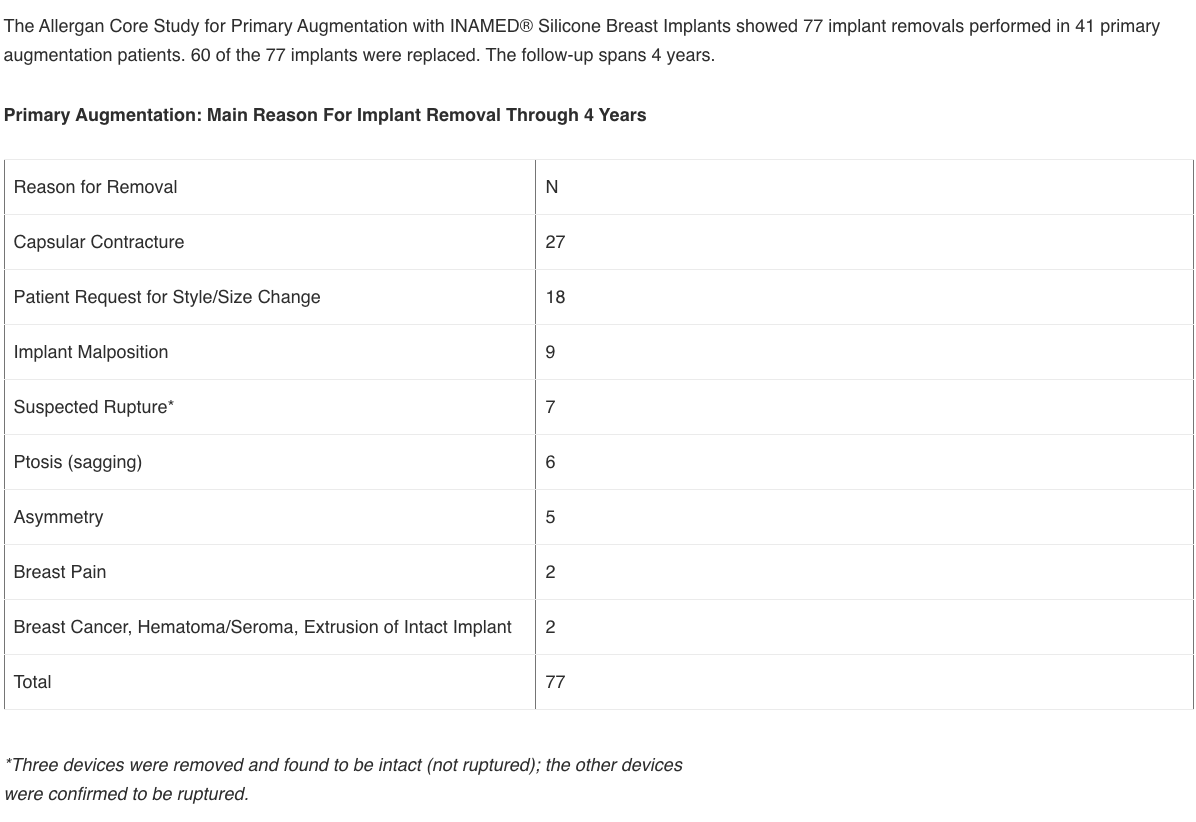
What Were The Complication Rates After 4 Years of Follow-up?
Complications rates reported In The Allergan Core Study for Primary Augmentation with INAMED® Silicone Breast Implants are shown below.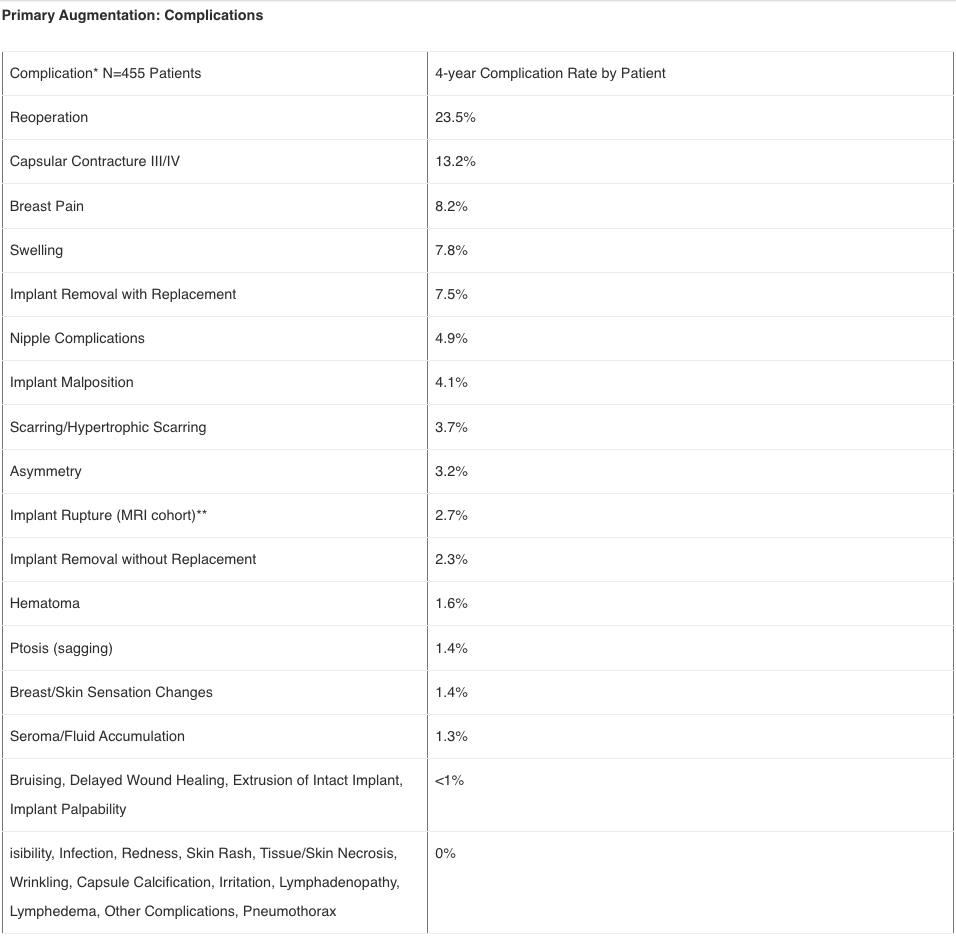
*Most events were assessed with severity ratings, and the rates shown in the table include only complications rated moderate, severe or very severe (excludes mild andvery mild ratings). All occurrences of reoperation, implant removal, implant rupture,implant extrusion and pneumothorax are included.**There was one patient with a suspected rupture of one of her implants. This rupture has not yet been confirmed with removal and visual inspection of the implant.Complications rates reported In The Allergan Core Study for Revision Augmentation with INAMED® Silicone Breast Implants are shown below.
Revision-Augmentation: Complications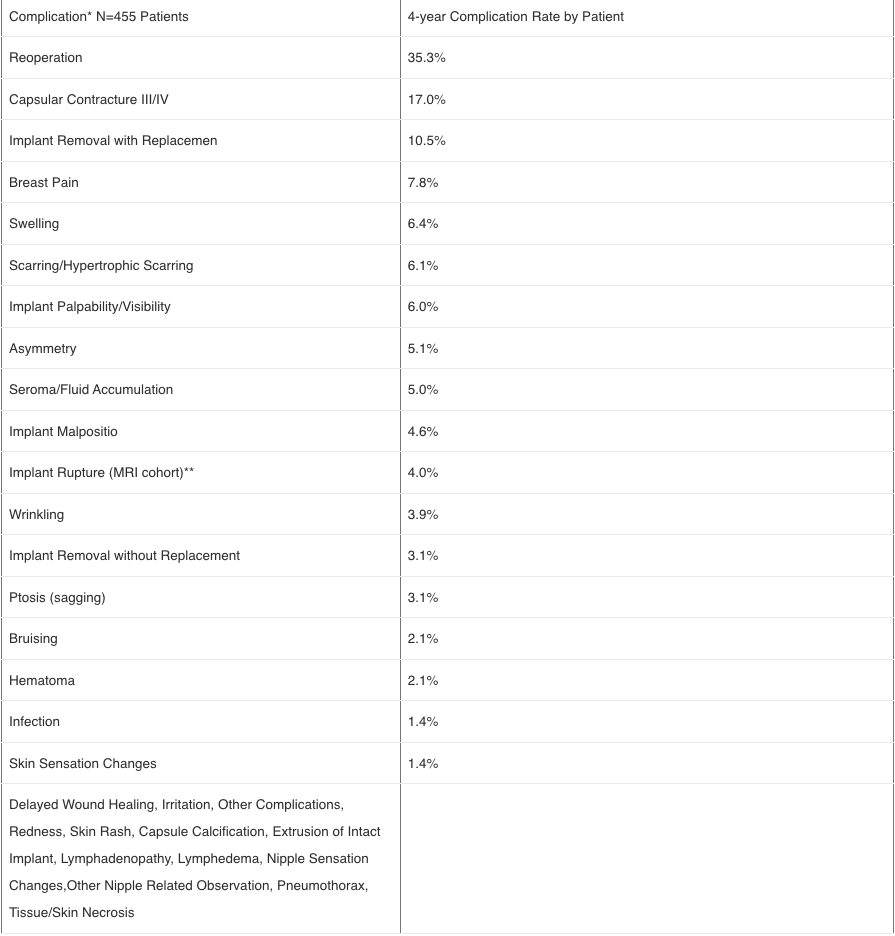
*Most events were assessed with severity ratings, and the rates shown in the table include only complications rated moderate, severe or very severe (excludes mild andvery mild ratings). All occurrences of reoperation, implant removal, implant rupture,implant extrusion and pneumothorax are included.**There were two patients with a suspected rupture in one of their implants. These two ruptures have not yet been confirmed with removal and visual inspection of the implants.
What Were The Benefits to Silicone Breast Augmentation according to the Allergan Core Study on INAMED® Silicone-Filled Breast Implants?
Positive outcomes in the Allergan Core Study with INAMED® Silicone-Filled Breast Implants were reported as follows.In patients who have undergone primary silicone breast augmentation, 396 (87%) of the total 455 patients underwent breast measurement within 1 and ½ years of surgery. 41% increased by 1 cup size; 45% increased by 2 cup sizes; 8% increased by more than 2 cup sizes; and 6% had no increase or decrease. Patient contentment was based on a 5-point scale evaluation of satisfaction with their silicone breast implants at the time of the follow-up visits. Of the total 455 breast augmentation patients in the study, 364 (80%) gave a satisfaction rating four years after surgery. 346 (95%) were satisfied with their silicone breast implants. According to the commonly used mental and physical health scales (SF-36) and self-esteem scale (Rosenberg), primary augmentation patients showed no significant changes after 4 years. There was a decrease in self-concept on the Tennessee Self Concept Scale in the same time span.Breast measurement were not obtained in revision-augmentation patients since implants were already in place and being exchanged.Patient contentment was based on a 5-point scale evaluation of satisfaction with their silicone breast implants at the time of the follow-up visits. Of the total 146 breast revision-augmentation patients in the study, 111 (76%) gave a satisfaction rating four years after surgery. 96 (87%) were satisfied with their silicone breast implants. According to the commonly used mental and physical health scales (SF-36) and self-esteem scale (Rosenberg), primary augmentation patients showed no significant changes after 4 years. There was a decrease in self-concept on the Tennessee Self Concept Scale in the same time span.
What was the followup rate in the Allergan Core Study on INAMED® Silicone-Filled Breast Implants?
The Allergan Core Study on INAMED® Silicone-Filled Breast Implants has divulged an overall risk for any given complication over the first four years of 41% in primary breast silicone augmentation patients, and 57% for revision-augmentation patients. Of the 455 primary silicone breast augmentation patients enrolled in the study, 83% followed up (378 patients). Of the 147 primary silicone breast augmentation patients enrolled in the study, 83% followed up (378 patients). Of the 147 silicone breast reconstruction patients enrolled in the study, 82% followed up (121 patients).
What Were The Main Reasons For Reoperation in The Allergan Core Study for Primary Augmentation with INAMED® Silicone Breast Implants?
The Allergan Core Study for Primary Augmentation with INAMED® Silicone Breast Implants showed an additional 345 procedures performed in 135 reoperations involving 103 primary augmentation patients. 39 of the procedures may be attributed to capsular contracture. The follow-up spans 4 years.
What were the Allergan Core Study Results on INAMED® Silicone-Filled Breast Implants for primary augmentation and revision-augmentation?
The Allergan Core Study is the primary clinical study for INAMED® Silicone-Filled Breast Implants. Individual outcomes cannot be predicted by the study, but expectations, benefits, and chances for a particular negative event may become more clear. The study took place over a 10-year period and was performed to determine the safety and value of the use of silicone breast implants in breast augmentation, breast reconstruction, and breast revision, whether after enlargement or augmentation patients.Silicone breast implant patients were seen weekly for a month, at half a year, and then yearly for 10 years. Safety evaluated through noting the incidence of complications, like infection, capsular contracture, silicone implant rupture, and the need for more surgery. Benefits were ascertained via patient satisfaction and quality of life measures. The Allergan Core Study of INAMED® Silicone-Filled Breast Implants involved 715 patients. Procedures performed included 455 primary silicone breast augmentations, 147 revision-augmentations, 98 breast reconstructions, and 15 revision-reconstructions. Silent rupture was assessed via MRI in 158 primary silicone breast augmentation patients, 50 revision-augmentation patients, 51 primary breast reconstruction patients, and 5 revision-reconstruction patients. The imaging was performed at year after operation, and then at 2 year intervals. It was designed to end at year 9 after surgery, and is updated on a rolling basis. The study has thus far reported on the first four years.
What is the difference between silicone and saline filled breast implants?
The difference between the two types of implants is obvious. Silicone breast prostheses are filled with a silicone, while saline breast implants are filled with saline. The actual breast implant sack, called a breast implant shell, is made of a rubbery silicone elastomer, regardless of whether the implants are silicone, or saline. Apart from certain advantages and disadvantages with respect to the technical outcome of breast augmentation surgery, the basic difference is that silicone implants come filled, while saline implants are filled at the time of surgery. One advantage to saline breast implants that stems from this, is the ability to fill the two breasts with slightly different volumes to correct any small changes in size between the two breasts present before surgery. The answer to the question as to which type of implant to use in breast augmentation surgery has supporters on both the saline breast implant, and the silicone breast implant side. To begin with let’s address the controversy surrounding silicone filled breast implants. There is a well known reporter of Asian descent married to an ex-talk show host who built a career on sensational reporting without any basis in fact, that cheated millions of women out of a perfectly soft, and natural silicone breast augmentation. As is the case with many such issues, the truth was not nearly as well publicized. For a decade, the truth was not made public at all. To add to this, countless cases of alleged harms stemming from the implantation of silicone implants were exploited by immoral attorneys. Since the 1990’s, silicone breast implants have been shown to impart no increase in the incidence of breast, cancer, immune disease, or any other malady so eagerly imparted to them by dishonest litigators, and melodramatic fortune seekers with no regard for the effect it would have on women interested in breast augmentation, and especially augmentation combined with a breast lift. Silicone implants have several drawbacks but in the opinion of many plastic surgeons, such shortcomings are far outweighed by the benefits afforded by their use in breast augmentation. Silicone breast implants are thought to produce a softer breast, less breast contour deformities, and a substantially more natural feel on breast contact than saline breast implants. The drawbacks to silicone mammary prosthesis use are twofold. The first is difficulty in the detection of breast implant rupture. When silicone breast implants rupture, the saline that was used to fill them is reabsorbed, and the discrepancy between what was and what is, or between what the size of the unaffected breast and the side of the affected breast is very obvious. When silicone breast implants rupture, the silicone fill is not absorbed. The change in the affected breast is more consistent with a shape change than a size change. As a consequence, this becomes much more difficult to detect. This would not be a problem, however, silicone incites a significant inflammatory reaction in many patients, leading to a dense capsule, and making it difficult to remove the old breast implant, and achieve a predictable result in placing the new one at the same operation. Staging, or breaking the operation presents the patient with the nuisance of two surgeries. For this reason, a patient with silicone breast implants must be very vigilant in monitoring for signs of implant rupture, as early detection, and re-implantation, makes it much less likely that a significant inflammatory reaction, or a tough breast implant capsule will form.
Will I be able to breast feed after breast enlargement surgery with silicone breast implants?
Breast augmentation surgery should not affect breast feeding. Because breasts gain more projection and substance after enlargement, they are typically easier to hold. Because they protrude more, and are easier to hold, breast feeding becomes much easier. Paradoxically breast feeding is actually less difficult for some women, after breast augmentation surgery. Given all of this, however, there are studies showing that women with breast implants report an inability to feed in up to 2/3’s of the implanted population, compared to 7 in 100 for women without breast implants. It is doubtful, however, that matching for size and age such results would ever hold up.
Is breast tissue atrophy common after breast enlargement surgery with silicone breast implants?
Breast tissue atrophy may be a result of aging, or the pressure exerted by a usually large breast implant in relation to the patient breast and chest wall size. This adverse effect is not very common.
Can calcium collections in the breast after silicone breast implant surgery be mistaken for cancer?
Besides cancer, calcium accumulates in areas of trauma or inflammation such as surgical sites. Although calcium present in and/or around tumors has a distinct configuration, it may be mistaken for a possible malignancy with a resultant recommendation for biopsy and/or extirpative surgery. Such procedures may result in the need for implant removal and replacement, or even breast reconstruction. A baseline mammogram prior to breast augmentation , and radiologic centers experienced in the Eklund technique would likely diminish the chances for this.
Is there an association between breast augmentation surgery with silicone breast implants and cancer, or other serious conditions?
According to multiple studies, there is no association between breast enlargement surgery and breast cancer.The following is an excerpt from a US breast implant manufacturers on the subject.“Breast CancerReports in the medical literature indicate that patients with breast implants are not at a greater risk than those without breast implants for developing breast cancer. Some reports have suggested that breast implants may interfere with or delay breast cancer detection by mammography and/or biopsy; however, other reports in the published medical literature indicate that breast implants neither significantly delay breast cancer detection nor adversely affect cancer survival of women with breast implants.Brain cancerOne recent study has reported an increased incidence of brain cancer in women with breast implants as compared to the general population. The incidence of brain cancer, however, was not significantly increased in women with breast implants when compared to women who had other plastic surgeries. Another recently published review of four large studies in women with cosmetic implants concluded that the evidence does not support an association between brain cancer and breast implants.Respiratory/Lung CancerOne study has reported an increased incidence of respiratory/lung cancer in women with breast implants. Other studies of women in Sweden and Denmark have found that women who get breast implants are more likely to be current smokers than women who get breast reduction surgery or other types of cosmetic surgery. Cervical/vulvar cancer – One study has reported an increased incidence of cervical/vulvar cancer in women with breast implants. The cause of this increase is unknown.Other CancersOne study has reported an increased incidence of stomach cancer and leukemia in women with breast implants compared to the general population. This increase was not significant when compared to women who had other types of plastic surgeries.Neurological Disease, Signs, and SymptomsSome women with breast implants have complained of neurological symptoms (such as difficulties with vision, sensation, muscle strength, walking, balance, thinking or remembering things) or diseases (such as multiple sclerosis), which they believe arerelated to their implants. A scientific expert panel report found that the evidence for a neurological disease or syndrome caused by or associated with breast implants is insufficient or flawed.SuicideIn several studies, a higher incidence of suicide was observed in women with breast implants. The reason for the observed increase is unknown, but it was found that women with breast implants had higher rates of hospital admission due to psychiatriccauses prior to surgery, as compared with women who had breast reduction or in the general population of Danish women.Effects on ChildrenAt this time, it is not known if a small amount of silicone may pass through from the breast implant silicone shell into breast milk during breastfeeding. Although there are no current established methods for accurately detecting silicone levels in breast milk, astudy measuring silicon (one component in silicone) levels did not indicate higher levels in breast milk from women with silicone gelfilled implants when compared to women without implants. In addition, concerns have been raised regarding potential damaging effects on children born to mothers with implants. Two studies in humans have found that the risk of birth defects overall is not increased in children born after breast implant surgery. Although low birth weight was reported in a third study, other factors (for example, lower pre-pregnancy weight) may explain this finding. This author recommended further research on infant health.Potential Health Consequences of Gel BleedSmall quantities of low molecular weight (LMW) silicone compounds, as well as platinum (in zero oxidation state), have been found to diffuse (“bleed”) through an intact implant shell. The evidence is mixed as to whether there are any clinical consequences associated with gel bleed. For instance, studies on implants implanted for a long duration have suggested that such bleed may be a contributing factor in the development of capsular contracture and lymphadenopathy. However, evidence against gel bleed being a significant contributing factor to capsular contracture and other local complications, is provided by the fact that there are similar or lower complication rates for silicone gelfilled breast implants than for saline-filled breast implants. Saline filled breast implants do not contain silicone gel and, therefore, gel bleed is not an issue for those products. Furthermore, toxicology testing has indicated that the silicone material used in the Mentor implants does not cause toxic reactions when large amounts are administered to test animals. It also should be noted that studies reported in the literature have demonstrated that the low concentration of platinum contained in breast implants is in the zero oxidation (most biocompatible) state. In addition, two separate studies sponsored by Mentor have demonstrated that the low concentration of platinum contained in its breast implants is in the zero oxidation (most biocompatible) state. Mentor performed a laboratory test to analyze the silicones and platinum (used in the manufacturing process), which may bleed out of intact implants into the body. Over 99% of the LMW silicones and platinum stayed in the implant. The overall body of available evidence supports tat the extremely low level of gel bleed is of no clinical consequence.”
What is capsular contracture after breast enlargement surgery with silicone breast implants?
A breast implant capsule is the firm, sometimes hard and thick, scar tissue that forms on the inside of the breasts and surrounds the breast implants after breast enlargement surgery. This sphere can contract over time, and squeeze the breast implants (capsular contracture). This would certainly place the breast implants in one position with almost no mobility. The positions of the left and right implants may be distorted with respect to each other, and also in relation to the chest wall. The shape of the breasts may also be made abnormal in any direction. The breasts may also feel unnaturally hard. Finally, significant pain may also be present. The incidence of capsular contracture is thought by many plastic surgeons to be related to blood collection, fluid collection, contamination, or infection at the time of breast enlargement surgery. It is also more common when the breast implants are placed on top rather than behind the pectoralis muscle, and in revision-augmentation. Capsular contracture after breast augmentation is also a risk factor for implant rupture owing to the squeezing of the breast implant by the capsule. This capsular contracture is the most common overall reason for re-operation in breast augmentation patients. It is assigned various grades of severity as noted below, with grades 3 and 4 generally requiring re-operation.Baker Grade I:the breast is normally soft and looks naturalBaker Grade II:the breast is a little firm but looks normalBaker Grade III:the breast is firm and looks abnormalBaker Grade IV:the breast is hard, painful, and looks abnormalSurgical options for the treatment of capsular contracture include releasing the capsule circumferentially, completely excising the capsule, or even the former or latter combined with breast implant replacement. Regardless of the intervention, there is no guarantee against the recurrence of capsular contracture.The Mentor Core Study put the risk of capsular contracture at 8% for the first 3 years after operation for primary augmentation patients. In revision-augmentation the risk was much higher at 19% over the first 3 years.The Allergan Core Study put the risk of capsular contracture at 13% for the first 4 years after operation for primary augmentation patients. In revision-augmentation the risk was much higher at 17% over the first 4 years.
Is chest wall deformity common after breast enlargement surgery with silicone breast implants?
Chest wall deformity may be a result of aging, or the pressure exerted by a usually large breast implant in relation to the patient breast and chest wall size. This adverse effect is not very common.
Is there an asociation between silicone breast implants and connective tissue disease?
Pseudoscientific “studies” reported on cases of connective tissue disease supposedly associated with breast implant use in breast augmentation surgery. No study to date has ever demonstrated this. Many women who went on to develop connective tissue disease after breast augmentation attributed the problem to the implants, but the truth is that the incidence of such patients within the breast enlargement population and the general population is the same.The following is an excerpt from a US breast implant manufacturer on the subject.“Connective Tissue Disease (CTD)Connective tissue diseases include diseases such as lupus, scleroderma, and rheumatoid arthritis. Fibromyalgia is a disorder characterized by chronic pain in the muscles and soft tissues surrounding joints, with tenderness at specific sites in the body. It is often accompanied by fatigue. There have been a number of published epidemiological studies which have looked at whether having a breast implant is associated with having a typical or defined connective tissue disease. The study size needed to conclusively rule out a smaller risk of connective tissue disease among women with silicone gel-filled breast implants would need to be very large. The published studies taken together show that breast implants are not significantly associated with a risk of developing a typical or defined connective tissue disease. These studies do not distinguish between women with intact and ruptured implants. Only one study evaluated specific connective tissue disease diagnoses and symptoms in women with silent ruptured versus intact implants, but it was too small to rule out a small risk.CTD Signs and SymptomsLiterature reports have also been made associating silicone breast implants with various rheumatological signs and symptoms such as fatigue, exhaustion, joint pain and swelling, muscle pain and cramping, tingling, numbness, weakness, and skin rashes. Scientific expert panels and literature reports have found no evidence of a consistent pattern of signs and symptoms in women with silicone breast implants. Having these rheumatological signs and symptoms does not necessarily mean you have a connective tissue disease; however, you should be aware that you may experience these signs and symptoms after undergoing breast implantation. If you notice an increase in these signs or symptoms, you should consider seeing a rheumatologist to determine whether these signs or symptoms are due to a connective tissue disorder or autoimmune disease.”
Does baby get exposed to silicone that diffuses from silicone breast implants?
Silicon concentrations in breast milk were not shown to be higher in women with silicone breast implants versus women without silicone breast implants. Silicon is a component in silicone, so that the study looking at this was not wholly conclusive, and if any component of silicone is in fact present in breast milk the effects of this will not be known until further studies are performed.
What is a periareolar incision in breast enlargement surgery?
The periareolar incision goes around the nipple. It is less noticeable, smaller than the inframammary incision, and if a lift is required later in time, it may be utilized again. Its disadvantages in breast enlargement surgery are a higher infection rate (because the cut goes through breast tissue), possible difficulty in breastfeeding, and the risk of decreased sensation in breast skin and nipple sensation.
What are PIP Saline Breast Implants?
(PIP=Poly Implant Prosthesis) Saline Breast Implants are simply silicone elastomer shell breast implants pre-filled with saline. The touted advantages of this breast implant is two-fold. The first is that the implant shell is thinner and, has a more natural feel, like that of silicone implants. The second is that no filling is required at the time of surgery minimizing the risk of contamination, and cutting down operative time. Bot points are moot since the PIP Saline Breast Implants are not available in the US, secondary to a lack of submitted safety data.
Should I opt for Subglandular, Submuscular, or the “Dual-Plane” Breast Implant Placement?
Subglandular placement refers to placement of breast implants under the skin, fat, and breast tissue, but on top of the muscle. As a result of this, patients who are thin, and lack significant breast tissue will have an increased chance for implant palpability. The risk for capsular contracture is also significantly higher for both saline and silicone breast implants when placed over the muscle. The advantage to using this approach is the ability to take up loose skin at the lower poles of the breasts, and avoid the longer incisions necessary for a breast lift in some cases.Submuscular placement puts the breast implant pocket between the ribs of the chest wall and the chest (pectoralis) muscle on top. It is much less prone to cause breast implant palpability than subglandular implant placement, and is associated with a lower risk of scarring and hardness around the implants. Its disadvantage is the propensity to cause a higher riding breast implant. When the pectoralis muscles are contracted the implants are also prone to move up in a very unnatural fashion.The “dual-plane” approach allows placement of the upper portion of the implant under the muscle, and by releasing the lower portion of the muscle allows the lower portion of the breast implant to sit under the breast tissue. This eliminates the drawbacks of both the sub-glandular and sub-muscular placement while retaining the advantages of both. It is the most commonly performed placement in today’s breast augmentation surgery.
What are Polyurethane Coated Breast Implants?
Polyurethane Coated Breast Implants are not available in the U.S. at this time. They were taken off the UK market in 1991, but brought back in 2005 after “The Committee on Carcinogenicity” deemed the carcinogenic risk “small and unquantifiable.” The advantage of the polyurethane implant is thought to be less capsular contracture. A lot of the more seasoned plastic surgeons swear by this type of implant. Further information from the British MHRA (Equivalent of FDA, except for the food part), can be studied below.“Polyurethane-coated breast implants”Polyurethane-coated silicone gel breast implants are now available for implantation in the UK.These implants consist of a silicone elastomer shell filled with silicone gel. The shell is coated with a polyurethane foam which breaks down over time. Polyurethane-coated breast implants were removed from the UK market in 1991, following concerns about the possible carcinogenic risk from the polyurethane breakdown product. The Committee on Carcinogenicity1 concluded that carcinogenic risk from these implants is small and unquantifiable. In April 2005, the manufacturer of one type of polyurethane-coated breast implant reintroduced them to the UK. The manufacturer claims that the incidence of capsular contracture is lower than with other types of breast implant, and that the movement or rotation is less.”
How did MHRA bring the Polyurethane Coated Breast Implant issue to plastic surgery patients?
Information for women considering polyurethane-coated breast implants…What are polyurethane-coated breast implants?Micro-Polyurethane Surfaced (MPS) mammary implants, manufactured by PolytechSilimed Europe GmbH, consist of a silicone elastomer shell, filled with silicone gel.This design is similar to other silicone gel breast implants, except that the shell iscoated with a polyurethane foam, intended to reduce the rate of capsular contracture.What is capsular contracture?Fibrous tissue forms around any implant as part of the body’s response to the implant material. The formation of a fibrous capsule around a breast implant is thus a normal reaction. In some women, however, the fibrous capsule can contract and ‘squeeze’ the implant resulting in an altered appearance and consistency of the breast, and is sometimes associated with pain. This is known as capsular contracture. The amount of contracture varies from person to person and cannot be predicted before implantation. An additional operation to remove the fibrous capsule, and possibly the implant, is sometimes necessary.What are the advantages of polyurethane-coated breast implants?The manufacturer claims that the incidence of capsular contracture is lower for MPS implants than for other silicone breast implants with smooth or textured shells. The texture of the foam coating is believed to disrupt the organisation of the cells that form the fibrous capsule, thus making the capsule less likely to contract. They also claim that movement or rotation of the implant is less likely due to better adhesion to the underlying tissue.What are the risks associated with polyurethane-coated breast implants?Following implantation, the polyurethane foam coating breaks down over several years. After this time, it is thought that the protective effect against capsular contracture may be lost or diminished. One of the chemicals that is released into the surrounding tissue during the breakdown of the coating is known to cause cancer in animal experiments. The risk of developing cancer in humans due to the presence of these implants is small and unquantifiable.How do I decide whether to have polyurethane-coated breast implants?Many factors need to be taken into account when deciding which type of implant is most suitable for a particular person, and the relative importance of these factors varies with individual circumstances. Your plastic surgeon will be able to discuss the options available to you and the advantages and drawbacks of each, so that, between you, you can reach a decision on which type of breast implant would be the most appropriate for you.This information sheet has been produced by the Devices Division of the Medicines and Healthcare products Regulatory Agency (MHRA), which was formerly the Medical Devices Agency (MDA). MHRA is an executive agency of the UK Department of Health whose role is to protect and promote public health and patient safety by ensuring that medicines, healthcare products and medical equipment meet appropriate standards of safety, quality, performance and effectiveness, and are used safely.
How did MHRA bring the Polyurethane Coated Breast Implant issue to plastic surgery professionals?
The following letter was issued by MHRA.“12th April 2005Dear…Reintroduction of polyurethane-coated breast implants in the UKI am writing to you about the decision by Polytech Silimed Europe GmbH, to supply their Micro-Polyurethane Surfaced (MPS) mammary implants for use in the UK, as from April 2005. Polyurethane-coated implants have not been available in the UK since 1991. The purpose of this letter is to bring to the notice of plastic surgeons the risks and claimed benefits associated with these implants, so that surgeons can reach an informed judgement on the suitability of the implants and be able to give appropriate advice to women considering their implantation.BackgroundSilicone gel filled breast implants covered with polyurethane foam coating were introduced to clinical use in the 1970s with the aim of reducing the rate of capsular contracture. They were withdrawn worldwide in 1991 following concern that the polyurethane coating might release a carcinogenic breakdown product. One such breast implant (the MPS implant) was subsequently reintroduced in Europe and the Medical Devices Agency (MDA, now MHRA) issued two Advisory Notices1 to draw attention to the carcinogenic risk and to advise surgeons that these implants should not be used in the UK.Evidence of RiskThe carcinogenic risk arising from polyurethane-coated breast implants was assessed by the Committee on Carcinogenicity2 (COC) in 1991 and 1994. The COC concluded that the implants give rise to a small, unquantifiable carcinogenic risk because the breakdown of the polyurethane coating over a number of years leads to the release of small amounts of the probable genotoxic carcinogen, 2,4-toluenediamine (2,4-TDA). No evidence has emerged since 1994 that would alter the COC’s conclusions. In 2001, MDA prepared a report on the safety of polyurethane-coated breast implants. This report presented the opinion of the COC and discussed factors relevant to the carcinogenic risk assessment. It noted that there were reports of a reduction in capsular contracture with polyurethane-coated breast implants but insufficient evidence was available at that time to demonstrate the long-term benefits of these devices over other products.Further DevelopmentsIn 2003, in response to the MDA report, Polytech Silimed provided MHRA with a review of evidence for a lower, quantifiable rate of capsular contracture with polyurethane-coated breast implants. The manufacturer claimed that the clinical benefits of these implants therefore outweighed the potential risks. In November 2003, the above reports were reviewed by the Committee on the Safety of Devices3 (CSD). The CSD concluded that, on the basis of the evidence available at that time, the benefits were not substantial and did not outweigh the remote but unquantifiable carcinogenic risk. They therefore could not recommend the re-introduction of polyurethane-coated breast implants into clinical use in the UK. In 2004 the manufacturer provided additional evidence which they claimed further supported the clinical benefit of these implants. In January 2005, the manufacturer informed MHRA of their intention to supply MPS mammary implants in the UK. As the implants are CE marked medical devices, the MHRA accepts that they can legitimately be placed on the UK market, provided users and potential recipients are appropriately informed about their risks and benefits. MHRA has placed details of the CSD discussion and a copy of its 2001 report on the safety of these implant on its website for the information of plastic surgeons 4. Information on the benefits claimed for these implants can be obtained from the manufacturer5. Plastic surgeons may also find the attached information sheet useful when discussing the suitability of these implants with their patients.Yours sincerely,Dr Susanne LudgateBSc(Hons) MB ChMB DMRT FRCR FRACRClinical Director (Devices)Medicines and Healthcare products Regulatory Agency (MHRA)”
What can I expect in the post-operative period following breast enlargement surgery?
The following information is given to Dr. Gerzenshtein’s patients before surgery to inform them of a typical course after breast augmentation. Your plastic surgeon may have a different working environment, and his or her patients a different experience. Consult with your physician about their impressions of patient experience. On waking from anesthesia, you will find yourself in the recovery room with dressings and/or bra in place. You will be able to depart once sufficiently recovered from anesthesia. A friend or family member should drive you home and stay with you for the next 2 days to help you with activities of daily living. You will feel tired and run down for the first several days after general anesthesia, this will improve substantially over the first week. Discharge should be minimal over the next 48 hours; bleeding may occur with excessive activity. If dilute local solution was used (superwet or tumescent technique) pain and discomfort will be mild initially, it will increase and peak within two days, it will then subside over the course of one to two weeks, please use pain medication as needed to help. Nausea and vomiting in the postoperative period is not uncommon and has to do with the type of anesthesia used, and overall patient sensitivity to the various medications, it generally resolves within one to two days after surgery, increasing fluid intake, especially via one of the “ade” (gatorade, powerade, etc.) solutions available for sports use, combined with anti-emetic medication should minimize this problem. Use of opiate pain medication, combined with inactivity, and dehydration may lead to constipation, increasing fluid intake will help this as well, especially in combination with walking, and the use of the prescribed stool softener. Swelling and bruising peak within three days of surgery and gradually subside over the following week. Healing incisions will adopt a pinkish hue which should gradually fade over the next six months to a year. Some patients react to absorbable (inside) suture, small pustules or whiteheads along the incision may signal this, the suture may be removed in the office if the problems becomes bothersome. Numbness may affect the breast skin, and/or the nipple, most commonly this involves the lower pole of the breast skin, and resolves on its own within six months.
Are there any particular questions you should ask of your plastic surgeon in consultation?
Any of the questions within this FAQ section may be asked, however because of time constraints, it is best to ask questions that focus on the negatives, possible complications, and possible re-operations.
What is the rate of re-operative breast augmentation surgery?
What are the reasons for early re-operative breast enlargement surgery?
What are the reasons for late re-operative breast enlargement surgery?
Will I ever need another breast operation?
What are the pros and cons of silicone versus saline breast implants?
Why are there all kinds of different shapes, sizes and textures for implants, which one is right for me?
Will the position of my implants change over time?
Will I ever need a breast lift?
If I decide to have the breast implants removed, and not replaced, will my breasts look deformed?
Will I be able to breast feed?
Will the shape and size of my breasts change during, or after pregnancy?
How does the look of implanted breasts change over time?
What happens if I don’t like the way my breasts look?
Asking about a surgeon’s credentials and experience should not make one apprehensive. Allowing a surgeon to alter your body is very personal. You must be very comfortable with the surgeon’s credentials, and with his or her understanding of your expectations.
Can I see some preoperative and postoperative photographs of your work?
Are you board certified in plastic surgery?
Do you do many breast augmentations?
What is your “re-do” percentage?
What is the most common problem you’ve encountered post-operatively?
You should have at least a general idea of what you expect your breasts to look like after augmentation. After all, if you don’t know, how can you expect your plastic surgeon to get a result you will be happy with. Things to consider include breast implant size, and the particulars of shape such as cleavage, upper breast fullness or slope, and implant projection, or perkiness, placement under the muscle, or over it, incision site, and smooth versus textured implants. You should also consider the advantages and disadvantages of silicone breast implants vs. saline breast implants. All of this information will aid your surgeon in choosing the right implant size and type for you.
If I need revision breast augmentation surgery, or “touch up” breast enlargement surgery do I have to pay?
Generally, surgeon fee should be waived for breast augmentation revision surgery. That would leave the cost of the facility fee, supplies, and possibly anesthesia to worry about, which should run a fraction of the cost of the original surgery. A plastic surgeon will typically gladly correct mistakes associated with positioning, size discrepancy, and obvious asymmetry, as this clearly reflects on the surgeon’s ability, but also integrity. Some surgeons will do the same regardless of whether the mistake was their own, or due to patient compliance, accident, etc. The time frame for something like this is typically one year. All conditions must be discussed, and agreed upon by the patient and surgeon; so that there are no misunderstandings should a repeat surgery be necessary. Both implant companies based in the U.S. have extended warranties on both their breast implants, and repeat breast augmentation surgery for a very small fee. This breast augmentation insurance should be seriously considered by anyone undergoing breast enlargement surgery.
What Were The Main Reasons For Implant Removal in The Allergan Core Study for Revision-Augmentation with INAMED® Silicone Breast Implants?
The Allergan Core Study for Revision-Augmentation with INAMED® Silicone Breast Implants showed 32 implant removals performed in 18 prevision-augmentation patients. 26 of the 32 implants were replaced. 9 of the procedures may be attributed to capsular contracture – the most common reason for removal. The follow-up spans 4 years.
Revision-Augmentation: Main Reason For Implant Removal Through 4 Years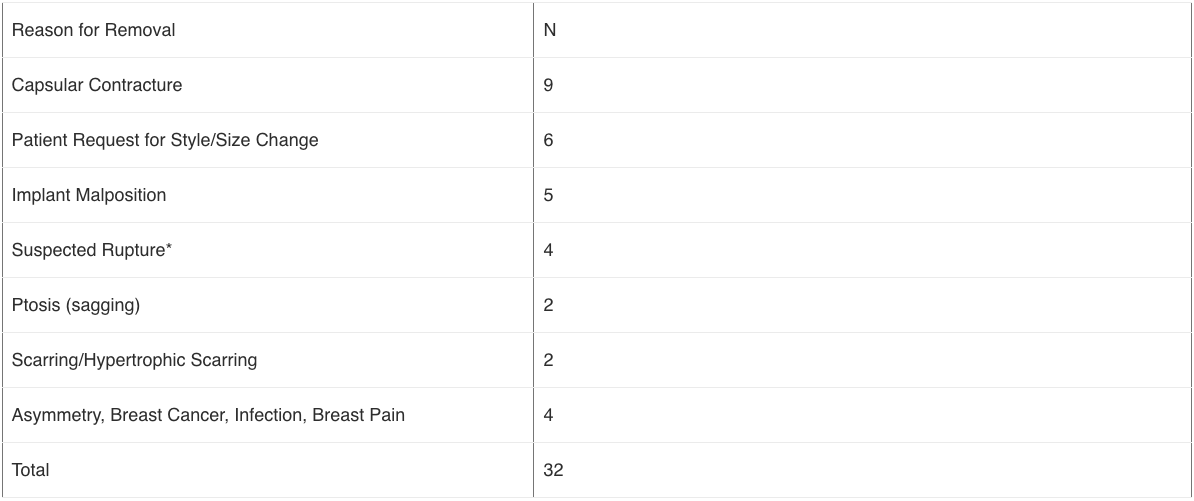
What Were The Main Reasons For Reoperation in The Allergan Core Study for Revision-Augmentation with INAMED® Silicone Breast Implants?
The Allergan Core Study for Revision-Augmentation Augmentation with INAMED® Silicone Breast Implants showed an additional 181 surgeries performed in 83 reoperations involving 49 revision-augmentation patients. 14 of the procedures may be attributed to capsular contracture. The follow-up spans 4 years.
Saline Vs. Silicone
To begin with let’s address the controversy surrounding silicone filled breast implants. There is a well known reporter of Asian descent married to an ex-talk show host who built a career on sensational reporting without any basis in fact, that cheated millions of women out of a perfectly soft, and natural silicone breast augmentation. As is the case with many such issues, the truth was not nearly as well publicized. For a decade, the truth was not made public at all. To add to this, countless cases of alleged harms stemming from the implantation of silicone implants were exploited by immoral attorneys. Since the 1990’s, silicone breast implants have been shown to impart no increase in the incidence of breast, cancer, immune disease, or any other malady so eagerly imparted to them by dishonest litigators, and melodramatic fortune seekers with no regard for the effect it would have on women interested in breast augmentation, and especially augmentation combined with a breast lift. Silicone implants have several drawbacks but in the opinion of many plastic surgeons, such shortcomings are far outweighed by the benefits afforded by their use in breast augmentation. Silicone breast implants are thought to produce a softer breast, less breast contour deformities, and a substantially more natural feel on breast contact than saline breast implants. The drawbacks to silicone mammary prosthesis use are twofold. The first is difficulty in the detection of breast implant rupture. When silicone breast implants rupture, the saline that was used to fill them is reabsorbed, and the discrepancy between what was and what is, or between what the size of the unaffected breast and the side of the affected breast is very obvious. When silicone breast implants rupture, the silicone fill is not absorbed. The change in the affected breast is more consistent with a shape change than a size change. As a consequence, this becomes much more difficult to detect. This would not be a problem, however, silicone incites a significant inflammatory reaction in many patients, leading to a dense capsule, and making it difficult to remove the old breast implant, and achieve a predictable result in placing the new one at the same operation. Staging, or breaking the operation presents the patient with the nuisance of two surgeries. For this reason, a patient with silicone breast implants must be very vigilant in monitoring for signs of implant rupture, as early detection, and re-implantation, makes it much less likely that a significant inflammatory reaction, or a tough breast implant capsule will form.
Should I perform self breast examinations after breast enlargement surgery?
Self breast examinations are very important regardless of the presence of breast implants. Imaging studies combined with breast self-examinations may help discover a cancer in its early stages, thereby making treatment more effective.
How can breast implants change the shape of my breasts?
Breast implants are designed to increase the size of the breasts into which they are implanted. The way in which breast shape changes is dictated by the type and size of breast implants used. Wider implants add cleavage, while narrower implants of the same volume increase the projection, or perkiness of the operated breasts. Anatomically shaped, otherwise referred to as contoured, or teardrop breast implants, produce more upper pole fullness, but less of the other characteristics, given that that at the same volume, more fill sits higher in the breast. Using larger breast implants may obviate the need for a mastopexy, or a breast lift, because the larger volume may be able to adequately take up the extra skin present in the cases of significant breast sagging or drooping.
Shaped Vs. Round
This decision depends as much on what the surgeon can accomplish using either the round or the anatomically contoured implants as on which type of implants to use. Assuming the breast pockets are dissected in to the inferior or lowermost extent in the exact same manner, the shaped implants will impart more fullness at the top, and provide a more natural, gently curving slope to the augmented breast. For this to happen, however, the lowermost portion of the dissection or pocket must be the same no matter which mammary implants you use. If a surgeon habitually dissects low enough inferiorly to drop round breast prosthesis low enough that upper pole fullness is lost, that surgeon will likely favor the teardrop shaped, or anatomically shaped implant to compensate for that dissection. For anatomically shaped or contoured implants to do what they were intended for, pocket dissection has to extremely precise. This is because contoured breast implants are not symmetric; they have a top and bottom. If the subglandular or submuscular pockets are too wide, the shaped implants can shift or even flip, imparting asymmetry and even worse an unnatural shape to the augmented breast. Even though shaped mammary implants are textured, this is still no guarantee against malposition. Finally using the round type of breast implants can impart more medial or inner breast fullness. This significantly improves cleavage, because more fill volume winds up toward the more central part of the breast.There are several advantages to the use of high profile breast implants. First, just as the name suggests, for any given fill volume, high profile breast implants will implant more projection or profile when compared to moderate or “normal” breast prosthesis, and most certainly more than low profile, or anatomically shaped breast implants. The way to picture this is that if you had a cone with a highly sitting tip versus a cone with a wide base, the narrower, taller cone would point more (think of Madonna’s show bra!) and thus give more projection to the breast. What this means is that women with a narrower, smaller chest wall can still have larger breasts. The advantage to some women, and disadvantage to others comes from a basic difference in perception as what a natural breast should look like. If a patient prefers a highly “perky,” high profile, or well projecting breast, the high profile breast implant would be considered ideal. High profile breast implants would not be ideal to place in a patient who prefers natural, gently sloping, and slightly ptotic (hanging) breasts, or in a client who is large and wide chested. Placing full profile breast implants in the case of a wide chest would impart a very unnatural “double cone” appearance. For women with a mid-range chest-wall diameter the choice is one of partiality. That is, the decision has to be made between projection, and cleavage. This is because lower profile implants with a wide base will naturally fill up the inner, otherwise known as the medial breast, and produce cleavage. Finally, it is mostly the anecdotal opinion of some authorities that full or high profile implants tend to generate less rippling.
What are MemoryGel™ Smooth Round Moderate Profile Breast Implants? What are their advantages and disadvantages?
As the name suggests the MemoryGel™ Smooth Round Moderate Profile Breast Implants are round in shape (not anatomically shaped), have a moderate profile (not too low, and not too perky), and are encased in a smooth silicone elastomer shell. The advantages of using textured versus smooth breast implants are discussed in another section of this text, but are more related to physician preference, and beliefs regarding skin palpability than scientific data. The biggest advantage of the round moderate profile breast implants is a compromise between upper pole fullness, cleavage, and projection. It is a sort of “jack-of-all trades, master of none.” Because it does not emphasize one aspect of the implanted breast over another the augmentation takes place throughout, producing a full, rounded appearance. In addition, the use of silicone allows for the use of the MemoryGel™ Smooth Round Moderate Profile Breast Implants in breasts with less skin and soft tissue cover. Some physicians prefer to use the larger size breast implants in moderate breast ptosis (sagging breasts) to avoid extra incisions. Use of silicone implants, because of their consistency, is ideal in such cases, especially when the lower pole of the breast has little soft tissue cover. The particular proprietary polymer employed in the Mentor devices is a cohesive gel that is purported to have more consistency such that even in cases of ruptured breast implants it is said not to leak as fast or as much. The obvious disadvantage to the moderate round breast implants is that if one particular area of concern needs special attention, a more specialized implant will give better improvement than this all-purpose breast implant.
Smooth Round Gel Moderate Profile Sizing Chart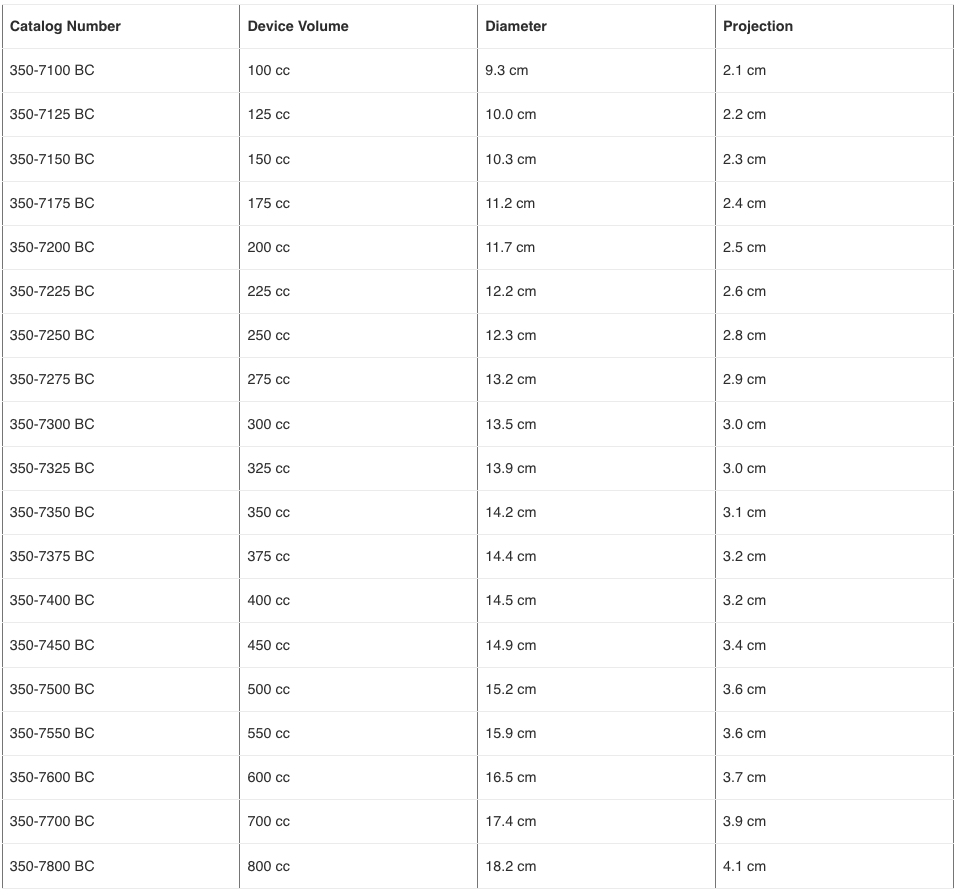
What are MemoryGel™ Smooth Round Moderate Plus Profile Breast Implants? What are their advantages and disadvantages?
As the name suggests the MemoryGel™ Smooth Round Moderate Plus Profile Breast Implants are round in shape (not anatomically shaped), have a moderate plus profile (not too low, but more perky), and are encased in a smooth silicone elastomer shell. The advantages of using textured versus smooth breast implants are discussed in another section of this text, but are more related to physician preference, and beliefs regarding skin palpability than scientific data. The biggest advantage of the round moderate plus profile breast implants is a compromise between upper pole fullness, cleavage, and projection. It is a sort of “jack-of-all trades, master of none.” Because it does not emphasize one aspect of the implanted breast over another the augmentation takes place throughout, producing a full, rounded appearance. In addition, the use of silicone allows for the use of the MemoryGel™ Smooth Round Moderate Profile Breast Implants in breasts with less skin and soft tissue cover. Some physicians prefer to use the larger size breast implants in moderate breast ptosis (sagging breasts) to avoid extra incisions. Use of silicone implants, because of their consistency, is ideal in such cases, especially when the lower pole of the breast has little soft tissue cover. The particular proprietary polymer employed in the Mentor devices is a cohesive gel that is purported to have more consistency such that even in cases of ruptured breast implants it is said not to leak as fast or as much. Because it does not emphasize one aspect of the implanted breast over another the augmentation takes place throughout, producing a full, rounded appearance. The Plus Profile Breast Implants does, however add a bit more projection, or the protuberance noted on side view at a slight expense to the width of the breast, and thus the cleavage. The obvious disadvantage to the moderate plus round breast implants is that if one particular area of concern needs special attention, a more specialized implant will give better improvement than an all-purpose breast implant.
Smooth Round Gel Moderate Plus Profile Sizing Chart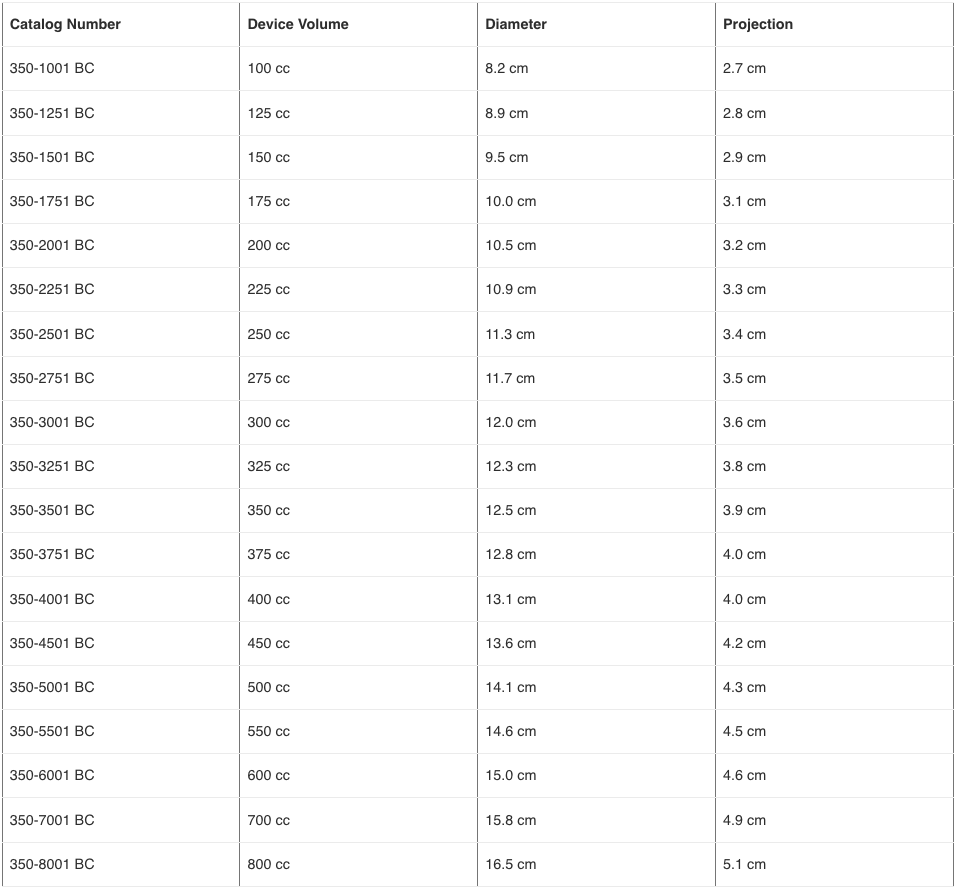
What are Contour Profile® High Breast Implants Style 2900? What are their advantages and disadvantages?
As the name suggests the Contour Profile® Moderate Breast Implants are contoured to resemble the slope of a natural breast (a subject of debate), have a high (perky) profile, and are encased in a textured silicone elastomer shell, to aid in maintaining their position. The advantages of using textured versus smooth breast implants are discussed in another section of this text, but are more related to physician preference, and beliefs regarding skin palpability than scientific data. The use of a textured in shell in an anatomic or teardrop implant is absolute. This is because textured implants adhere more intimately to the implant capsule, and have less of a tendency to move. When placing shaped breast implants it is very important to achieve correct positioning, as there is a definite orientation to the implants, hence textured shells are used with contoured breast implants exclusively. The biggest advantage of the contoured breast implants is their ability to add more volume to the upper pole of the breast, and to provide a gentler slope to the breast silhouette. Cleavage is more affected in the high profile implant, as its base is narrower, and the inside part of the breast does not extend as far inward. Projection is improved through a taller implant with a narrower base. The obvious disadvantages to the high profile contoured implants are decreased cleavage, as explained above, and the danger of implants malposition, or flipping within the pocket of dissection. Although at times a turned-about breast implant may be restored to “normal” position without surgery, sometimes a trip to the operating room becomes necessary.
Contour Profile®, High Profile Style 2700 Sizing Chart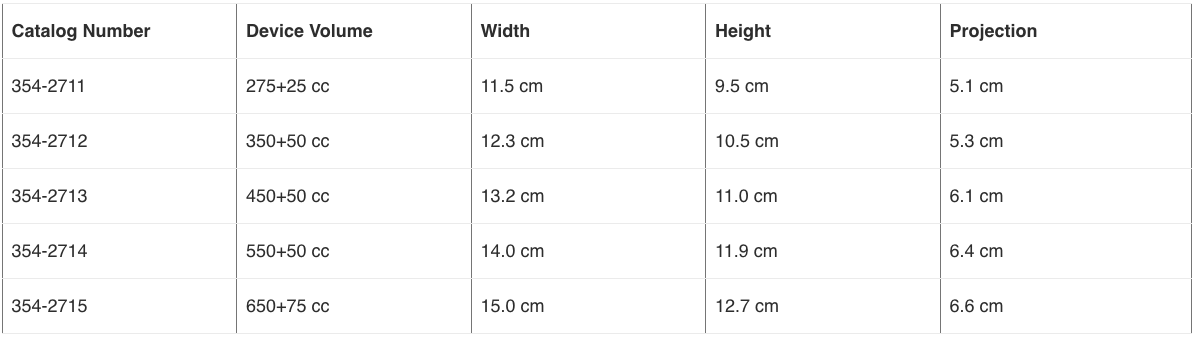
What are Contour Profile® Moderate Breast Implants Style 2900? What are their advantages and disadvantages?
As the name suggests the Contour Profile® Moderate Breast Implants are contoured to resemble the slope of a natural breast (a subject of debate), have a moderate profile (not too low, and not too perky), and are encased in a textured silicone elastomer shell, to aid in maintaining their position. The advantages of using textured versus smooth breast implants are discussed in another section of this text, but are more related to physician preference, and beliefs regarding skin palpability than scientific data. The use of a textured in shell in an anatomic or teardrop implant is absolute. This is because textured implants adhere more intimately to the implant capsule, and have less of a tendency to move. When placing shaped breast implants it is very important to achieve correct positioning, as there is a definite orientation to the implants, hence textured shells are used with contoured breast implants exclusively. The biggest advantage of the contoured breast implants is their ability to add more volume to the upper pole of the breast, and to provide a gentler slope to the breast silhouette. Cleavage is less affected than projection, as breast implant width is maintained, but projection is diminished. The obvious disadvantages to the contoured implants are decreased projection, as explained above, and the danger of implant malposition, or flipping within the pocket of dissection. Although at times a turned-about breast implant may be restored to “normal” position without surgery, sometimes a trip to the operating room becomes necessary.
Contour Profile® Moderate Breast Implants Style 2900 Sizing Chart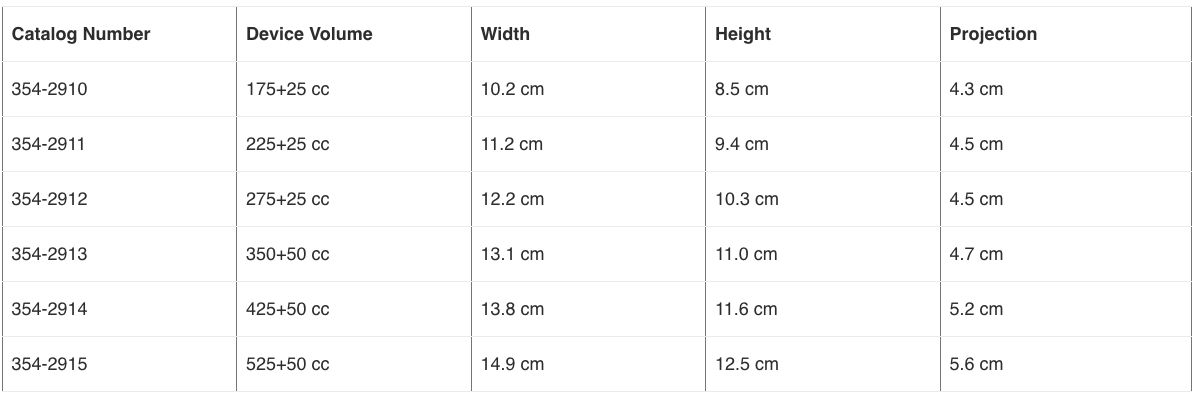
What are the various silicone implants available from Mentor?
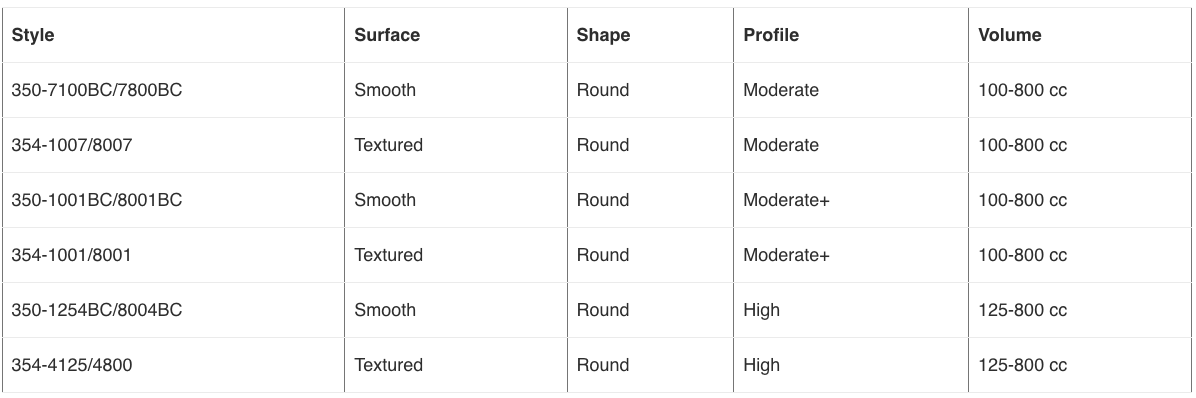
What are Siltex® Round Moderate Profile Breast Implant Style 2600? What are their advantages and disadvantages?
As the name suggests the Round Saline Breast Implants are round in shape (not anatomically shaped), have a moderate profile (not too low, and not too perky), and are encased in a textured silicone elastomer shell. The advantages of using textured versus smooth breast implants are discussed in another section of this text, but are more related to physician preference, and beliefs regarding skin palpability than scientific data. The biggest advantage of the round moderate profile breast implants is a compromise between upper pole fullness, cleavage, and projection. It is a sort of “jack-of-all trades, master of none.” Because it does not emphasize one aspect of the implanted breast over another the augmentation takes place throughout, producing a full, rounded appearance. The obvious disadvantage is that if one particular area of concern needs special attention, a more specialized implant will give better improvement than this all-purpose breast implant.
Siltex® Round, Moderate Profile Style 2600 Sizing Chart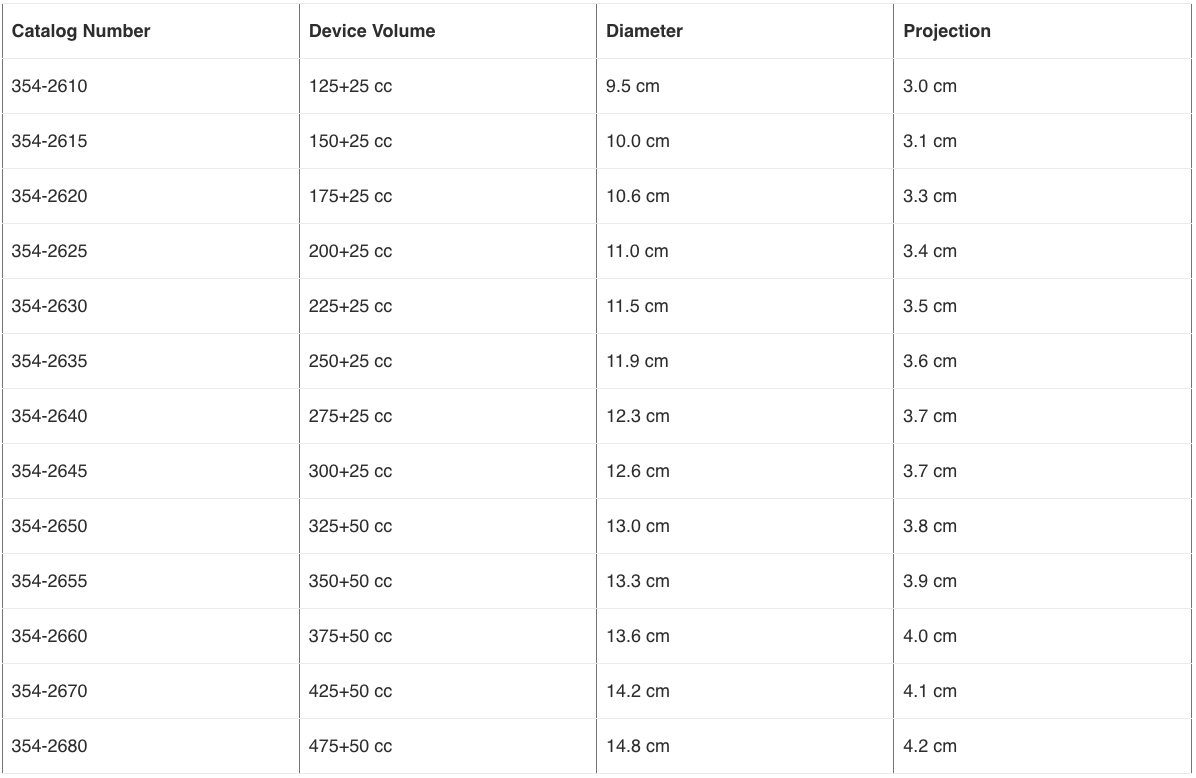
What are Round Saline Breast Implants? Particularly the Smooth Round High Profile Breast Implants, Style 3000 from Mentor? What are their advantages and disadvantages?
As the name suggests the Round Saline Breast Implants are round in shape (not anatomically shaped), have a high profile, giving them more of a bulge on side view (the most perkiness for your buck), and are encased in a smooth silicone elastomer shell. The advantages of using textured versus smooth breast implants are discussed in another section of this text, but are more related to physician preference, and beliefs regarding skin palpability than scientific data. The biggest advantage of the round high profile implants is this protuberance, considered youthful by many patients, and plastic surgeons. Another considerable advantage is the ability to use higher volume implants in patients with narrow chest walls because the width of the implant base is narrower. The disadvantages include a sacrifice of cleavage, owing to the decrease in the base diameter of the implant, and a drop in upper pole fullness for the same reason. In addition some women find the look imparted by the high profile breast implant too perky.
Smooth Round, High Profile, Style 3000 Sizing Chart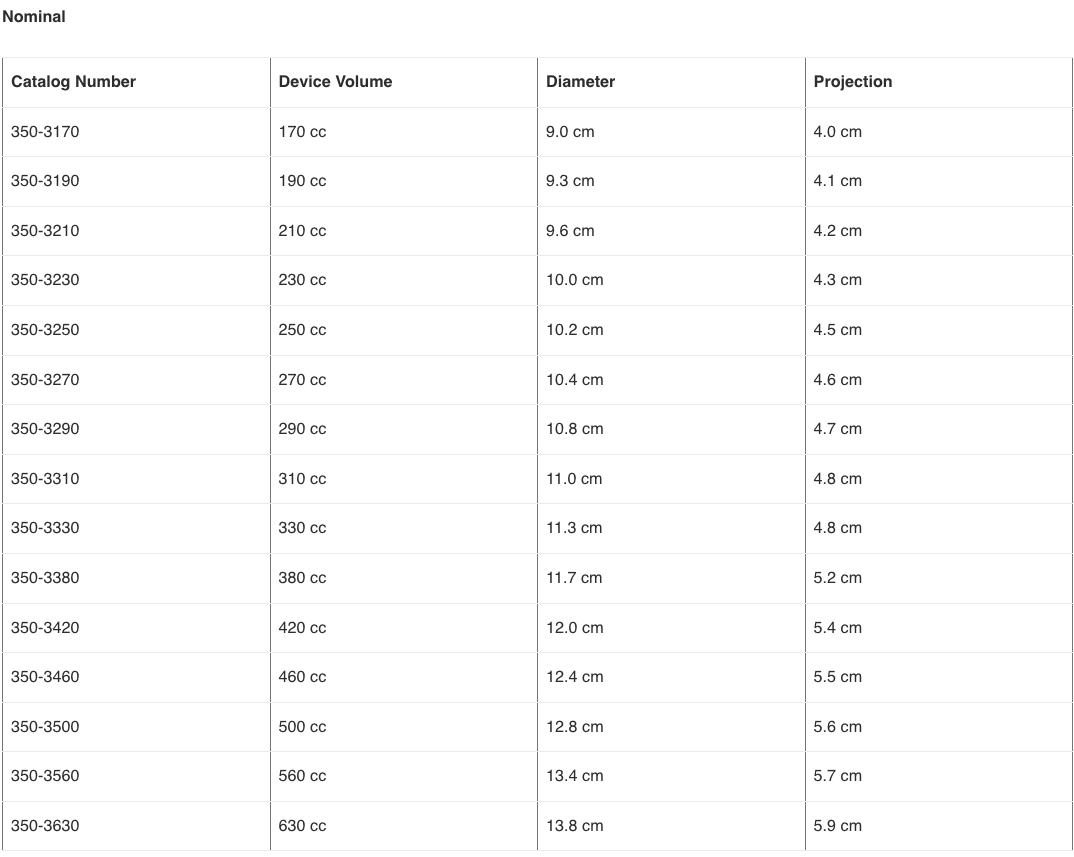
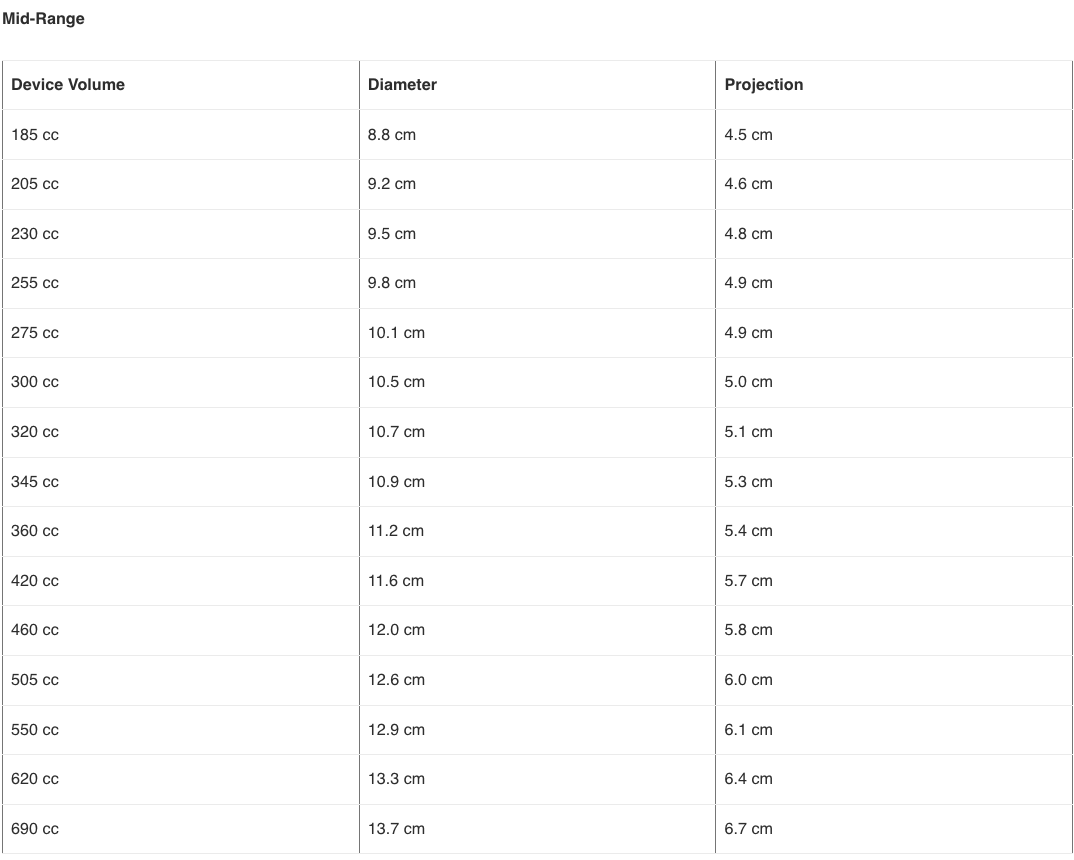
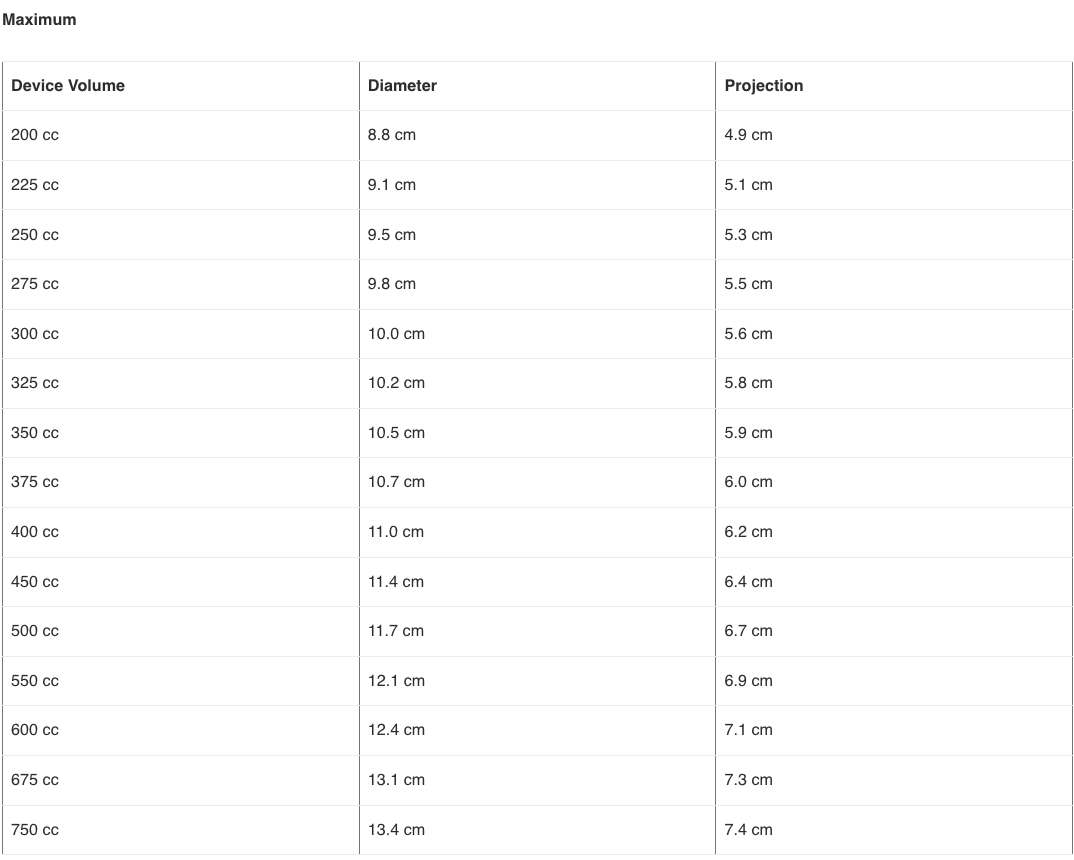
Please Note: Individual implant dimensions may vary slightly in products of this type. Not all units will conform exactly to the dimensions noted above.
What are Round Saline Breast Implants? Particularly the Smooth Round Moderate Profile Breast Implants, Style 1600 from Mentor? What are their advantages and disadvantages?
As the name suggests the Round Saline Breast Implants are round in shape (not anatomically shaped), have a moderate profile (not too low, and not too perky), and are encased in a smooth silicone elastomer shell. The advantages of using textured versus smooth breast implants are discussed in another section of this text, but are more related to physician preference, and beliefs regarding skin palpability than scientific data. The biggest advantage of the round moderate profile breast implants is a compromise between upper pole fullness, cleavage, and projection. It is a sort of “jack-of-all trades, master of none.” Because it does not emphasize one aspect of the implanted breast over another the augmentation takes place throughout, producing a full, rounded appearance. It is touted by Mentor to betheir most popular implant for over 2 decades. The obvious disadvantage is that if one particular area of concern needs special attention, a more specialized implant will give better improvement than this all-purpose breast implant.
Smooth Round Moderate Profile Style 1600 Sizing Chart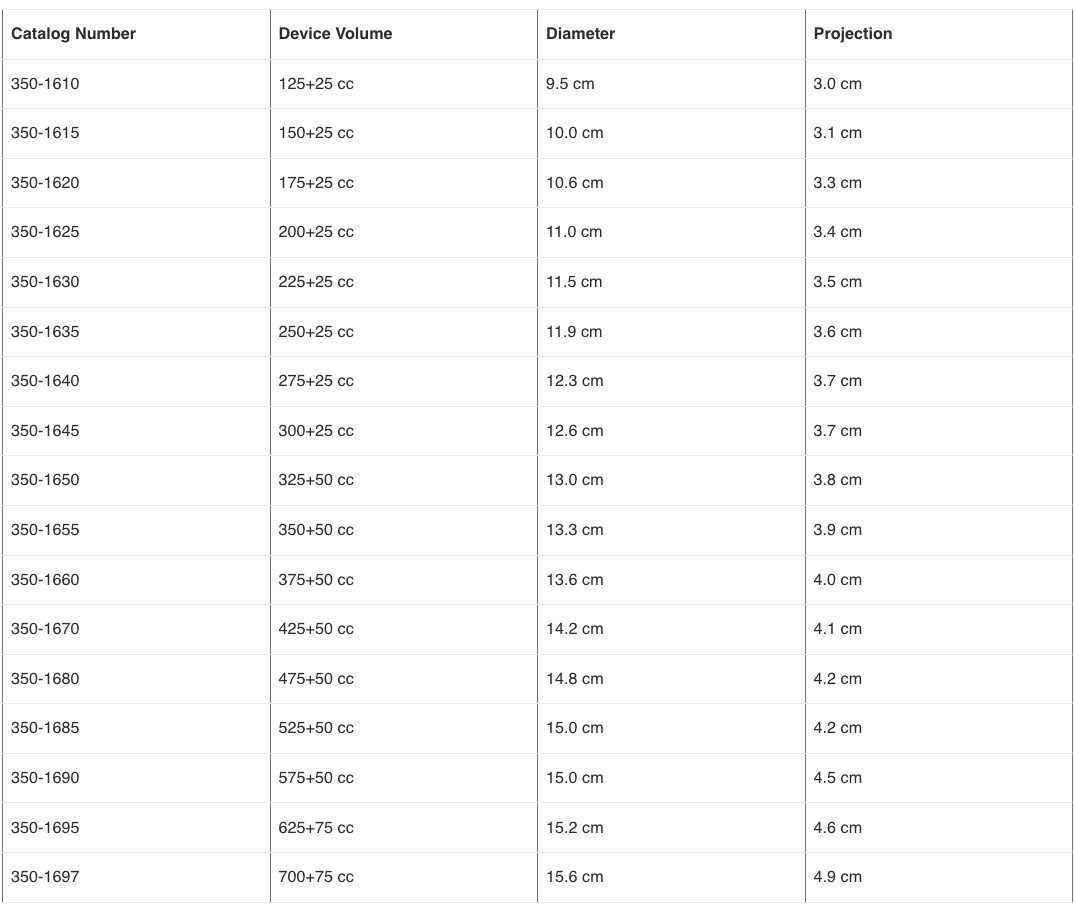
What are Round Saline Breast Implants? Particularly the Smooth Round Moderate Plus Profile Breast Implants, Style 2000 from Mentor? What are their advantages and disadvantages?
As the name suggests the Round Saline Breast Implants are round in shape (not anatomically shaped), have a moderate profile (not too low, and not too perky), and are encased in a smooth silicone elastomer shell. The advantages of using textured versus smooth breast implants are discussed in another section of this text, but are more related to physician preference, and beliefs regarding skin palpability than scientific data. The biggest advantage of the round moderate profile breast implants is a compromise between upper pole fullness, cleavage, and projection. It is a sort of “jack-of-all trades, master of none.” Because it does not emphasize one aspect of the implanted breast over another the augmentation takes place throughout, producing a full, rounded appearance. The Plus Profile Breast Implants do, however add a bit more projection, or the protuberance noted on side view at a slight expense to the width of the breast, and thus the cleavage. The obvious disadvantage is that if one particular area of concern needs special attention, a more specialized implant will give better improvement than this all-purpose breast implant.
Smooth Round Moderate Plus Profile Style 2000 Sizing Chart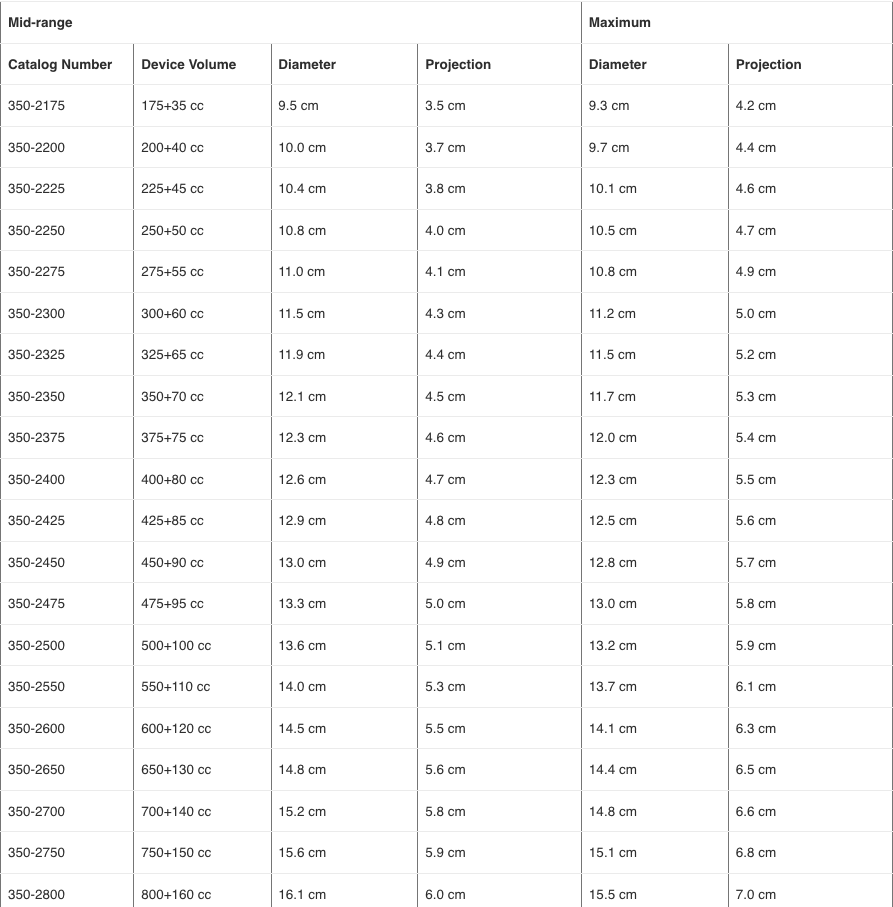
Please Note: Individual implant dimensions may vary slightly in products of this type. Not all units will conform exactly to the dimensions noted above.
What was presented to the committee on safety of devices (MHRA)?
COMMITTEE ON SAFETY OF DEVICES – 20 NOVEMBER 2003 MEETING POLYURETHANE-COATED BREAST IMPLANTS
Background
Conventional breast implants consist of a silicone shell surrounding a silicone gel filling. The silicone shell can be smooth or textured. Silicone gel filled breast implants covered with a polyurethane foam coating were introduced to clinical use by an American manufacturer in the 1980s with the aim of reducing the risks of capsular contracture compared with those seen in conventional breast implants. They were withdrawn from the market in 1991 following concern that the coating might release a carcinogenic breakdown product. An equivalent product was subsequently reintroduced outside the USA and is currently authorised for marketing throughout Europe and is on sale in several European and South American countries. However, the product has not been available in the UK since 1993 and MDA issued advisory notices to draw attention to this in 1994 and 1996 (Annex 1).
In 2001, MDA responded to approaches from a European manufacturer and plastic surgeons on the anomalous position in the UK, compared with the rest of Europe, by preparing an updated analysis of the biological safety of the implants. This found that earlier conclusions on the carcinogenic risk still stood, but the benefits claimed of the polyurethane coating could not be substantiated by the evidence available. There was therefore no basis for altering the advice given in 1994 and 1996.
In July 2003, in response to the MDA report, the European manufacturer provided MHRA with a literature review, which concluded that the superiority of polyurethane-coated breast implants, in terms of capsular contracture rates, had been demonstrated.
Review of carcinogenicity
The carcinogenic risk arising from polyurethane-coated breast implants was assessed by the Committee on Carcinogenicity (COC) in 1991 and 1994. The COC concluded that the breakdown of the polyurethane coating over a number of years leads to the release of small amounts of the probable genotoxic carcinogen, 2,4-toluenediamine (2,4-TDA) into the tissues surrounding the implant. This gives rise to a small, unquantifiable carcinogenic risk.
No evidence has emerged since 1994 that would alter the COC’s conclusions, although MDA noted recent evidence for the in vivo genotoxicity of 2,4-TDA and for its presence in the tissue of implanted women.
The 2001 MDA Review of the biological safety of polyurethane-coated breast implants (Annex 2) summarised the relevant data, reported the opinions of the COC and presented a discussion of the various factors relevant to the carcinogenic risk assessment and their public policy implications.
Review of capsular contracture
The 2001 MDA review noted that there were some reports of a reduction in capsular contracture with polyurethane-coated breast implants but insufficient evidence was available to demonstrate conclusively their long-term benefits over other products. In addition, MDA noted that the necessity of using the particular polyesterurethane foam that gave rise to the release of 2,4-TDA had not been demonstrated. MDA had reviewed evidence published up to 2000, including that considered by Lübbers (2000) (Annex 3) and the case series by Vázquez (1999) which is appended to Annex 4.
The report provided by Polytech Silimed to MHRA in July 2003 (Annex 4) presented evidence for a lower, quantifiable rate of capsular contracture with polyurethane-coated breast implants. This report summarised data previously considered by MDA and reviewed two additional case series (Hester et al, 2001 (appended to Annex 4) and Brunnert, 2003 (Annex 5)).
Questions for the CSD
The CSD is invited to consider the following questions:
Are the benefits from polyurethane-coated breast implants substantial in terms of clinical outcome in respect of:capsular contraction rates;
aesthetic results?
Do the demonstrated benefits of polyurethane-coated breast implants outweigh the remote but unquantifiable carcinogenic risk, which has already been identified by the COC?
If polyurethane-coated breast implants were to be re-introduced to clinical use in the UK, what information on the risks and benefits should be available to:surgeons;
women considering implantation;
and what measures would be appropriate to provide this information?
Is the need for additional surgeries (reoperations) common after breast augmentation surgery with silicone breast implants?
Allergan’s Core Study showed a reoperation rate of 24% in primary augmentation and 35% in revision-augmentation in the first 4 years after receiving silicone implants. In primary augmentation cases, the three most common reasons for reoperations were capsular contracture, implant malposition, and ptosis (sagging). After revision-augmentation breast enlargement, the three most common reasons for additional surgery were capsular contracture, hematoma/seroma, and ptosis (sagging).Mentor’s Core Study showed a reoperation rate of 15% in primary augmentation and 3528% in revision-augmentation in the first 3 years after receiving silicone implants. For primary silicone breast augmentation patients, the three most common reasons for reoperation were severe capsular contracture, patient request for size/style change, andhematoma/seroma. In women who needed silicone revision-augmentation, the three most common reasons for additional surgery were severe capsular contracture, patient request for style/size change, and biopsy.
Is breast augmentation surgery the only surgery I will ever need to enhance my breasts?
The need for additional surgery after primary breast augmentation surgery is high, on order of 1 in 5 to 1 in 4 patients. Multiple factors account for this. Weighing down a breast with a silicone or saline breast implant may increase the chance for needing a breast lift down the road. Capsular contracture, or hardening of the breasts after breast enlargement surgery may require a revision depending on the severity of the problem. The rate of leakage and deflation also goes up with time, increasing the chances for implant removal. Patients may wish to address other cosmetic disturbances such as asymmetry, unfavorable scarring, shifting, etc. Allergan’s Core Study showed a reoperation rate of 24% in primary augmentation and 35% in revision-augmentation in the first 4 years after receiving silicone implants. In primary augmentation cases, the three most common reasons for reoperations were capsular contracture, implant malposition, and ptosis (sagging). After revision-augmentation breast enlargement, the three most common reasons for additional surgery were capsular contracture, hematoma/seroma, and ptosis (sagging).
Is the need for additional breast procedures common after breast enlargement surgery?
The need for additional surgery after primary breast augmentation surgery is high, on order of 1 in 5 to 1 in 4 patients. Multiple factors account for this. Weighing down a breast with a silicone or saline breast implant may increase the chance for needing a breast lift down the road. Capsular contracture, or hardening of the breasts after breast enlargement surgery may require a revision depending on the severity of the problem. The rate of leakage and deflation also goes up with time, increasing the chances for implant removal.
Is breast augmentation surgery painful?
The breast enlargement surgery itself should be painless, whether performed under sedation with local anesthetic, or general anesthesia. It is the postoperative period that some may find brings discomfort. Assuming the postoperative course is without complication, pain from breast augmentation surgery peaks the day after surgery, and diminishes over the course of the following three to four days to be tolerable enough without the use of narcotics. Of course, pain tolerance varies significantly from patient to patient. The 72-96 hrs time frame is a “ballpark” figure, and a reflection of personal experience. Several other important factors are crucial to consider in breast enlargement surgery. Pre-incisional administration of local or dilute local (called tumescent) anesthetic greatly diminishes postoperative breast enlargement surgery pain. Postoperative pain and tenderness can be further affected by breast implant placement position. Sub-muscular placement or “dual plane” placement may cause substantially more discomfort than sub-glandular placement because of muscle dissection. If a skin excision is necessary, pain may be more pronounced. The injection of local anesthetic at the conclusion of breast augmentation surgery greatly diminishes postoperative discomfort. In addition, a more effective multiple intercostal nerve block may be performed. Finally, a small catheter may be placed, within the breast implant pocket, for the purpose of delivering local anesthetic in the post breast enlargement surgery period. This has been shown in studies to help significantly with postoperative discomfort. In short, breast enlargement surgery is very well tolerated in most patients.
What type of incision should I chose when undergoing breast enlargement surgery? What are the advantages and disadvantages of each?
The inframammary approach to breast augmentation surgery allows your plastic surgeon the greatest visibility while dissecting an implant pocket, and as such, allows greater precision and control of symmetry. The inframammary incision is placed in the fold under the breast, in the breast fold, and tends to be more noticeable for two reasons. It is typically larger than other types of breast incisions. It has a tendency to migrate as the implant settles up or down, and its final resting place is less predictable.The periareolar incision goes around the nipple. It is less noticeable, smaller than the inframammary incision, and if a lift is required later in time, it may be utilized again. Its disadvantages in breast enlargement surgery are a higher infection rate (because the cut goes through breast tissue), possible difficulty in breastfeeding, and the risk of decreased sensation in breast skin and nipple sensation.Placing the incision in the axilla (underarm) allows for a smaller incision. It is useful when there is not much breast tissue present to begin with, and thus no prominent breast fold, and when the nipple-areola complex is small. It is not as well concealed as the periareolar incision, gives less control in terms of the ability to feel around the breast pockets in assuring symmetry, and placement of silicone breast implants will necessitate a larger incision which may be less pleasing.The peri-umbilical incision is placed at the top of the belly-button. Its obvious advantage is a lack of scars on, around, or near the breasts. Its disadvantages are blind dissection, making asymmetry more common, and making the likelihood of one side being submuscular and the other subglandular more likely. If an undesirable result is obtained, a new incision will be needed to correct the problem. It may also damage the breast implants, and cannot be used with pre-filled silicone breast implants.
Is infection common after breast enlargement surgery, what are the consequences, and what is the treatment?
Any surgery, in any discipline carries a risk of infection. The risk is calculated based on the degree of contamination for a particular operation. Breast augmentation is considered a “clean” surgery, and carries an overall infection rate of less than two percent. If infection should take place, it will most often affect one or more of three patterns, assuming there is no disseminated spread, and the infection remains localized. Infection can occur in the skin, in the soft tissue surrounding the implant, and in the form of a pus pocket. Skin infection will usually respond to oral antibiotics. Soft tissue infections surrounding the breast implant may respond to oral antibiotics, will sometimes require intravenous antibiotics, and in other cases need to be treated with implant removal. If the infection should progress to, or start out as an abscess (pus-pocket), the only treatment that will be effective in treating the infection and preventing more serious systemic complications is drainage of pus and breast implant removal. Toxic Shock Syndrome (TSS) may result from the presence of a foreign body (breast implant in this case) in the setting of an infection, and is a truly life-threatening condition that needs to be addressed immediately. It is marked by high fever, nausea and vomiting, diarrhea, light-headedness and possibly loss of consciousness, and a diffuse rash. The treatment is timely institution of IV antibiotics, and breast implant removal. If the breast implant is removed, the infection should be treated, the inflammation allowed to resolve, and a new implant placed weeks down the road.
What is an inframammary incision with respect to breast augmentation?
The inframammary approach to breast augmentation surgery allows your plastic surgeon the greatest visibility while dissecting an implant pocket, and as such, allows greater precision and control of symmetry. The inframammary incision is placed in the fold under the breast, in the breast fold, and tends to be more noticeable for two reasons. It is typically larger than other types of breast incisions. It has a tendency to migrate as the implant settles up or down, and its final resting place is less predictable.
Are silicone breast implants safe?
The controversy over the safety of silicone breast implants was founded more on the desire to wage successful litigation with lucrative awards, than on science. It was raised more to shift public opinion in the direction of paranoia and “uncover” some sinister plot while building a “solid” career in journalism, than to extricate fact from events. The battle was a classic of example of lies repeated long enough, loud enough, and by enough visible and “educated” people to sway the opinion of juries from fact to confabulation. One thing for certain, science, fact, or truth had nothing to do with the conduct of the players. Money, greed, and ambition had everything to do with it.Let’s begin by noting first that nothing in life is guaranteed. In allowing oneself to be implanted with breast prosthesis, a patient is permitting an unnatural act upon herself. A foreign substance is placed into a consenting body. Any foreign substance, or object will be regarded by the organism as just that, a foreign body. Any such foreign substance will incite a response, be it a breast capsule, or a more violent immune response. The question should then be restated, “how unsafe is a silicone implant?” The parties involved in condemning the use of silicone without a shred of scientific evidence effectively cheated millions of women afflicted with breast cancer out a perfectly good breast reconstruction, unless they were willing to enroll in a study. To add to the charade, millions more who had been implanted, but symptom free, had their breast implants removed. To answer the question of breast implant safety, we need to look back to the beginning…In the 1940’s, convinced of the American GI’s penchant for large breasts, Japanese prostitutes would inject their mammary glands with various materials of dubious origin. The substances included sponge, paraffin, and silicone. Fast forward to the 1960’s. Doctors Gerow and Cronin began implanting silicone breast prostheses in Houston. In 1976, the silicone breast implant, along with all other medical devices came under the jurisdiction of the Food and Drug Administration in an amendment of the Federal Food, Drug, and Cosmetic Act. Because silicone implants were in use for years prior to the enactment of the amendment, the only requirement imposed on their producers was the provision of safety data on FDA’s demand. In 1977, the first settlement from Dow was furnished to a patient with “pain and suffering” as a result of implant rupture requiring multiple revisions. In the 1980’s, Ralph Nader’s Public Citizen Health Research Group began implicating silicone breast implants in the etiology of breast cancer. As is the case with many of Mr. Nader’s allegations today, the statements were based on anecdotal “evidence.” This is the type of proof the scientific community regards as equivalent to no proof, and the type our attorney friends call hearsay. As a result of the dissemination of this propaganda, in 1982, the Food and Drug Administration suggested that silicone breast implant producers demonstrate conclusively the safety of silicone breast implantation, placing the device into category III. In 1984, Maria Stern was awarded 211k in compensatory, and 1.5m in “punitive” “damages.” The charade put on by Dan Bolton, her “attorney,” included the testimony of theorizing “experts,” who through their “expertise,” but without the burden of true scientific research or proof of any kind, linked breast cancer with silicone. The 1982 category III re-classification proposal materialized in 1988, with the premarket approval applications (PMA) due date set in July of 1991. The FDA would then review the applicants’ data over the following six months. Prior to any such due process, however, the case for the silicone implant was “reviewed”, no doubt after exhaustive “research,” by Connie Chung on “Face to Face.” Sensationalism sells, and Connie’s brand sold particularly well. Without regard for truth, and based entirely on a handful of anecdotal reports and cases, she effectively paraded women who claimed to contract autoimmune disease from breast implants, in the process fueling the baseless paranoia. It is quite unfortunate, and very sad that these patients were sick. It is even more unfortunate that a third party was able to use them to capitalize on emotions stirred up in the public. The “good” journalist never stopped to think that of the millions of women who had silicone implants placed, some were bound to be affected by autoimmune disease at the rate of the general population. Truth, however, seldom makes careers. At around the same time Ralph Nader’s “Public Citizen” jumped on the band wagon, aided Dr. Sidney Wolfe, stoking the flames and pressing in courts, while Representative Ted Weiss headed a Congressional Hearing on the safety of silicone breast implants. It is interesting that a court order from the Stern hearing barred the presentation of certain evidence for publi
Can any patient receive the latest generation cohesive or gummy-bear silicone implants?
Patients who seek breast reconstruction, revision or secondary breast augmentation, or a first time breast enlargement may enroll in the trial. A list of prohibited medical conditions for participating in the study must be satisfied, and patients must agree to a ten-year follow-up.
Is loss of sensation from the skin of the lower pole of the breast common after breast enlargement surgery, what are the consequences, and what is the treatment?
Nerves that supply sensation to the nipple and surrounding (areolar) skin may be cut or stretched during surgery. Most often this is not the case, and if sensation is lost, it generally due to stretching of the nerves, and will eventually recover. Permanent loss of nipple sensation, however, is always a possibility. Sometimes the nipple skin will become more sensitive to any form of stimulation, which may be due to nerve involvement, or to the stretching of the skin by the breast implant. This, too, is normally temporary. Usually, it is not the nipple that loses sensation, but the nerves to the skin of the lower part of the breast, especially on its outside edge. This is because the nerves giving sensation to that part are most frequently encountered, and manipulated in some way. As with nipple sensation, this usually returns, but not always.
Is loss of nipple sensation possible after breast augmentation surgery?
Nerves that supply sensation to the nipple and surrounding (areolar) skin may be cut or stretched during surgery. Most often this is not the case, and if sensation is lost, it generally due o stretching of the nerves, and will eventually recover. Permanent loss of nipple sensation, however, is always a possibility. Sometimes the nipple skin will become more sensitive to any form of stimulation, which may be due to nerve involvement, or to the stretching of the skin by the breast implant. This, too, is normally temporary. Usually, it is not the nipple that loses sensation, but the nerves to the skin of the lower part of the breast, especially on its outside edge. This is because the nerves giving sensation to that part are most frequently encountered, and manipulated in some way. As with nipple sensation, this usually returns, but not always.
Is it better to use a low profile breast implant or a high profile breast prosthesis in breast enlargement surgery?
There are several advantages to the use of high profile breast implants. First, just as the name suggests, for any given fill volume, high profile breast implants will implant more projection or profile when compared to moderate or “normal” breast prosthesis, and most certainly more than low profile, or anatomically shaped breast implants. The way to picture this is that if you had a cone with a highly sitting tip versus a cone with a wide base, the narrower, taller cone would point more (think of Madonna’s show bra!) and thus give more projection to the breast. What this means is that women with a narrower, smaller chest wall can still have larger breasts. The advantage to some women, and disadvantage to others comes from a basic difference in perception as what a natural breast should look like. If a patient prefers a highly “perky,” high profile, or well projecting breast, the high profile breast implant would be considered ideal. High profile breast implants would not be ideal to place in a patient who prefers natural, gently sloping, and slightly ptotic (hanging) breasts, or in a client who is large and wide chested. Placing full profile breast implants in the case of a wide chest would impart a very unnatural “double cone” appearance. For women with a mid-range chest-wall diameter the choice is one of partiality. That is, the decision has to be made between projection, and cleavage. This is because lower profile implants with a wide base will naturally fill up the inner, otherwise known as the medial breast, and produce cleavage. Finally, it is mostly the anecdotal opinion of some authorities that full or high profile implants tend to generate less rippling.
Does breast enlargement surgery, or do breast implants interfere with mammography?
Breast implants, whether silicone or saline interfere with mammography. Special views need to be obtained by radiologists experienced in the Eklund technique to visualize any abnormalities, however breast implants also project breast tissue from behind its base making any masses easier to feel. If you need to obtain a mammogram after your breast enlargement surgery, your radiology-mammography technologist must be informed about your breast implants so that in addition to obtaining additional views, special techniques may be used to minimize the chances for implant rupture.
Should I have a mammogram prior to have breast augmentation surgery?
There are guidelines for routine screening mammography established by the National Cancer Institute. The factors that are very important in determining the appropriate age for a first, and subsequent mammograms are age, patient history, and family history. Even if the guidelines suggest that you are too young, say 10 years younger than recommended, for mammography, it may be a good idea to have a “baseline” mammogram before, and six months after breast enhancement surgery. This is because breast enlargement surgery makes scars on the inside of the augmented breast which can calcify and fool mammographic examiners as to the cause of the calcium deposits. This would then lead to an unnecessary biopsy, which has the potential to add scars, distort breast tissue, or cause implant rupture. For NCI information on breast cancer screening, please see below.
Breast Cancer Screening
Different tests are used to screen for cancer.
Three tests are commonly used to screen for breast cancer:Mammogram
Clinical breast exam (CBE)
Breast self-exam (BSE)
New screening tests are being studied in clinical trials.MRI (magnetic resonance imaging)
Tissue sampling
Some screening tests are used because they have been shown to be helpful both in finding cancers early and in decreasing the chance of dying from these cancers. Other tests are used because they have been shown to find cancer in some people; however, it has not been proven in clinical trials that use of these tests will decrease the risk of dying from cancer.
Scientists study screening tests to find those with the fewest risks and most benefits. Cancer screening trials also are meant to show whether early detection (finding cancer before it causes symptoms) decreases a person’s chance of dying from the disease. For some types of cancer, finding and treating the disease at an early stage may result in a better chance of recovery.
Clinical trials that study cancer screening methods are taking place in many parts of the country. Information about ongoing clinical trials is available from the NCI Web site.
Three tests are commonly used to screen for breast cancer:
1.) Mammogram
A mammogram is an x-ray of the breast. This test may find tumors that are too small to feel. A mammogram may also find ductal carcinoma in situ, abnormal cells in the lining of a breast duct, which may become invasive cancer in some women. The ability of a mammogram to find breast cancer may depend on the size of the tumor, the density of the breast tissue, and the skill of the radiologist.
2.) Clinical breast exam (CBE)
A clinical breast exam is an exam of the breast by a doctor or other health professional. The doctor will carefully feel the breasts and under the arms for lumps or anything else that seems unusual.
3.) Breast self-exam (BSE)
Breast self-exam is an exam to check your own breasts for lumps or anything else that seems unusual.
If a lump or other abnormality is found using one of these 3 tests, ultrasound may be used to learn more. It is not used by itself as a screening test for breast cancer. Ultrasound is a procedure in which high-energy sound waves (ultrasound) are bounced off internal tissues or organs and make echoes. The echoes form a picture of body tissues called a sonogram.
New screening tests are being studied in clinical trials.
MRI (magnetic resonance imaging)
MRI is a procedure that uses a magnet, radio waves, and a computer to make a series of detailed pictures of areas inside the body. This procedure is also called nuclear magnetic resonance imaging (NMRI). Screening trials of MRI in women with a high genetic risk of breast cancer have shown that MRI is more sensitive than mammography for finding breast tumors.
MRI scans are used to make decisions about breast masses that have been found by a clinical breast exam or a breast self-exam. MRIs also help show the difference between cancer and scar tissue. MRI does not use any x-rays.
Tissue sampling
Breast tissue sampling is taking cells from breast tissue to examine under a microscope. Abnormal cells in breast fluid have been linked to an increased risk of breast cancer in some studies. Scientists are studying whether breast tissue sampling can be used to find breast cancer at an early stage or predict the risk of developing breast cancer. Three methods of tissue sampling are under study:
Fine-needle aspiration: A thin needle is inserted into the breast tissue around the areola (darkened area around the nipple) to withdraw cells and fluid.
Nipple aspiration: The use of gentle suction to collect fluid through the nipple. This is done with a device similar to the breast pumps used by nursing women.
Ductal lavage: A hair-size catheter (tube) is inserted into the nipple and a small amount of salt water is released into the duct. The water picks up breast cells and is removed.
Screening clinical trials are taking place in many parts of the country. Information about ongoing clinical trials is available from the NCI Web site.”
Should I massage my breasts after breast enlargement surgery?
There have not been studies demonstrating conclusively, any benefit to massaging your breasts, however many surgeons feel that it helps diminish the chance for capsular contracture. Your body’s natural response to any implant is scar formation, the scar envelops the implant and may contract with time, causing firm capsule formation, and possibly palpable or even visible flaws. Massage is performed in the hopes of enlarging the space in which the implant moves about, thereby enlarging the size of the capsule. It should be performed slowly, and deliberately. It should be performed symmetrically, that is displacing the implant equally on both sides with each movement/repetition. Slowly press the implants inward, and hold for 10 seconds, release and repeat 10 times. Repeat the same pressing downward, and upward for the same number of repetitions.
What is the McGhan style 410 breast implant, what are its features, and when should it be used?
The Style 410 McGhan Breast Implant is composed of a gel that is considered to be more cohesive than prior silicone breast implant designs. It is engineered to allow simulate the appearance, and tactile sensation of a natural breast. Its BIOCELL® textured surface is said to facilitate a gentle degree of tissue adherence. As explained before, this may keep the implant within the dissected surgical breast pocket, whether submuscular, or subglandular. The texture of the Style 410 breast implants may also serve to diminish the degree of capsular contracture. The fill used to construct the Style 410 implant consists of a more cohesive silicone, which not only more closely approximates the look and feel of natural breast tissue, but is less prone to significant soft tissue spread should a leak occur. The patented barrier within the implant is stated to minimize silicone diffusion out of the implant shell. This implant is also available in a wide variety of sizes, and thus dimensions, for attaining the desired result with respect to cleavage (medial fullness), upper breast pole fullness, and breast protrusion (projection).
What various sizes and shapes do the 410 “gummy bear” silicone gel implants come in?
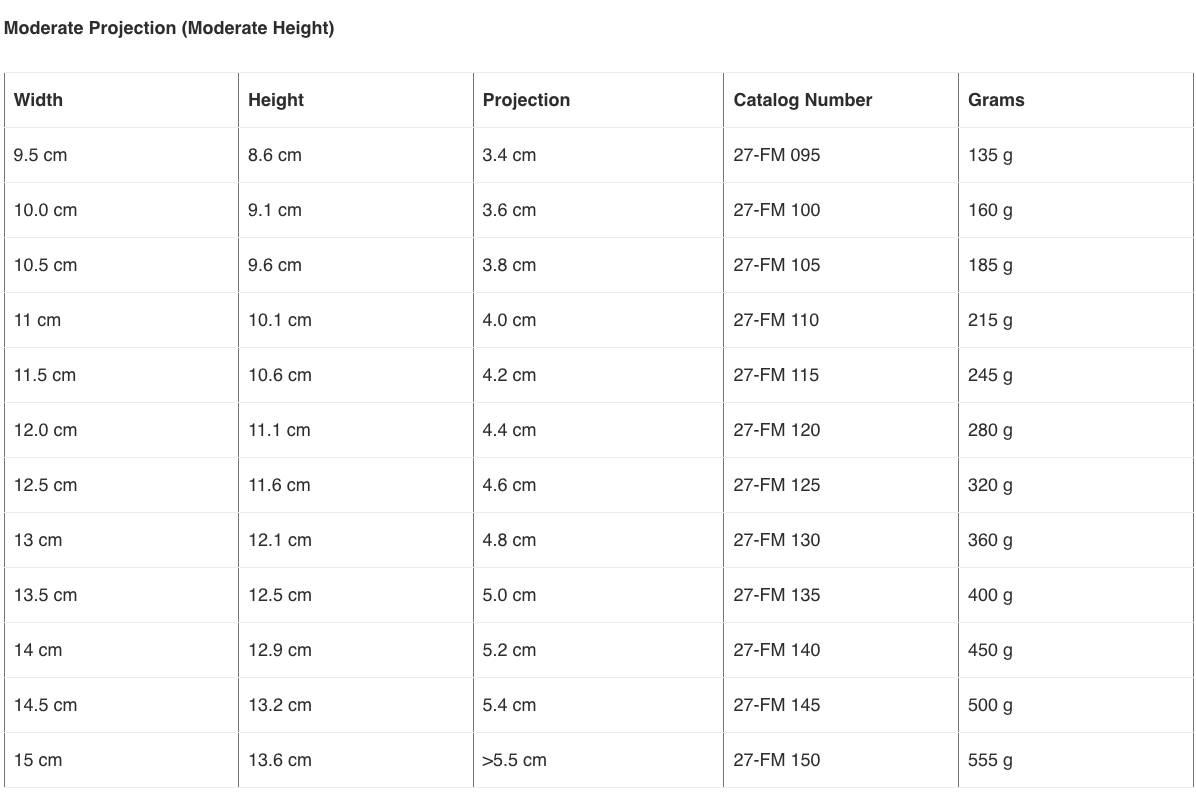

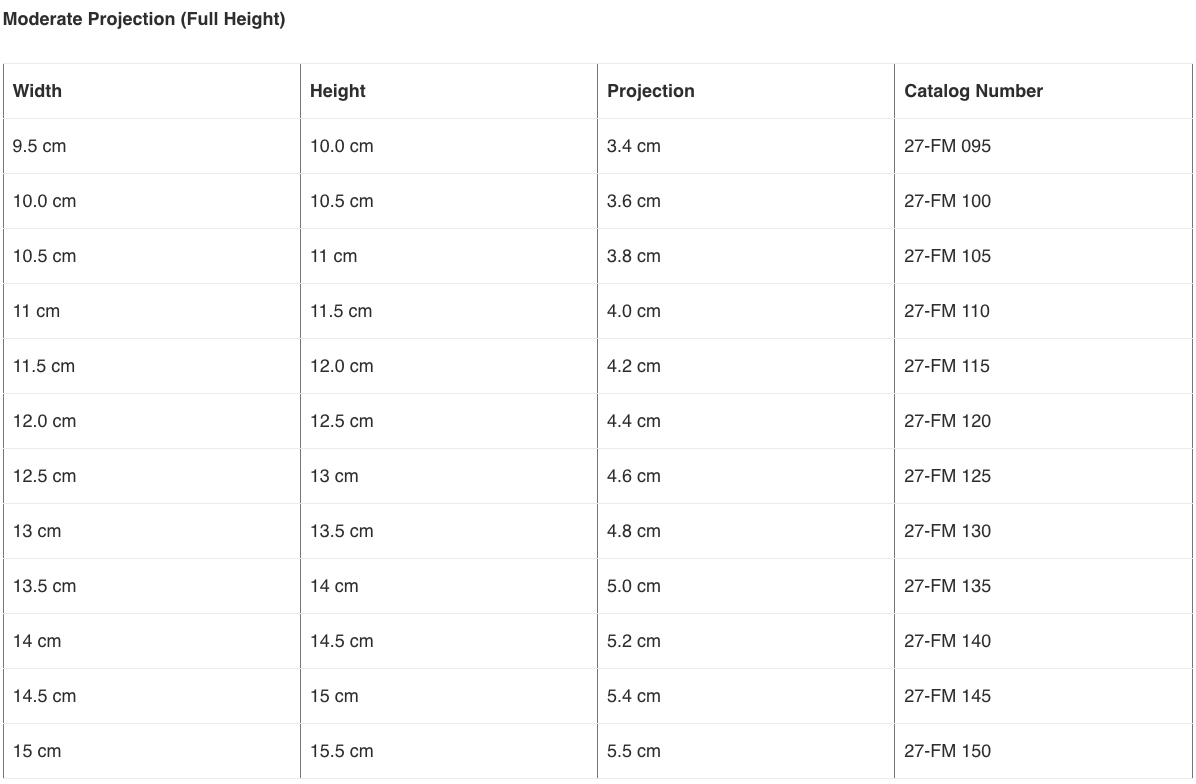
What are MemoryGel™ Smooth Round High Profile Breast Implants? What are their advantages and disadvantages?
As the name suggests the MemoryGel™ Smooth Round High Profile Breast Implants are round in shape (not anatomically shaped), have a high profile, giving them more of a bulge on side view (the most perkiness for your buck), and are encased in a smooth silicone elastomer shell. The advantages of using textured versus smooth breast implants are discussed in another section of this text, but are more related to physician preference, and beliefs regarding skin palpability than scientific data. The biggest advantage of the round high profile implants is this protuberance, considered youthful by many patients, and plastic surgeons. Another considerable advantage is the ability to use higher volume implants in patients with narrow chest walls because the width of the implant base is narrower. In addition, the use of silicone allows for the use of the MemoryGel™ Smooth Round High Profile Breast Implants in breasts with less skin and soft tissue cover. Some physicians prefer to use the larger size breast implants in moderate breast ptosis (sagging breasts) to avoid extra incisions. Use of silicone implants, because of their consistency, is ideal in such cases, especially when the lower pole of the breast has little soft tissue cover. The particular proprietary polymer employed in the Mentor devices is a cohesive gel that is purported to have more consistency such that even in cases of ruptured breast implants it is said not to leak as fast or as much. The disadvantages include a sacrifice of cleavage, owing to the decrease in the base diameter of the implant, and a drop in upper pole fullness for the same reason. In addition some women find the look imparted by the high profile breast implant too perky.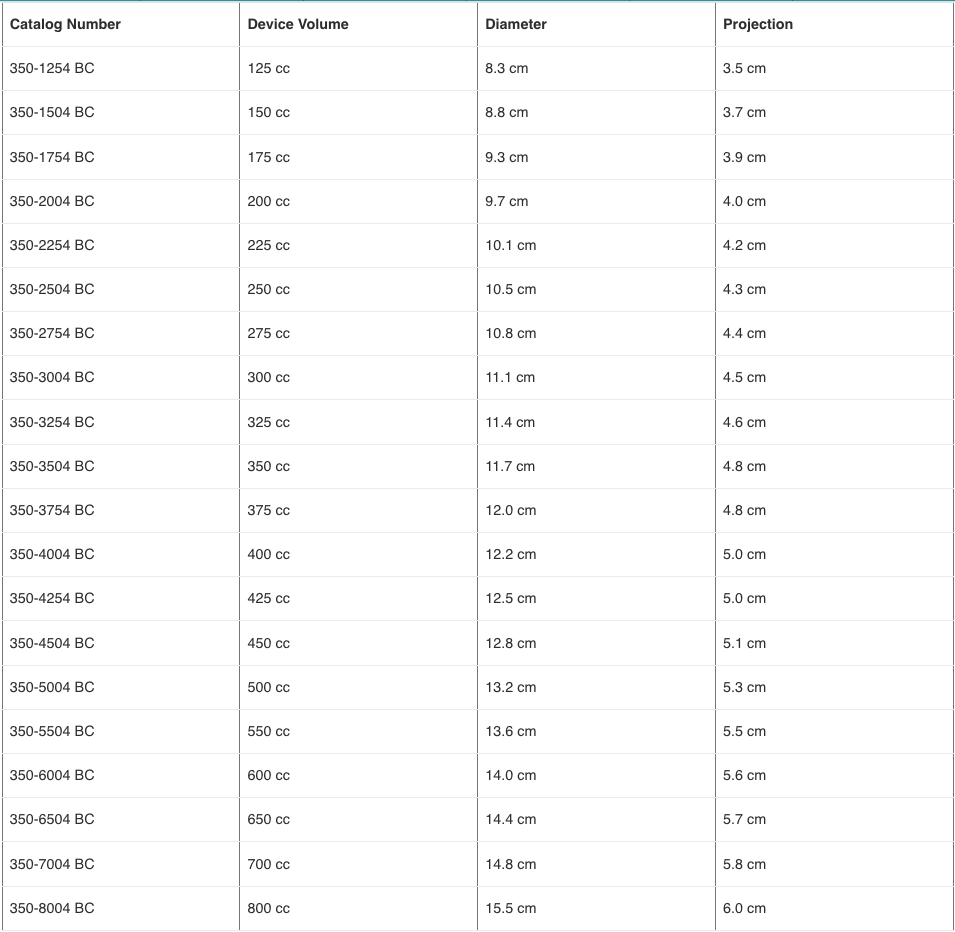
What is the thinking behind making the cohesive or gummy bear implant anatomically contoured?
There is a gentle curve to the breast. The top portion protrudes less, the bottom more, creating a gentle slope. The argument for a shaped gummy bear breast implants makes sense intuitively only. That is, a formed breast implant will maintain its shape at the top and not sag to the bottom, as would a more liquid implant. This is cannot be true, not because I disagree with it but because liquids are non-compressible, as are solids. A more liquid-like implant may be more prone to deformation through gravity, but all that would cause is rippling, as the down pulling silicone would exert traction on the top portion of the implant.
Is it possible for “Gummy Bear Breast Implants” to rupture?
Although probably less likely than other type of breast implant rupture, the “gummy bear silicone breast implant” can rupture or tear. After the implantation of thousands of such breast implants in Europe, the reported incidence of rupture is confined to several cases. This may be because most cases of rupture may not be picked up owing to the “gummy bear” consistency of the silicone gel. The consequences of leaking “gummy bear breast implants” are not well known, and there are studies going on right now to determine the safety of this cohesive silicone gel implant. Intuitively, the silicone “gummy bear” implant should not migrate as much as would be expected of the more liquid older generation silicone breast implants.
What are Cohesive Gel Breast Implants (“Gummy Bear Breast Implants”)?
Cohesive gel breast implants were formulated with a thicker form of silicone (viscous silicone polymer as a result of more extensive cross-linking) resulting in three ideal properties; less silicone “run-off,” in the case of rupture, no rippling, and maintenance of more precies form. If you slice into a third generation cohesive gel implant from Mentor and turn the two halves over, the silicone will not leak, drip, or run. You can see how this would be advantageous in case of rupture. It should be mentioned that “cohesiveness” is an attribute that is present in most of the older generation implants, so technically using such implants may be described as using cohesive gel implants. Recently, the latest generation of silicone breast implants was dubbed cohesive in the media. This is true, but misleading, once again, because all silicone implants are cohesive to a certain extent. What most consumers are interested in when they refer to cohesive implants are the so called “gummy bear implants,” or the latest generation of highly cross-linked silicone breast implants. So, back to the two most favorable properties of the so called “gummy bear breast implants.” They are more solid, and they do not ripple. This makes them ideal for thin skinned patients, because soft tissue cover (breast tissue or fat) is not as important in concealing the implant since the formed or cohesive gummy bear breast implant should hold its shape, and not ripple. It is also ideal in breast reconstruction for the same reason, and because large incisions are already present from the mastectomy (breast removal).
Why is the cohesive “gummy bear” implant being investigated?
FDA regulations mandate that all new devices be subjected to rigorous clinical trials to determine their safety regardless of how safe they may be thought, or how many regulatory bodies have approved them outside of the United States.
How can I tell if my cohesive gel (“gummy bear”) breast implants have ruptured, or are leaking?
Unfortunately, this is a question that can be answered only in speculation, without hard medical evidence. Presumably the more solid, formed nature of silicone “gummy bear” implant would not allow as much leakage, or as rapid a spill as a conventional silicone implant. This means that a patient would not be able to pick this up on routine self-inspection very easily. Having stated this a “gummy bear” implant patient who develops soreness and possibly enlarged lymph nodes in the armpit should promptly report to her surgeon.
Unfortunately, this is a question that can be answered only in speculation, without hard medical evidence. Presumably the more solid, formed nature of silicone “gummy bear” implant would not allow as
The breast enlargement surgery itself should be painless, whether performed under sedation with local anesthetic, or general anesthesia. It is the postoperative period that some may find brings discomfort. Assuming the postoperative course is without complication, pain from breast augmentation surgery peaks the day after surgery, and diminishes over the course of the following three to four days to be tolerable enough without the use of narcotics. Of course, pain tolerance varies significantly from patient to patient. The 72-96 hrs time frame is a “ballpark” figure, and a reflection of personal experience. Several other important factors are crucial to consider in breast enlargement surgery. Pre-incisional administration of local or dilute local (called tumescent) anesthetic greatly diminishes postoperative breast enlargement surgery pain. Postoperative pain and tenderness can be further affected by breast implant placement position. Sub-muscular placement or “dual plane” placement may cause substantially more discomfort than sub-glandular placement because of muscle dissection. If a skin excision is necessary, pain may be more pronounced. The injection of local anesthetic at the conclusion of breast augmentation surgery greatly diminishes postoperative discomfort. In addition, a more effective multiple intercostal nerve block may be performed. Finally, a small catheter may be placed, within the breast implant pocket, for the purpose of delivering local anesthetic in the post breast enlargement surgery period. This has been shown in studies to help significantly with postoperative discomfort. In short, breast enlargement surgery is very well tolerated in most patients.
What are Hydrogel Breast Implants (Hyaluronic-Acid Filled Breast Implants)?
This type of breast implant is not available in the U.S., and has been taken off the UK market. This is not because it is unsafe, but because not enough data exists to prove that it is safe. The same substance that is used to manufacture Juvaderm®, Restylane®, Captique®, Hylaform®, etc., was used to manufacture the Hydrogel-filled implant. That is, it was used as the filler in the standard silicone elastomer shell. Since the implants are not available, further discussion is unwarranted. For further information, please read the information put forth by the British MHRA (Equivalent of FAD, except for the food part).“Hydrogel filled breast implants are no longer available in the UK.Hydrogel breast implants consisted of a silicone elastomer shell containing hydrogel filler. Hydrogels are polymeric materials that have the ability to swell in water without dissolving and retain water within their structures.Until December 2000, there were two models of hydrogel filled breast implants on the UK market.Because of continuing concern over the safety of breast implants, the MDA (Medical Devices Agency, a forerunner to the MHRA) carried out a series of investigations into the safety of the various filler materials used in the implants available in the UK. The MDA’s investigations into hydrogel-filled breast implants revealed inadequacies in the manufacturers’ biological safety assessments and concluded that there was not enough information to fully assess the safety of either of the hydrogel filler materials. When they were made aware of the results of the MDA’s reviews, both manufacturers decided to withdraw their hydrogel-filled breast implants from the UK market in December 2000 as a precautionary measure, pending further studies to establish the safety of the filler materials.It must be emphasised that no definite risk has been identified. The concern lay only with the way the safety of the hydrogel fillers had been assessed. The MHRA is continuing to monitor the safety of these implants and, based on the currently available evidence, does not recommend that women with hydrogel-filled breast implants have them removed unless they are experiencing problems.Women who think that they may have hydrogel breast implants and are concerned, should contact the surgeon who carried out their operation, their GP or get advice from NHS Direct on 0845 4647 or in Scotland the Scottish NHS Helpline on 0800 224488.Clinicians and members of the public should continue to report adverse incidents to the MHRA.
Information specific to each hydrogel filled breast implant:
PIP Hydrogel breast implants were made in France and supplied in the UK by Clover Leaf Products Ltd. Approximately 4000 women in the UK received these implants since they were first introduced in 1994. The removal of these implants from the UK market was the subject of Device Alert DA 2000(07). This noted concerns about uncertainty over the metabolic fate of the filler material and about pathological changes seen in rats following implantation of the filler material that suggested the possibility of a systematic effect. The CE-marking was removed in 2002. In May 2005 the Committee on Toxicity (COT)1 reviewed two animal studies commissioned by PIP. Although some effects were seen in the kidneys of the tested animals, in a statement (external link) prepared in January 2006, the Committee concluded that these results suggested that exposure to the hydrogel filler will not lead to toxic effects in women with these implants. There is therefore no indication for a proactive explantation programme. The Committee did, however, express concern about the lack of long-term follow up of women with breast implants.The MHRA has received adverse incident reports of breast swelling associated with the presence of fluid in the implant pocket around PIP Hydrogel breast implants. The MHRA continues to monitor the safety of PIP Hydrogel implants and, based on the currently available evidence, does not recommend that women with these hydrogel-filled breast implants should have them removed unless they are experiencing problems. However clinicians who remove implants due to swelling (with or without suspected implant rupture) should consider having the implants weighed and photographed, carrying out histology of the surrounding capsule and cytology of any collected fluid; such cases should be reported to the MHRA.NovaGold™ breast implants were made in Germany and supplied in the UK by Somatech Medical Ltd. Approximately 250 women in the UK received these implants since they were first introduced in 1996. It is estimated that around 80% of these implants were implanted by the private sector for cosmetic reasons. The removal of these implants from the UK market was the subject of Device Alert DA 2
Besides silicone breast implants, or saline breast prostheses, what else is out there?
Cohesive Gel Breast Implants (Gummy Bear Breast Implants), Hydrogel Breast Implants (Hyaluronic-Acid Filled Breast Implants), PIP Hydrogel Breast Implants, PIP Saline Breast Implants, Trilucent Breast Implants (Peanut Oil Breast Implants, Soy Oil Breast Implants, Soya Oil Breast Implants, Soybean Oil Breast Implants), Hydrophilic Polyacrylamide Gel Breast Implants.
What is implant exposure or breast implant extrusion after breast enlargement surgery, what are the consequences, and what is the treatment?
The exact risk percentage may be found for both the Allergan, and the Mentor studies in related questions. The problem most often is the result of inadequate soft tissue (breast and skin) overlying the breast implants. It is unusual in cases of primary augmentation, and is more commonly seen in the compromised soft tissue of the reconstructed breast.If the extrusion if only threatened, and no implant is actually showing at the time of detection, a salvage procedure may be done to improve the soft tissue cover atop the implant. If the implant is exposed, many plastic surgeons will not attempt salvage, as by definition, and exposed implant is a contaminated implant. The breast implant will be removed, patient allowed to heal, and implant replaced at a later time.
How can the palpability of a breast implant be reduced in breast enlargement surgery?
A breast implant is more likely to be noted on manipulation of the breast when they are too big for the breast and soft tissue present, when they are over, rather than under the muscle, and when they are textured. Ensuring a small enough base width, good soft tissue cover with a submuscular or dual-plane placement, and using smooth breast implants will decrease the risk for this.
What is palpable or visible breast implant rippling after breast augmentation surgery, what are the consequences, and what is the treatment?
Breast implants have fold flaws. Because of the consistency of silicone gel, and predetermined, and optimal filling, the flaws may be less pronounced in such breast implants. Saline breast implants may produce scalloping and folding that is made more pronounced by overfilling, or under-filling breast implants. The visibility or palpability of breast implant rippling is accentuated by lack of breast tissue, fat tissue, or muscle tissue between the breast implants, and their overlying skin. The solutions to the problem include replacement with the latest generation cohesive gel implants or augmentation of the soft tissue covering the breast implants with flaps.
What are some of the unestablished consequences of implant rupture?
Problems not specific to silicone breast implant rupture include breast hardness, a change in breast shape or size, and breast pain. Gel migration has also been infrequently reported to areas far removed from the breast like the underarm, abdominal wall, arm, groin, and chest wall. Inflammation around nerves, granuloma and scar formation have been associated with this. Silicone migration has also been rarely reported to lymph nodes, in absence of rupture.
Is breast implant rupture common after breast augmentation surgery, what are the consequences, and what is the treatment?
Breast enlargement implants collapse when either saline or silicone that is contained within them leaks out through a broken valve (saline breast implants only), or a tear in the implant shell (both silicone and saline implants). Saline is reabsorbed rapidly, and a dramatic change in size will be noted by the patient within days. Silicone breast implants rupture may go undetected, may present with a slight change in shape from one breast to the other, or may have a more pronounced difference in size between the two breasts. Many rupture events go unexplained, but may be due to inherent defects in the implant with worsening over time. Known reasons for deflation consist of overfilling or underfilling saline breast implants, obvious causes such as undetected damage to the breast implants in surgery (tears, needle holes, etc.), trauma whether via accident, aggressive manipulation during intimate contact, or during mammography, the scar around the breast implant squeezing to the point of rupture (capsular contracture), attempted rupture of such contracture via closed capsulotomy. Consequences of saline rupture are cosmetic only. Many ill-effects have been attributed to silicone leak, however, in spite of opportunistic attempts at destroying scientific method of research as it applies to silicone breast implants, local inflammation and difficulty in extracting all of the leaked silicone gel has been the only real issue. Obviously, the treatment in such cases is implant removal and replacement.
What type of implants should I ask my surgeon to use in enlarging my mammaries through breast augmentation surgery?
There are multiple different types of implants available for use in breast enlargement. In addition multiple permutations of the various prosthesis types yield a fairly wide array of choices in terms of material, shape, coating, size. In addition, each of the two currently approved breast prosthesis manufacturers in the United States (Inamed™ and Mentor™) makes their own version of each implant with the varying characteristics. The availabilities are as follows. Each implant is encased in a silicone elastomer shell. The shell may be smooth, or textured. The shell may be shaped like a tear-drop, also referred to as anatomical, or the shell may be perfectly round. Each configuration of the round implant may have a different degree of projection even if the amount of volume contained within is the same. As an example, one style of implant may have a volume of 500cc and a projection of 3.6cm, while another, may have a volume of 500cc but a projection of 4.7cm as a result of a narrower base. The filling material of a breast implant may be silicone, or saline, or both in the case of some implants used for breast reconstruction. The size of an implant may vary to over 1000cc, though volumes of that size are not currently approved in the U.S. and must be procured through companies in Europe or South America.
Do breast implants come with a warranty, if so what does the warranty cover, and what is excluded?
There are two FDA approved manufacturers of breast implants within the United States, Mentor™ and Allergan™. Each corporation has its own breast prosthesis warranty, with options for more extensive coverage. Both policies are quoted below.“Mentor’s free Lifetime Product Replacement Policy involves the free lifetime product replacement for its gel-filled and saline-filled breast implants, worldwide. When implant replacement is required and the Mentor Product Replacement Policy applies (see below), Mentor will provide, throughout a patient’s lifetime, the same or similar Mentor breast implant at no cost. If a more expensive product is requested, Mentor will invoice the surgeon for the price difference.The Mentor Standard Advantage Limited Warranty is free of charge to all patients who are implanted with Mentor gel-filled or saline-filled breast implants in the United States and Puerto Rico. When the limited warranty applies, Mentor provides the following:Financial assistance: For the first ten years following a breast implant procedure, Mentor will provide financial assistance up to $1200 to help cover operating room, anesthesia, and surgical charges not covered by insurance. Financial assistance applies to covered events only (see below). Operating room and anesthesia charges will be given payment priority. In order to qualify for financial assistance, the patient will need to sign a Release Form.Free contralateral (opposite side) implant replacement upon surgeon request. Non-cancelable terms.The Mentor Enhanced Advantage Limited Warranty is an optional limited warranty available for women who are implanted with Mentor gel-filled or saline-filled breast implants in the United States and Puerto Rico. To be eligible, the Mentor Enhanced Advantage Limited Warranty must be purchased for an enrollment fee of $100 within 45 days from implantation. When the warranty applies, Mentor provides the following: Financial assistance: For the first ten years following a breast implant procedure, Mentor will provide financial assistance up to $2400 to help cover operating room, anesthesia, and surgical charges not covered by insurance. Financial assistance applies to covered events only (see below). Operating room and anesthesia charges will be given payment priority. In order to qualify for financial assistance, the patient will need to sign a Release Form. Free contralateral implant replacement upon surgeon request.Non-cancelable terms.With both the Mentor Standard Advantage and Mentor Enhanced Advantage Limited Warranties, it is important for the patient to also maintain her own records to ensure validation of her enrollment.
Products Covered
The Mentor Standard Advantage Limited Warranty coverage applies to all Mentor gel-illed and saline-filled breast implants that are implanted in the United States and Puerto Rico, provided they have been:Implanted in accordance with the Mentor package insert, current to the date of implantation, and other notifications or instructions published by Mentor; andUsed by appropriately qualified, licensed surgeons, in accordance with accepted surgical procedures.
Events Covered
The Mentor Lifetime Product Replacement Policy, and the Standard Mentor Advantage and Enhanced Advantage Limited Warranties coverages apply to the following:Rupture due to localized stress, folding, manufacturing defect, patient trauma, or unknown causeOther loss-of-shell integrity events, such as surgical damage may also be covered by these programs. Mentor reserves the right to determine if specific, additional events should be covered.
Events Not Covered
The Mentor Lifetime Product Replacement Policy and the Mentor Standard Advantage and Enhanced Advantage Limited Warranties coverages do not apply to the following: Removal of intact implants due to capsular contracture, or wrinkling. Loss of implant shell integrity resulting from preoperative procedures, open capsulotomy, or closed compression capsulotomy procedures. Removal of intact implants for size alteration.
Filing for Financial Assistance
To file a Mentor Advantage claim for product replacement and/or financial assistance, the surgeon must contact the Mentor Product Evaluation Department at 1-866-250-5115 prompt #1 prior to replacement surgery.For financial assistance claims, a patient-specific Release form will be generated that the patient must sign and return.For either replacement or financial assistance claims, the surgeon must send the explanted, decontaminated Mentor breast impl
What type of surgical techniques are not appropriate for plastic surgeons to use in breast augmentation surgery for risk of implant shell rupture?
The filling of saline breast implants with anything other than saline, bathing saline breast implants in iodine solution, penetration of the saline breast implant shell during injection, utilizing more than one saline breast implant per side, attempts at reshaping the saline breast implant can all compromise the integrity of the saline breast implants’ shells and lead to rupture or leak.
How should I care for my incisions after breast enlargement surgery?
Dr. Gerzenshtein’s recommendations to his patients are found below. Consult with your own surgeon for his ore her specific instructions. After surgery you will be placed in a bra, possibly with an ace wrap above it. If the ace is present, it was applied to control pocket position in cases where implant position was made submuscular and the muscle was not entirely divided at its lower edge, this means that the ace wrap must be re-applied exactly the way you were instructed. The ace wrap along with the dressing, will removed for the first time 24 hours after surgery, in the office. After the initial dressing change, dressings should be changed twice a day in the following manner: Remove old dressing and wash or shower, after drying, apply new dressing; ABDs followed by bra, then ace if indicated. When the edges of the steri-strips become frayed trim them. With time, as very little is left behind, they may be removed (usually 2-4 weeks). It is not routine to have drains placed at the time of surgery, however, at times, if bleeding is diffuse, and cannot be addressed via surgical maneuvers (clipping, suturing, tying) it may be safer to leave behind a drain in attempting to prevent a hematoma (blood collection), if present, the drains will be removed within one to three days. Wear a soft comfortable bra for the first 7 days after surgery. Two weeks after surgery you may purchase any type of bra you wish. If non-absorbable sutures were used, they will be removed 7 days after surgery. You may begin breast massage the 2nd week after surgery, you will be instructed on breast massage at your post-op appointment, continue massaging for at least 6 weeks after surgery. Do not expose incisions to the sun and/or tanning UV light for at least 1 year, however, you may begin tanning 4 weeks after surgery while keeping incisions covered. If sun exposure in unavoidable, use a product with SPF of at least 30.
Who would be considered a good candidate for breast enlargement or breast augmentation surgery?
The ideal candidate is over 18 years of age, that is a consenting adult, psychologically fit, healthy, has well-defined and realistic expectations of the breast enlargement process, and is not under the impression that breast augmentation surgery is the answer to all of her life’s problems. Patients who are inappropriate candidates include women with a breast malignancy, or pre-cancerous tumor(s), are pregnant or nursing or breast feeding post-partum, the presence of acute or chronic infection, including oral or dental. Relative red flags include psychological or emotional instability, stressful life-events, and unrealistic goals and expectations.
What is capsular contracture after breast augmentation surgery, what are the consequences, and what is the treatment?
A breast implant capsule is the firm, sometimes hard and thick, scar tissue that forms on the inside of the breasts and surrounds the breast implants after breast enlargement surgery. This sphere can contract over time, and squeeze the breast implants (capsular contracture). This would certainly place the breast implants in one position with almost no mobility. The positions of the left and right implants may be distorted with respect to each other, and also in relation to the chest wall. The shape of the breasts may also be made abnormal in any direction. The breasts may also feel unnaturally hard. Finally, significant pain may also be present. The incidence of this capsular contracture is thought by many plastic surgeons to be related to blood collection, fluid collection, contamination, or infection at the time of breast enlargement surgery. It is also more common when the breast implants are placed on top rather than behind the pectoralis muscle. Surgical options for the treatment of capsular contracture include releasing the capsule circumferentially, completely excising the capsule, or even the former or latter combined with breast implant replacement. Regardless of the intervention, there is no guarantee against the recurrence of capsular contracture.
Is chest wall deformity common after breast enlargement surgery?
Chest wall deformity may be a result of aging, or the pressure exerted by a usually large breast implant in relation to the patient breast and chest wall size. This adverse effect is not very common.More common is a congenital anomaly whereby the deficit is present before augmentation as in pectus excavatum or carinatum (and inward or outward bowed chest).
Is chronic pain common after breast enlargement surgery?
Acute pain is common, chronic pain is not. Both U.S. implant manufacturers have similar data to this effect. Although “improper size, placement” are stated by some to be the culprits, the allegation is laughable, because the proper size and placement is dependent entirely upon patient anatomy and preferences. Transection of nerves supplying skin may lead to prolonged pain as the nerves heal over months. Most surgeons will attempt to stretch the tissue around the area where the nerve travels hoping to avoid this. Capsular contracture may cause traction on cutaneous nerves, lading to pain. Relentless, intense breast pain should prompt an urgent notification of the operating plastic surgeon.
What is closed capsulotomy?
The inside scar that forms around a breast implant, whether silicone or saline, can compress that implant and make it look and feel very unnatural. Years ago a method devised to “break” apart this capsule was quite commonly used. Although successful in some instances, many times the technique led to implant rupture, necessitating removal of the breast implants, and re-implantation.
Are gummy bear implants the final word in breast augmentation?
This question can be answered by comparing Rembrandt painting with his old brush, and a painter-for-hobby using the latest and greatest in paintbrush technology. It is not so much the brush, as the brusher. I’ll take Rembrandt any day. That being said, the so called “gummy bear” silicone breast implants have many advantages, and a few disadvantages. They are likely the ideal implant for breast reconstruction patients, patients with thin skin or no native breast tissue who desire large breasts, and patients to whom incision size is not of the outmost importance.
Can any surgeon use the cohesive gummy bear implant?
Any board certified plastic surgeon who has agreed to abide by the patient selection criteria, to provide follow-up data, and to enroll in the ongoing studies may use this implant.
Is there a way to detect cohesive gel (“gummy bear”) breast implant rupture or leak?
Presently, and as with other types of silicone breast implants, the cohesive gel (“gummy bear”) silicone breast implants can only be examined for a possible leak by Magnetic Resonance Imaging (MRI). Because silicone tends to remain inside the capsule that is formed around each implant, it would be very difficult to pick this up on routine x-rays or mammograms.
What happens if “Gummy Bear Breast Implants” tear, rupture, or leak?
After the implantation of thousands of such breast implants in Europe, the reported incidence of rupture is confined to several cases. This may be because most cases of rupture may not be picked up owing to the “gummy bear” consistency of the silicone gel. The consequences of leaking “gummy bear breast implants” are not well known, and there are studies going on right now to determine the safety of this cohesive silicone gel implant. Intuitively, the silicone “gummy bear” implant should not migrate as much as would be expected of the more liquid older generation silicone breast implants.
Why aren’t any Inamed or Mentor contoured or anatomically shaped silicone gummy bear breast implants made smooth?
Regardless of the degree of silicone cohesiveness in an anatomically shaped breast implant, it will always have a thinner end and a thicker end. It is very important that the position of the implant be maintained so that no distortion occurs, as would happen if the breast implant flipped up, or front to back. Textured implants tend to adhere firmly to their breast capsule, preventing any rotation, and malposition.
What are some of the complications of breast enlargement surgery?
Hemorrhage (bleeding), infection (superficial skin and soft tissue, or deep around the soft tissue surrounding the implant), implant exposure (implant poking through the incision), incision dehiscence (wound coming open), loss of nipple sensation (complete or partial), loss of sensation in breast skin (usually lower part), palpable or visible defects such as rippling or capsular contracture, breast implant rupture, silicone leak with the possibility of a local inflammatory reaction, capsular contracture (inside scar that may squeeze the implant into an unnatural form), seroma (fluid accumulation as your body attempts to fill a potential space).
Is there an association between breast augmentation surgery and connective tissue disease?
Pseudoscientific “studies” reported on cases of connective tissue disease supposedly associated with breast implant use in breast augmentation surgery. No study to date has ever demonstrated this. Many women who went on to develop connective tissue disease after breast augmentation attributed the problem to the implants, but the truth is that the incidence of such patients within the breast enlargement population and the general population is the same.
What other points should I consider when chosing silicone gel-filled breast implants to be used in my breast enlargement?
In addition to all of the possible complications, and unplanned additional surgeries you should also consider the possibility of health insurance premium increases. It may also be a good idea to invest in CosmetAssure®. This is an independent insurance company that offers coverage for patient treatment in cases of post-surgical complications related to cosmetic surgery for a one-time premium.
What is the customary cost of breast augmentation or breast enlargement surgery?
Prices range from as little as $2,500 to as high as $15,000. There are several factors that go into the price of breast enlargement surgery.Geographical area is probably the most likely factor to affect the price of breast enlargement surgery. Prices tend to run lower in regions where the population is less affluent on average, where cosmetic surgery is considered less necessary, but also where competition is more prevalent.Surgeon availability is another important factor in price setting. A surgeon whose schedule is entirely booked for months on end, will generally “skim the top,” in terms of patients who can afford higher prices. This does not mean there is no one out there who can do as good a job. It means that a particular surgeon knows he or she can get a certain amount of money for his or her breast augmentations.Another important part of the ultimate cost that is passed on to the patient is whether or not the plastic surgeon owns the facility at which the breast enlargement surgery is carried out. Although part of the facility fee may then go to the owning surgeon, it may be set substantially lower than a facility fee that would be paid to a third party such as a hospital or operating center when carrying out the breast enlargement surgery.A factor related to the facility fee is whether or not the surgeon prefers to use general anesthesia, or to employ the services of an anesthesiologist, or whether the plastic surgeon favors surgeon administered sedation with regional blocks for carrying out breast enlargement surgery. Obviously, the addition of an anesthesiologist or even a certified nurse anesthetist will add cost to breast augmentation. It is important to realize, however, that paying for an anesthesiologist does add a certain measure of safety, regardless of what anyone may tell you to the contrary.
Is dissatisfaction with cosmetic results common after breast augmentation surgery?
Both Allergan and Mentor publish data with respect to adverse outcomes after breast enlargement surgery with either silicone or saline breast implants. Disappointment with cosmetic outcomes of breast enlargement surgery with either silicone or saline breast implants are a result of miscommunication in preference or obvious defects. The former comes from the plastic surgeon and his or her patient not being on the same page with respect to shape, size, or incision placement. The latter is either an unavoidable fact of breast augmentation or a technical problem. Breast implant rippling and wrinkling, possible asymmetry with implant migration, scar migration, or audible sounds with manipulation that present months after the procedure are usually not the result of surgical misadventure. Asymmetry in shape, size, or incision placement immediately after the surgery can be attributed miscalculation. Hypertrophic scarring, implant visibility, implant palpability, and hardening of the breast capsule with resultant distortion in shape are typically not a result of surgical error.
What is “dual-plane” breast implant placement in breast augmentation?
The “dual-plane” approach allows placement of the upper portion of the implant under the muscle, and by releasing the lower portion of the muscle allows the lower portion of the breast implant to sit under the breast tissue. This eliminates the drawbacks of both the sub-glandular and sub-muscular placement while retaining the advantages of both. It is the most commonly performed placement in today’s breast augmentation surgery.
Is there a way to tell my own breast tissue from saline breast implants during self examination?
Distinguishing native breast tissue from saline breast implants is a necessary part of breast self-examination. It should be fairly obvious to discern breast from implant. If you encounter difficulties, ask your plastic surgeon to demonstrate the appropriate technique for breast self-examination and point out the difference between breast implants and breast tissue.
What are the restrictions to activity after breast enlargement surgery?
Dr. Gerzenshtein’s recommendations to his patients are found below. Consult with your own surgeon for his ore her specific instructions. Do not drive a car or engage in activities that depend on your coordination for 48 hours after your surgery, or after taking any of the pain, nausea or insomnia medications predscribed. Walking and getting about is highly encouraged for multiple reasons, including a decrease in the incidence of clot formation in the veins of your legs, have someone with you for the first 24 hours to monitor and help you get about as necessary. When resting/sleeping, lie on your back with several pillows under your head and back, or place a pillow or rolled blanket under the head of your mattress, this will decrease swelling. You may sleep on your side 2 weeks after surgery, and in any manner 4 weeks after surgery. Do not use your arms in strenuous activity such as vacuuming, pushing yourself up in bed, and pushing yourself up from sitting position for approximately 1 week. For the first week, avoid activities that raise your blood pressure such as heavy manual labor, repeated heavy lifting, strenuous exercise, or bending over. Plan to be away from work for one week, assuming your post-operative course is uncomplicated. After one week you may engage in light exercise only, such as walking. No heavy lifting should be done (10 lbs or more) for 4 weeks after breast augmentation. If weight training, refrain from upper body work for six weeks (substantial capsule formation), otherwise contraction of the pectoralis will push the implant up, changing the position of the final pocket to a more superior and less favorable position. Do not smoke, use nicotine substitutes (patches, chewing tobacco, etc.), and stay away from second hand smoke for at least 6 weeks after surgery. Smoking will decrease blood and oxygen flow to healing tissues and can cause loss (death) of skin, fat, and muscle in the operated field, especially along the incisions, slow down healing to double of normal time, worsen scar appearance on the outside, lead to a tough, fibrous scar on the inside, and increase the risk of fluid pockets.
What are the advantages and disadvantages to the use of cohesive “gummy bear” breast implants?
“Gummy Bear Breast Implants” have the consistency of gummy bears. This means there should be no folding or rippling. Being more formed should presumably allow the implants to maintain a shape closer to the original post-operative contour. Finally, should the implant rupture, migration should not occur to the same degree as with older generation implants.The main disadvantage to the cohesive “gummy bear” implants is that they require a somewhat larger incision to place. Being more formed does not allow for the kind of manipulation and squeezing through a tight incision that is possible with the older, more liquid-like silicone breast implants. The other drawback is that the gummy bear breast implants only come in the “teardrop,” contoured, or shaped variety in the U.S.
How and why do breasts shape change with age?
Three major factors accounting for significant shape and size changes within the breast need to be considered within each patient. A patient may have one or all three of the components acting to produce undesirable changes in the breasts. The factors are: Weight fluctuations, such as large weight-gain followed by a significant loss, stretching out the skin envelope, and then removing the contents (fat).Multiple pregnancies acting to increase the volume of breast tissue that pushes on the overlying skin envelope, and atrophies between periods of pregnancy.Loss of elasticity in the connective tissue scaffolding that keeps the skin from stretching too far. This may be related to aging, genetics, or both.
What are the various saline implants available from Allergan?
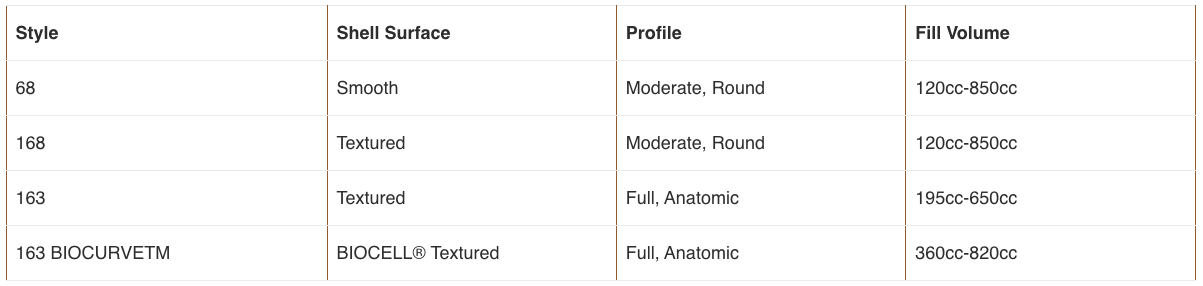
What are the various silicone implants available from Allergan?
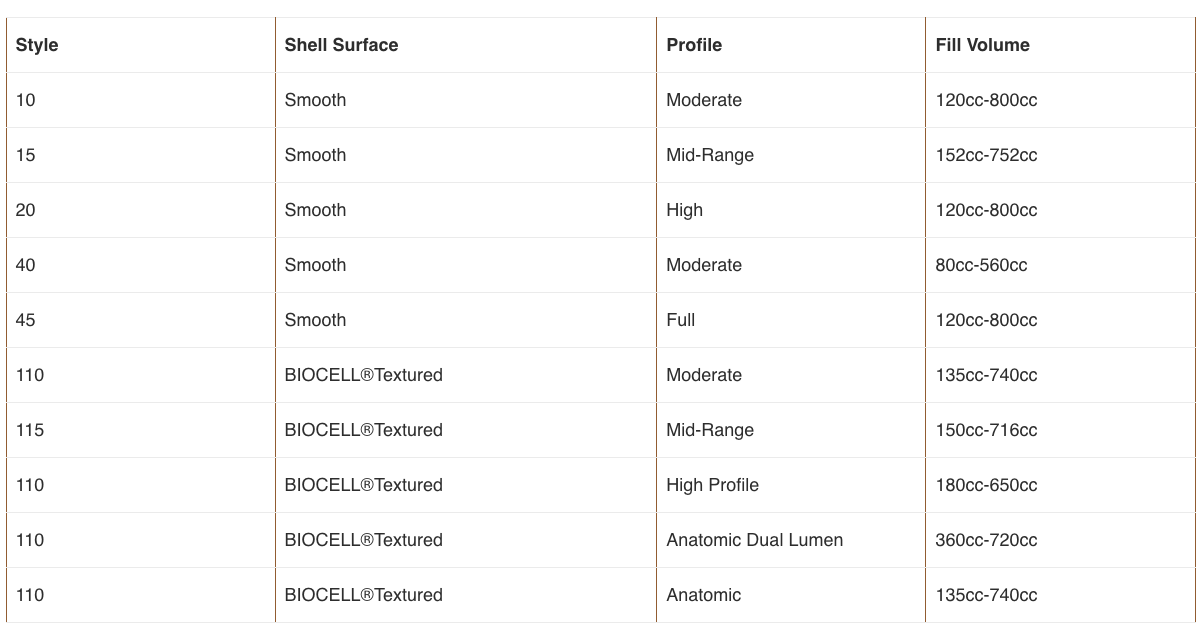
I not happy with the size of my breasts, but I do not want breast enlargement surgery. What are my options?
There are three non-surgical options available to women who do not wish to undergo breast augmentation surgery. The first is to do nothing and concede to smaller size breasts. The second is to use a padded bra to give the appearance of larger breasts when clothed. The third, though not highly recommended, is to try using a vacuum type device over a several month course.
Should my physician use a shaped or round implant in performing my breast augmentation?
This decision depends as much on what the surgeon can accomplish using either the round or the anatomically contoured implants as on which type of implants to use.Assuming the breast pockets are dissected in to the inferior or lowermost extent in the exact same manner, the shaped implants will impart more fullness at the top, and provide a more natural, gently curving slope to the augmented breast. For this to happen, however, the lowermost portion of the dissection or pocket must be the same no matter which mammary implants you use. If a surgeon habitually dissects low enough inferiorly to drop round breast prosthesis low enough that upper pole fullness is lost, that surgeon will likely favor the teardrop shaped, or anatomically shaped implant to compensate for that dissection. For anatomically shaped or contoured implants to do what they were intended for, pocket dissection has to extremely precise. This is because contoured breast implants are not symmetric; they have a top and bottom. If the subglandular or submuscular pockets are too wide, the shaped implants can shift or even flip, imparting asymmetry and even worse an unnatural shape to the augmented breast. Even though shaped mammary implants are textured, this is still no guarantee against malposition. Finally using the round type of breast implants can impart more medial or inner breast fullness. This significantly improves cleavage, because more fill volume winds up toward the more central part of the breast.
What is an axillary incision in breast enlargement surgery?
Placing the incision in the axilla (underarm) allows for a smaller incision. It is useful when there is not much breast tissue present to begin with, and thus no prominent breast fold, and when the nipple-areola complex is small. It is not as well concealed as the periareolar incision, gives less control in terms of the ability to feel around the breast pockets in assuring symmetry, and placement of silicone breast implants will necessitate a larger incision which may be less pleasing.
Is bleeding common after breast augmentation surgery, what are the consequences, and what is the treatment?
Bleeding is not a common complication after breast augmentation surgery; however, it may lead to problems if not detected in a timely fashion. This applies more to acute hemorrhage immediately after breast enlargement surgery. The affected side would become considerably larger than the non-bleeding side, would possibly turn pale and purplish, and the resulting tension would potentially threaten the viability of the overlying skin. The volume of blood that a breast pocket could potentially accumulate is not large enough to be life-threatening unless combined with certain other conditions. The treatment for acute postoperative bleeding after breast augmentation surgery is an immediate return to the operating room, release of the collected blood, a search for the offending vessel, and control of the bleeder. A hematoma may form after breast augmentation surgery in the case of a slow bleed, not detected immediately, or with subsequent trauma, days, weeks, or months after the initial operation for breast enlargement. The result would be swelling, discoloration, and pain. If large, as judged by the operating surgeon, the collection would need drainage. Smaller hematomas can be absorbed by the body.
Where do breasts get their shape?
To understand how the breast is built, we must examine its scaffolding, and then add intervening components. Let’s pretend we are building breasts. First we’ll start by making the skin on the chest wall loose, in a manner of a conical tent. We will make it as loose as we need to fill it with the volume we desire. Then, we’ll build the scaffold. Picture branching lines of connective tissue (white, fibrous, scar like strands) that attach the covering of the chest wall muscle to the overlying skin. Now if you were to tent up on the loose skin in the center of the breast, the scaffold would only allow you to stretch to the limits of it length. This is what would limit the descent of your breasts via gravity, though eventually the scaffold would stretch, and cause sagging breasts. Tenting the scaffolding would also make spaces between its individual strands. The spaces will then be filled with breast parenchyma, or the breast tissue that is responsive to female hormones, produces secretions, swells with monthly cycles, and makes milk. Each segment of this breast tissue will then have a pipe to drain its secretions, or milk. The pipes would travel to the nipple, and get bigger, the nearer to the nipple they came as more pipes joined in from other parts of the breast, and would look like an upside down tree. Finally, a several centimeter layer of fat would be placed under the skin, between the breast parenchyma (tissue), and the skin. The thickness of the fatty padding would depend on the bodyfat composition of the recipient of our breast.
Will there be breast skin and breast tissue changes after silicone gel-filled breast implant use in breast augmentation surgery?
Breast implantation stretches the skin envelope of the breast. This can accentuate stretch marks. Over time, breast skin can thin, revealing breast implant irregularities and fold flaws. The additional weight can potentially lead to an increase in breast drooping, and necessitate breast lifting or tightening.
Is breast tissue atrophy common after breast enlargement surgery?
Breast tissue atrophy may be a result of aging, or the pressure exerted by a usually large breast implant in relation to the patient breast and chest wall size. This adverse effect is not very common.
Is it safe to breastfeed my child after silicone breast enlargement surgery?
After the scare tactics of certain aspiring stars in the media had been worn thin by legitimate studies, it became clear that breast feeding after silicone breast augmentation was safe. From a purely physiologic standpoint two factors stand in the way of silicone secretion into milk. The first factor is the size of the silicone at the molecular level, the second is the fact that silicone never comes into direct contact with the cells that line the duct that secretes the milk. One of the surgical approaches to breast augmentation surgery, the circumareolar (around nipple) cuts through the breast ducts. Three approaches, the inframammary (under breast in fold), transaxillary (armpit), and TUBA (through the belly button). Even when the surgical approach carries a risk of transecting, or cutting through the milk carrying ducts, the passages either heal, or become blocked as in fibrocystic change, but do not retain a communication with the implant cavity making this of no consequence. As much as it would make for a good sensationalistic “story,” silicone breast implants do not harm the baby.
Can calcium collections in the breast after saline or silicone breast implant surgery be mistaken for cancer?
Besides cancer, calcium accumulates in areas of trauma or inflammation such as surgical sites. Although calcium present in and/or around tumors has a distinct configuration, it may be mistaken for a possible malignancy with a resultant recommendation for biopsy and/or extirpative surgery. Such procedures may result in the need for implant removal and replacement, or even breast reconstruction. A baseline mammogram prior to breast augmentation , and radiologic centers experienced in the Eklund technique would likely diminish the chances for this.
Is there an association between breast augmentation surgery and cancer?
According to multiple studies, there is no association between breast enlargement surgery and breast cancer.
Am I a good candidate for saline-filled breast implants?
The ideal candidate is over 18 years of age, that is a consenting adult, psychologically fit, healthy, has well-defined and realistic expectations of the breast enlargement process, and is not under the impression that breast augmentation surgery is the answer to all of her life’s problems. Patients who are inappropriate candidates include women with a breast malignancy, or pre-cancerous tumor(s), are pregnant or nursing or breast feeding post-partum, the presence of acute or chronic infection, including oral or dental. Relative red flags include psychological or emotional instability, stressful life-events, and unrealistic goals and expectations.
What type of anesthesia is typically used to carry out breast augmentation or breast enlargement surgery?
The two options available to clients and surgeons in maintaining a comfortable, safe and painless environment for the tummy-tuck patient, and a controlled setting for the abdominoplasty surgeon performing the body contouring surgery are general anesthesia and intravenous sedation combined with local anesthesia. The advantages of general anesthesia include complete unawareness on the part of the patient during abdominoplasty, a secure airway, and a still, controlled environment for the operating surgeon. The greatest disadvantages are post-operative nausea and vomiting, risks associated with general anesthesia and post-operative lethargy that slows recovery. The advantages to sedation type anesthesia for tummy-tuck surgery are just the reverse of the disadvantages noted for general anesthesia; recovery is faster, nausea and vomiting are minimized, and the systemic risks associated with general anesthesia are abolished. It is not possible to perform abdominoplasty under sedation in all cases, however, the amount of the tissue excised typically dictating whether it may or may not be used.
Will I be able to breast feed after breast enlargement surgery?
Breast augmentation surgery should not affect breast feeding. Because breasts gain more projection and substance after enlargement, they are typically easier to hold. Because they protrude more, and are easier to hold, breast feeding becomes much easier. Paradoxically breast feeding is actually less difficult for some women, after breast augmentation surgery. Given all of this, however, there are studies showing that women with breast implants report an inability to feed in up to 2/3’s of the implanted population, compared to 7 in 100 for women without breast implants. It is doubtful, however, that matching for size and age such results would ever hold up.
Is delayed wound healing common after breast enlargement surgery?
Delayed wound healing is not very common after breast enlargement surgery. Because the incisions are relatively small, and with proper technique the breast tissue is not devascularized the problem is rarely seen in healthy patients. Nicotine use, poorly controlled diabetes, chemotherapy, radiation therapy, vascular disease, immunosuppressive therapy or disease, use of corticosteroids may all lead to delayed wound healing.
Is abscess formation common after breast augmentation surgery with silicone breast implants, what are the consequences, and what is the treatment?
Any surgery, in any discipline carries a risk of infection. The risk is calculated based on the degree of contamination for a particular operation. Breast augmentation is considered a “clean” surgery, and carries an overall infection rate of less than two percent. If infection should take place, it will most often affect one or more of three patterns, assuming there is no disseminated spread, and the infection remains localized. Infection can occur in the skin, in the soft tissue surrounding the implant, and in the form of a pus pocket. Skin infection will usually respond to oral antibiotics. Soft tissue infections surrounding the breast implant may respond to oral antibiotics, will sometimes require intravenous antibiotics, and in other cases need to be treated with implant removal. If the infection should progress to, or start out as an abscess (pus-pocket), the only treatment that will be effective in treating the infection and preventing more serious systemic complications is drainage of pus and breast implant removal. Toxic Shock Syndrome (TSS) may result from the presence of a foreign body (breast implant in this case) in the setting of an infection, and is a truly life-threatening condition that needs to be addressed immediately. It is marked by high fever, nausea and vomiting, diarrhea, light-headedness and possibly loss of consciousness, and a diffuse rash. The treatment is timely institution of IV antibiotics, and breast implant removal. If the breast implant is removed, the infection should be treated, the inflammation allowed to resolve, and a new implant placed weeks down the road.
When should silicone gel-filled breast implants not be used in breast enlargement surgery?
Absolute contraindications for the use of silicone breast implants are the same as for the use of saline. Breast implant surgery should not be performed in patients who have not received treatment for breast cancer, who are pregnant, nursing, or have active infection in any part of their body.